If some tell you that “they won’t do anything to us,” and others “everything is lost!” - Both sides are lying. And we

Table of contents
- Will the import of mobile phones and computers to Russia be banned?
- The gray market will come to the rescue
- Will prices go up?
- Will we be left without the AppStore and Google Play?
- Will you be able to pay with your smartphone?
- Internet will not be turned off
Will the import of mobile phones and computers to Russia be banned?
Even if the US government bans the importconsumer electronics (finished products, not components) to Russia, they can extend a full ban only for their American companies: Apple, Dell, HP, etc. Most likely, Taiwanese / Japanese brands will also join the American sanctions, because Taiwan and Japan - one of the main partners of America in trade matters. So in the worst situation, you can add Acer, ASUS and MSI here.
Read also
Prohibit the supply of Chinese and Koreanthey will not be able to produce products, so in the near future Russia will not be left without Lenovo, Xiaomi, Realme, Oppo, Vivo, OnePlus, Huawei, Honor and ZTE devices. Judging by the reaction of China, it does not plan to impose sanctions:
Desktop processors?Here, the worst has already happened: Intel and AMD (both American companies, with Taiwanese production) have suspended the supply of processors to Russia. So far, however, only for organizations, and not for free sale to ordinary buyers. But, firstly, they can still change shoes and aggravate. Secondly, legal entities that need hundreds of processors, by hook or by crook, will scoop up processors for themselves, and Intel Core and AMD Ryzen remaining on sale may soon skyrocket in price.
Output? If you are the owner of an official retail chain in Russia, then it’s hard to say. If you are a buyer, then:
- In the short term, everything will be in the "gray retail". And now I’m not only talking about stores on Yandex.Market and e-catalog, but also about Aliexpress.
On Aliexpress, in addition, in addition to the usualIn the model line of Intel and AMD processors, there are “hedgehog and snake” hybrids - low-frequency, but multi-core and very cheap Intel processors taken from servers (industrial computers). For example, Intel Xeon E5-2666 V3, which is close in performance to Core i5-11400F (Intel gaming processor of 2021) costing 4-5 thousand rubles, or Xeon E5-2640 V3, which is close in performance to Core i7-8700K or AMD Ryzen 7 1700. This processor, complete with a motherboard (Chinese, chew them at least ass) and 16 GB of RAM now costs 15 thousand rubles.
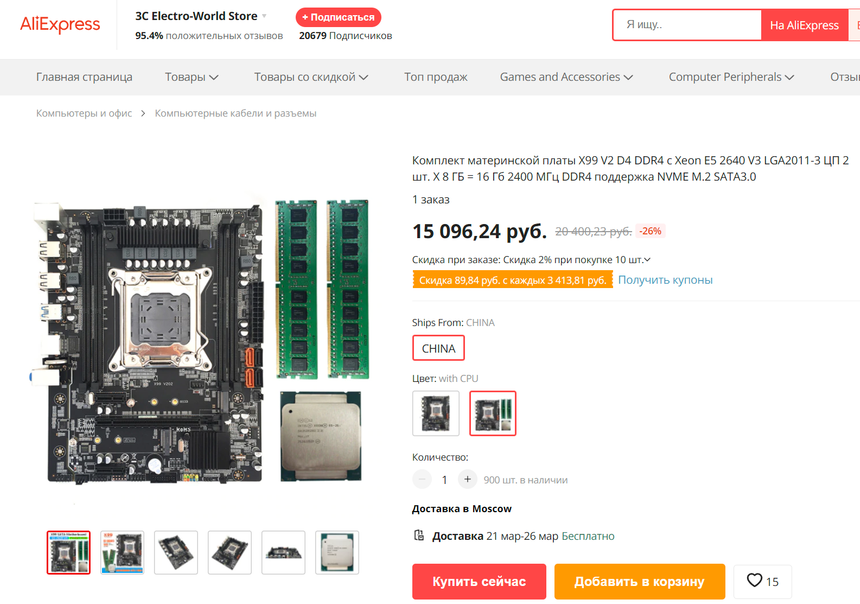
Of course, even inexpensive used processors (theyeternal, so second-hand does not play a role here) with the performance of the flagship Core i7 of 2017 will not replace the fresh Intel Alder Lake or AMD Ryzen 5xxx series for you, and there will not be enough such options for the whole of Russia. But if you are not a client of consultants, “what can I offer you?” in shopping centers, but if you build a computer with some experience, you will not be left without a desktop with an average level of performance today.
At the same time, it should be taken into account that for AMD and Intel suchrestrictions - a blow to the balls even more painful than Google's loss of manufacturer Huawei. Because Realme and Oppo/Vivo/OnePlus took the place of Huawei, and countries with an abnormal love for desktop computers took the place of Russia (abroad, laptops, moreover, Apple MacBooks, or game consoles are more favored, if you need something not for work - in financial terms and in volume, no one will come in. Not that we have hopes for new shipments of Intel and AMD in the near future, but "suspended" is not yet "finally stopped".
- In the worst possible casedo not forgetabout purebredsChinese x86 processorsZhaoxin. Did not hear? But they exist, and their operating speed is approximately as follows:


 13
Until now, they are not particularly available outside of China.they were selling because in China these processors are like Baikal processors in Russia. That is, they are made for government and other state needs, but nobody needs them anyway. And it is highly likely that the Chinese will gladly start selling them to Russia. You can read more about these prots here.
And what will happen to the video cards?In them, the sales market is significantly dependent on partner companies. For example, NVIDIA video cards from Taiwanese ASUS, Gigabyte and MSI may stop selling in Russia in the event of sanctions, but the same NVIDIA video cards, only under the Chinese Colorful brand, will easily continue to be sold in Russia. Differences? Basically, in the efficiency of the cooling system and the reliability of the power system - the graphics processor, memory and everything else in video cards from different brands almost never differ. Yes, prices too. But video cards with Chinese cooling systems heat up, as a rule, more strongly. And if you have a shitty power supply, it will be much easier to send a Chinese video card to the next world than a Taiwanese one. But it won't hurt to play on normal computers.
In fact, if the US really wants toserious sanctions, they will not ban smartphones and video cards from specific manufacturers, but will prohibit the import into Russia of products with processors manufactured on the basis of US patents or from US-friendly manufacturers. And this means that:
-
The Korean Samsung Exynos, along with some 75% of Samsung smartphone models, will leave Russia.
-
Almost all Chinese smartphones based on Qualcomm processors (well, it’s clear, the manufacturer is from the USA) and MediaTek (Taiwan) worth more than 15 thousand rubles are no longer officially imported into Russia.
-
iPhones? Of course, too, if it comes to that.Both the brand is American, and the patent base of the components is American, and the processor manufacturers are all the same TSMC (which produce Qualcomm and MediaTek processors) and Samsung.
What's left on the pipe?The original Chinese manufacturer SMIC remained. You hardly heard about him, because he technically lags far behind TSMC / Samsung, so he usually didn’t release smartphone processors, but was engaged in the release of all kinds of microcircuits for car radios, airplanes and other figovin, where the compactness of the case and super-power are not so important, and the cheapness of products is important, other things being equal.
Read also
At one time, SMIC was engaged in the release of Kirin 710 processors for budget Huawei and Honor smartphones, when US sanctions cut off Huawei's oxygen to full-fledged processors.
Now SMIC, if we are talking about smartphones andtablets, remained a testing ground mainly for processors of the “it can’t get any worse” level. - for example, Unisoc SC series processors. These are found today in smartphones from itel, BQ, Inoi, Alcatel… Well, you get the idea. And in the older, cheapest (up to 10 thousand rubles) smartphones of more thoroughbred brands - Samsung Galaxy A03 Core, Realme C11 2021, ZTE Blade A71. These are processors on the level of the rather old Snapdragon 625/Snapdragon 460/MediaTek Helio P25, only more power-hungry and prone to heating, because their process technology is old - 28 nm versus 14 or 16 nm for other processors with this design.
However, if Unisoc wants to, then return to 14nm, which SMIC used in the Kirin 710A processors for Huawei, will be able to return. And then you will get smartphones based on Unisoc T600 processors. And this is already the level of Snapdragon 662, Helio G80 processors, that is, good processors of the level of smartphones worth 15-18 thousand in current realities - in short, smartphones with the speed of the Samsung Galaxy A32, Xiaomi Redmi 10 / Redmi Note 9, or Honor 50 Lite you won't get anywhere. And cameras / displays of purely Chinese production on Chinese patents are also found in abundance, so it will be problematic to forbid the Chinese to sell something in the Russian Federation, if we are talking about Chinese smartphone manufacturers, as long as these are budget models.


 fourteen
Here's the power of the processor cores in Unisoc junior version (SC)…
Most likely US Department of Commercewill allow manufacturers to export consumer electronics to Russia, provided that they are not used in the public sector and corporations under sanctions. However, individual companies can (and most likely will) stop deliveries on their own initiative in order to understand the peculiarities of importing equipment to a country under sanctions. For example, on the evening of February 25, it became known that the American corporation Dell announced a temporary cessation of sales in two countries participating in the conflict at once: both in the Russian Federation and in Ukraine. The statement said they would be monitoring the situation to determine the next steps.
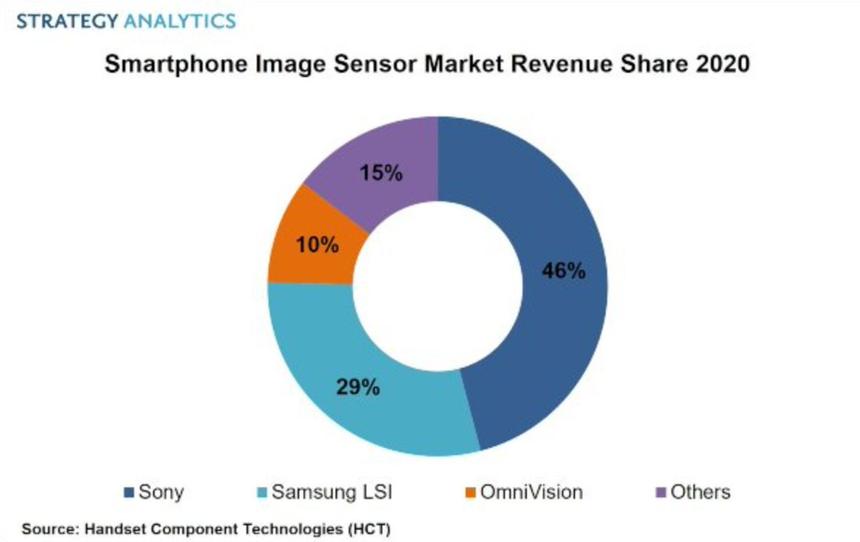
Leading manufacturers of smartphone cameras. OmniVision Chinese, like almost all Others
Read also
Also keep in mind that India, where there are alsoproduction facilities of Samsung, Xiaomi, Realme and a number of other brands have not yet accepted any of the parties to the conflict, which also weakens the possibility of Western pressure on our country. True, one more point should be taken into account: the container transportation crisis has not been resolved. If now everyone runs to the stores to buy electronics to invest rapidly depreciating money, there is a small risk of a shortage of goods for which it will not be possible to quickly increase supplies.
The gray market will come to the rescue
And even if we imagine the most unfavorablescenario that some brands really refuse to supply products to Russia, unofficial imports of equipment from other countries will continue, as well as the possibility of buying abroad using intermediary services. Now the duty-free threshold for ordering goods via the Internet from abroad is 200 euros (18,700 rubles as of February 26, 2022), almost any budget smartphone fits into this amount.
 Read also
And if it doesn’t fit, then try to calculateHere. It will come in handy if we are talking about expensive smartphones or laptops (which cannot be compacted at 200 euros. In principle, it’s unpleasant that there is a duty, but in comparison with the markups in Russian chain stores in the last two days, it doesn’t look so crazy in size. It’s much sadder that from 2023 the duty-free threshold will decrease from 200 to 100 euros, but we would still have to live to see these times…
Will prices go up?
Yes, prices will go up.After Russia recognized the independence of the DPR and LPR, the ruble collapsed significantly, and on the first day of the military operation, some electronics sellers began to change their price tags. Traditionally, small multi-brand stores (especially those operating online) and the “grey” market turned out to be the most sensitive to the exchange rate. Large networks, as well as branded retail brands, tried not to exacerbate the panic and gave buyers a chance to buy goods available in warehouses. At the moment, prices have not changed, but in the near future we should expect their significant growth. At the same time, it must be understood that it will not be proportional to the fall of the ruble. Retailers will have to include additional risks and the possibility of an even greater fall in the Russian currency in new prices.
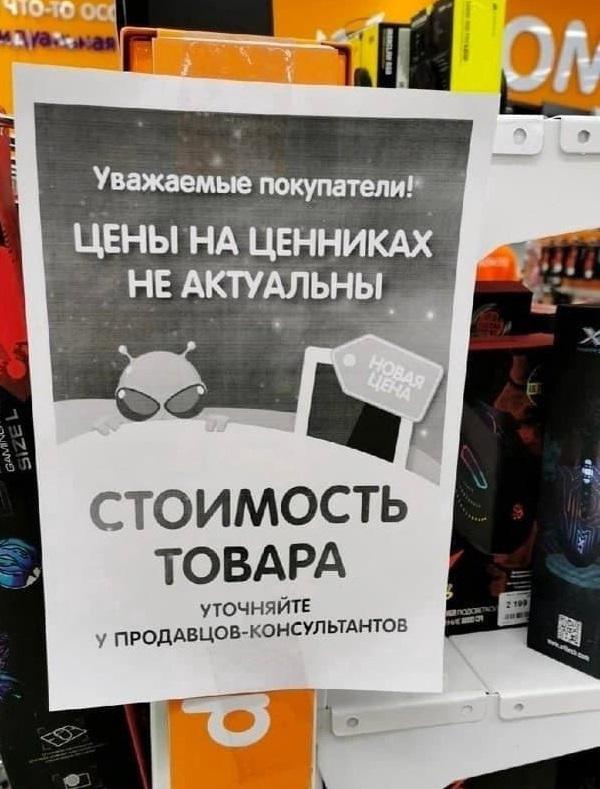
The DNS network managed to distinguish itself.On February 24, they immediately raised the prices of goods in the online store by an average of 30%, and also placed notices at offline points that the information on the price tags was no longer valid, and information about the real cost of goods was provided upon request. The most impressive were the prices for Apple equipment: for the iPhone 12 introduced two years ago with 128 GB of memory, they started asking 91,000 rubles, the new Macbook Pro 14" rose in price from 190 to 247 thousand. The head of the DNS company on his Facebook page explained the situation as follows:
Yesterday we suddenly faced the problem that all our activities have turned into the distribution of the deficit. There was a rush demand, there were failures in the site. Sales have almost doubled.
Yes, it affected the prices as well. Now the growth is up to 30%. And we cannot say that there will be no further growth.
We found ourselves in a new world, where, in addition to the growth of the exchange rate, technological sanctions have been introduced and it is not yet clear how a large list of goods will be delivered.
I understand that prices in stores are annoying, as are the numbers on the scoreboard with exchange rates. But that's the reality.
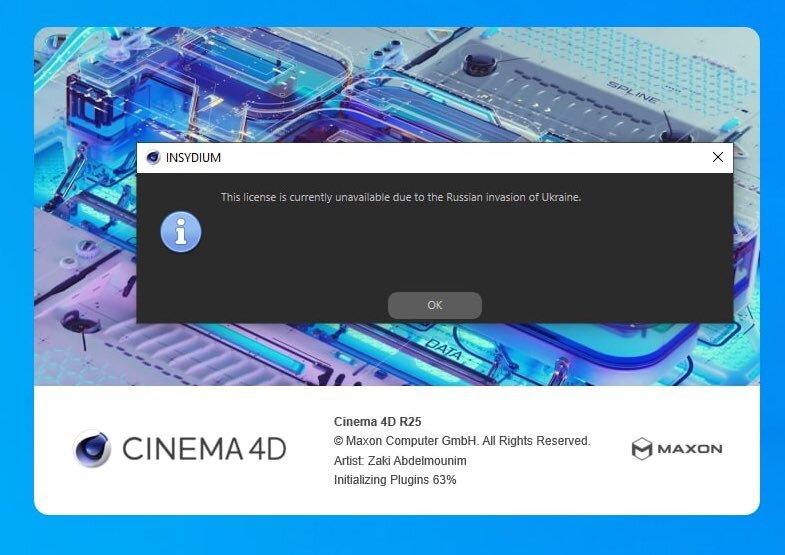
Samsung's past attemptsblocking software on TVs bought in Russian unofficial retail also failed: people quickly mastered VPN to bypass blocking, but the scandal and reputational losses due to Samsung's dubious decision were very noticeable. However, the whole AppStore or Google Play may not be blocked, but they can do targeted removals of the software of sanctioned companies, as, for example, this has already happened with Promsvyazbank. Android users can easily use alternative app sources, but iPhone owners will find it more difficult. The only thing that can be advised is to download in advance all the software that may be needed, just in case. In general, even in the worst case scenario, there are loopholes and there is no point in panicking.
Will you be able to pay with your smartphone?
Mobile payment services Apple Pay and GooglePay will stop working with cards of Russian banks that fell under the sanctions: VTB, Sovcombank, Novikombank, Promsvyazbank, Otkritie. If rumors about “sanctions against 70% of the Russian banking sector” are confirmed, contactless payments may indeed be severely restricted in Russia. However, do not forget that in our country such alternative options as SberPay and MirPay are available. Now that SWIFT has been blocked for sanctioned banks, most likely your Visa and Mastercard cards of these banks will stop working in Apple Pay / Google Pay.
That's why:
- In applications, where possible, switch payment methods from Visa/MasterCard and Apple Pay/Google Pay to SBP (universal method, if listed) or SberPay (for Sberbank customers).
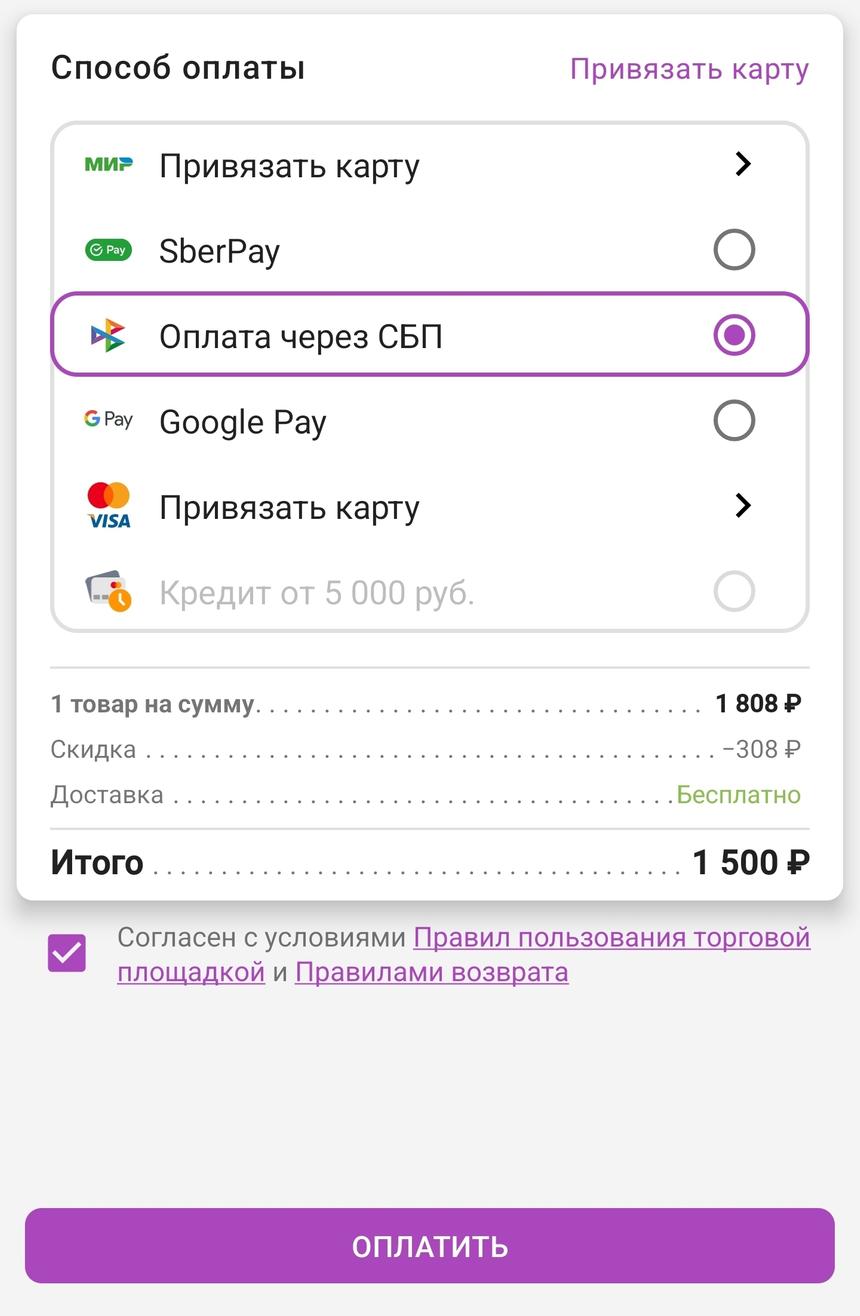
The instructions for connecting SberPay, in short, are as follows:


 16
Write the word "SberPay" in the search bar in the Sberbank.Online application
- Find an option to issue a MIR card in your bank.You can use a real plastic one (it will take longer, but it will be possible to pay without a smartphone), you can use a virtual one (if you need it faster and so that payment from a smartphone inside Russia works everywhere)
 1 / 1Read also
- Accordingly, you can link the MIR card to the MirPay application. Sorry, this method only works for Android owners.
On Android, a virtual card and Mir Pay can be the way out if your VISA and MasterCard are blocked. There are no alternatives for iPhone yet.
For everything to work correctly, after adding the MIR card, switch the payment type in the NFC settings of your smartphone (Smartphone settings – NFC – contactless payment).
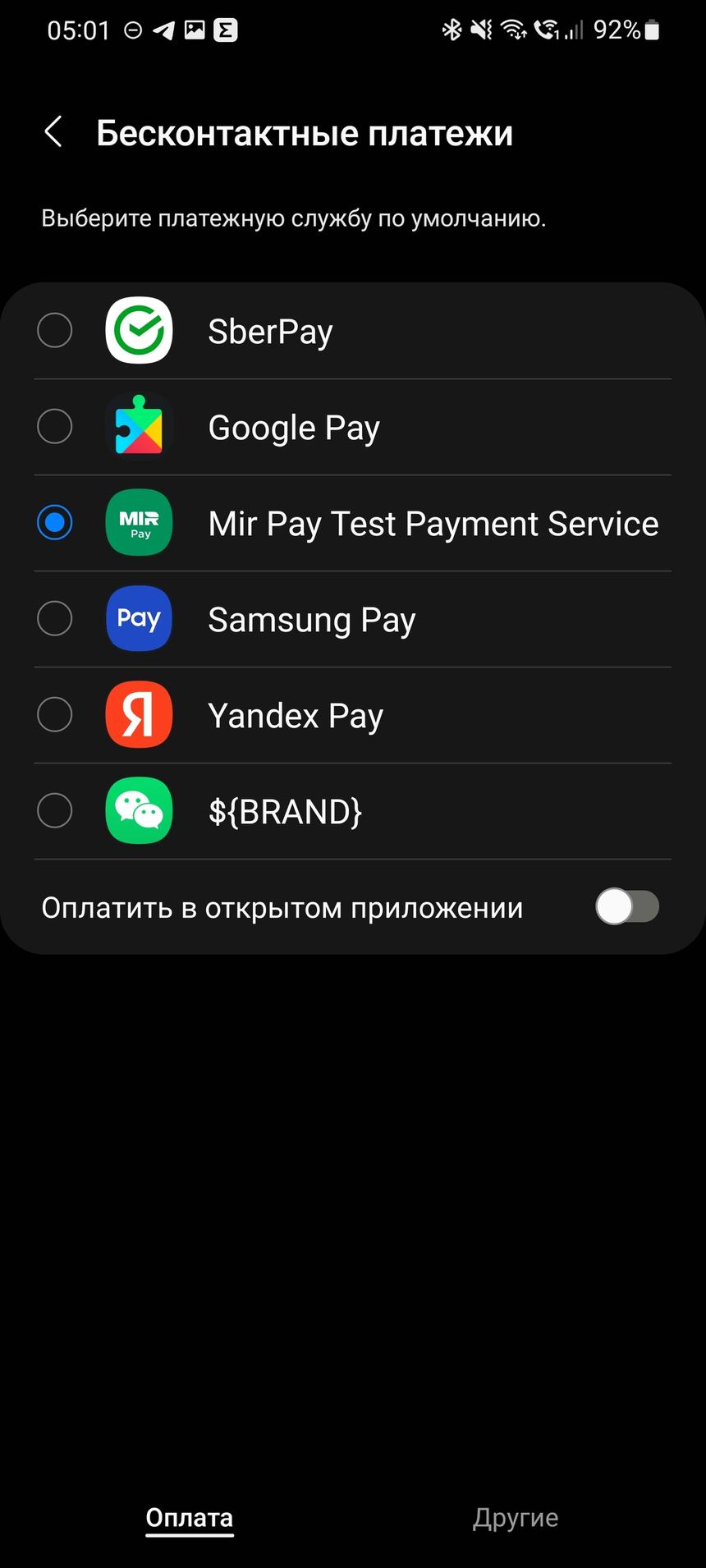
If the bank where you use the card is not undersanctions, while you can not do all these gestures - Europe and the United States do not plan to disconnect other Russian banks from SWIFT that were not included in the original sanctions list. But if you are worried that one day your method of paying for goods will suddenly disappear and the money will turn into virtual candy wrappers, order the MIR card now - even in those banks where significant money is being charged for its service, it will be more reliable with it than jumping from VISA / MasterCard when everyone in Russia will do it (lovers of withdrawing currency from ATMs, when it's too late, will not let you lie).
Internet will not be turned off
Strictly speaking, this is not discussed at all, and in general it is difficult to imagine such a situation.
However, in recent years, Russia has very muchdid to ensure technological independence, including in case the country is disconnected from the global network. Exercises to ensure the operation of the sovereign Internet were held regularly, import substitution was actively developed in terms of software products, and finally, the government claims that the risks are calculated and the state is ready to minimize the impact of sanctions in the technology sector. Of course, the public sector, the defense industry, the aerospace industry and industry will face the most difficulties, but it is not worth talking about significant and large-scale restrictions on access to technology for the country's residents.
If you want to learn something new
Subscribe to