The process of converting heat into an electrical impulse is called “pyroelectric”. This property is usually
Vipers and other snakes are well known for theirsensitive to heat. In fact, the infrared vision of the pit viper is so sharp that "if the animal appears in pitch darkness, even half a second 40 centimeters away, the pit viper will be able to detect it."
This ability exists through a structure called the pit organ—a hollow chamber near the snake's nostrils that contains a thin, flexible membrane.
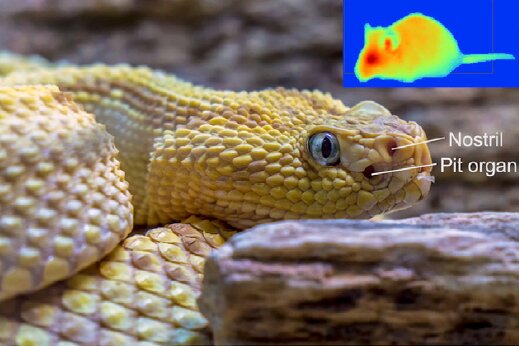
The pit organ plays an important role in the transformationheat into a signal that they can detect. However, the missing part of the equation was how the neural cells inside the pit organ membrane convert the heat signature into electricity to create that signal. <…> Apart from more advanced design elements, to make a pyroelectric soft material, all you need to do is embed static, stable charges into the material and make sure they don't leak out. Then you have to make sure that the material is soft enough so that it can deform greatly in shape and size and be sensitive to temperature. If you do this, they will act pyroelectrically, and this is what we were able to prove in our model. And we believe that this is what nature uses, because the process is simple and reliable.
Pradeep Sharma, M.D. Anderson, Professor and Chair of the Department of Mechanical Engineering at the University of Houston
The team plans to continue their researchsoft matter to generate electricity solely from a magnetic field. With enough research, they hope to inspire scientists to develop pyro, piezo, and magnetoelectric soft materials to expand the ability to generate electricity.
Read also:
The annual mission in the Arctic has ended and the data are disappointing. What awaits humanity?
On day 3 of illness, most COVID-19 patients lose their sense of smell and often suffer from a runny nose
Scientists have found out why children are the most dangerous carriers of COVID-19