An important decision Philippines
Energy Finance Analyst at the Institute for Energy Economics and
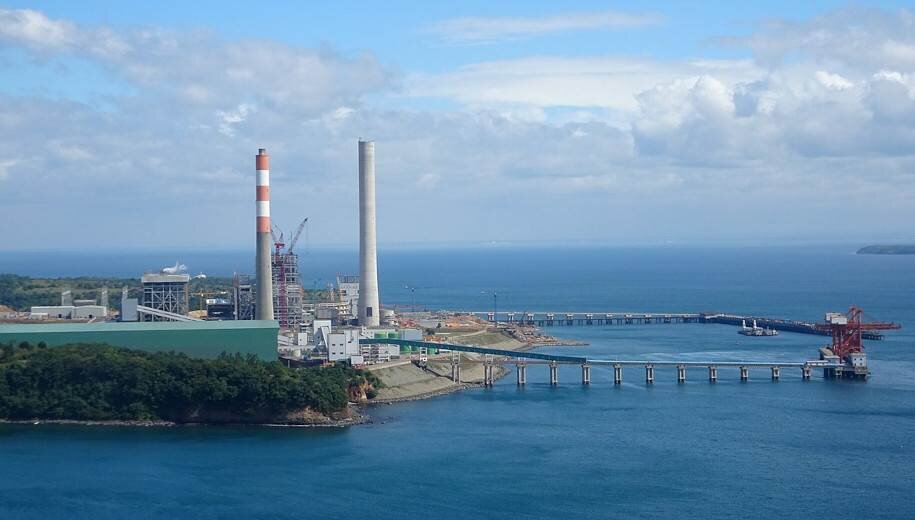 The Mariveles Power Plant in Bataan, Philippines. The Philippines relies heavily on coal for its energy source. Provided by: P199 CC BY-SA 4.0
It is worth noting that the Philippines is now in the process of updating its NDC – Nationally Determined Contribution – the Nationally Determined Contribution to the Paris Climate Agreement. NDC, in essence, is the responsibility to reduce national emissions and adapt to the impacts of climate change, which takeseach country in the agreement.
What are the contributions of other countries?
Japan and South Korea have already announced their intention to achieve net-zero carbon emissions.China, one of the world's largest consumers and exporters of coal, pledged in September to achieve carbon neutrality by 2060.However, there are reports that China is not actually complying withtheir commitments under the Paris Climate Agreement due to the pandemic.
According to Armida Salsia Alisjahban, deputySecretary General of the United Nations and Executive Secretary of the United Nations Economic and Social Commission for Asia and the Pacific, all of these recent announcements will affect the coal export trade in the region.
“Despite the fact that the ads arelong-term, the impact on infrastructure development will begin now ... In particular, the consequences are noticeable in the energy sector. Coal developments planned there in the future are already facing problems in their construction, ”she said in an interview with SciDev.Net. "Both public and private investors are no longer willing to finance new coal-fired power plants due to the risk of inefficient assets and in light of existing international commitments to reduce emissions."

Meanwhile, the Lao People's DemocraticThe Republic, Malaysia, Singapore and Thailand are betting on the energy integration project. It will increase these countries' shared access to clean energy resources. This is in line with the Association of Southeast Asian Nations' (ASEAN) plan to source 23 percent of its primary energy from renewable sources by 2025, Tan Zee Leng, Singapore's second minister for trade and industry, said during the International Energy Week in Singapore.
Why is Asia Pacific so important?
Despite the optimistic statement and promises,according to the International Renewable Energy Agency, the Asia-Pacific region does not shy away from fossil fuels. They now account for 85% of its energy. Ironically, this region is one of the most vulnerable to the impact of climate change.
“For climate-vulnerable countries, breaking the limita temperature rise of even 1.5 ° C could disrupt the region's economy and reverse any development gains, ”emphasizes Sarah Jane Ahmed.
Chuck Baclagon, 350 Campaigner.org on finance in Asia, says the disaster can be prevented. “The current promises and moratoriums, while they look great, unfortunately will not be realized unless stronger measures are taken,” he said.
Asia is the only continent wherecoal-fired electricity production is increasing. However, it is partially funded by China and Japan, two countries that are committed to the principle of carbon neutral energy.
350.org is an international non-governmental environmental organization created to draw the attention of the general public to anthropogenic climate change and the problem of the emission into the atmosphere of huge amounts of carbon dioxide CO₂, one of the greenhouse gases
Baclagon also noted that the Filipinothe moratorium is limited. “The moratorium only applies to coal-fired power plants that have not yet been approved. Projects that have received permits or are in development can be implemented. This is despite opposition from communities already harmed by coal-fired power plants.” He also notes that the Philippines remains one of the most coal-dependent countries. The fact is that this is a cheap source of energy that continues to be subsidized by the state.
Disaster Prevention
According to Baklagon, the countriesAsia-Pacific region still has the opportunity to prevent disaster. “If countries move to clean energy and phase out the polluting fossil fuel industry, millions of deaths will be prevented in Asia every year. In addition, the whole world will be able to achieve common climate goals. ”
Alisjahbana highlights the impact of the reductioncarbon emissions for health. “Highly carbon intensive energy sources such as coal result in high particulate emissions. One of the most significant impacts of reducing carbon emissions is improving air quality. This problem has been acute for Asia for a long time. By working to reduce emissions, we are not only helping the planet, but also eliminating the health risks associated with climate change. ”

The transition to renewable energy sources is alsomay have financial benefits, especially as technology prices fall. Renewable energy is now available at a lower cost than some traditional sources.
Yongping Zhai, Energy Group Leadersector of the Asian Development Bank is optimistic. He is confident that technological advances and related policies will contribute to the transition to renewable energy sources in the Asia-Pacific region. “It is clear that those countries that are leading in the introduction of renewable energy sources have similar characteristics. Namely, a clear long-term vision, stable policies to support renewable energy sources, transparent financial incentives and active private sector participation.
To improve the situation in Asia, he adds,fossil fuel subsidies need to be removed and carbon pricing should be phased out. This will stimulate the development of renewable energy sources.
Is there still hope?
Asia's Impact on Climate Change
Back in 2019, UN officials said thatthe battle to combat climate change will be “successful or unsuccessful” depending on what is happening in Asia. There, growing energy needs are driving up demand for fossil fuels.
Asia commitments to transition toA carbon neutral economy will be critical, said Rachel Kite, UN Special Representative to the UN Secretary General. “In fact, it is in this region that we will succeed or fail in the energy transition to achieve our climate change goals,” Kite told reporters.
It is the growing demand for electricity in Asia that is likely to be one of the key obstacles to the goal of reducing emissions.
Southeast Asia is one of the fastest growingeconomic regions in the world. This is where a growing population and urbanization are driving increased demand for electricity through 2040, the UN warns. To meet demand, Southeast Asia is increasingly switching to fossil fuels.

New coal-fired power plant projects appearin many countries especially Indonesia and Vietnam. Developed countries, including Japan, are funding their construction, despite criticism from environmentalists.
However, experts are confident that the sector shouldbe considered as leaving. “Coal really has no future,” insists the UN representative. - After all, it is not competitive when it comes to price. “In addition, coal has a huge impact on human health and the entire planet.”
More and more private sector firms in Japan andother countries refused to finance coal, seeing it as an inefficient long-term investment. This trend is very encouraging for the UN, along with the rise in energy efficiency in China and India.
Luis Alfonso de Alba, UN Special Envoylast year, he strongly challenged the idea that the transformations needed to combat global warming would impede economic development.
“Fighting climate change is compatible with fightingwith poverty, ”he said. - There are many opportunities, especially for those who take the lead in the transition to renewable energy sources. A transition that will be inevitable anyway. "
Read also
The Doomsday glacier turned out to be more dangerous than scientists thought. We tell the main thing
NASA: Moon will reflect Earth's bright light in November
The newly discovered primate is already on the verge of extinction, although the species lives for a million years