How did it all start?
In mid-October, Russian scientists announced that pollution in the Pacific
Caring residents drew the attention of the authorities to the fact that many marine life, including seals, octopuses and sea urchins, died, they were found washed ashore.
View this post on Instagram
And where is our newly appointed governor?@vv_solodov??? Is tourism developing or running? How can we live with all this now? The Ocean coast is a poisonous yellow color, octopuses, hedgehogs, crabs, even mussels have fallen off! And these are all the inhabitants of the depths! And they are all dead!! Not even the top layer! @greenpeaceru Kamchatka is in trouble and everyone is silent! @_svetlana__radionova_
This incident, following a major oil spill in Siberia, prompted a widespread investigation.
Later, the interdistrict environmental prosecutor's officeThe Kamchatka Territory has announced a large-scale inspection of the pollution of the peninsula's waters. The source of the pollution was not identified for a long time. It is worth noting that Khalaktyrsky Beach is not only the main location for professional surfers, but is also a popular tourist attraction in Kamchatka.
Greenpeace specialists took water samples andthe results of the audit revealed that the excess of the permissible level of oil products in the region was exceeded four times. Also, the level of phenols in water was 2.5 times higher than normal. Such data were consistent with the state of the ecological disaster in the region.
Greenpeace Russia immediately contactedRosprirodnadzor, Rospotrebnadzor, the Ministry of Defense and the Prosecutor General's Office demanding an immediate investigation of the causes of pollution, an assessment of the scale and urgent elimination of the consequences of major environmental pollution. The problem, which attracted worldwide attention, required an urgent and thorough investigation.
Russian officials began an activeactivities under the direct orders of President Vladimir Putin. Earlier, in June, Putin publicly rebuked officials for being evasive and slow in dealing with the spill of thousands of tons of diesel fuel into the soil and waterways in Arctic Siberia.
Investigation progress
A group of divers from the state naturalReserve discovered a massive death of marine life at a depth of five to 10 meters, said then Ivan Usatov from the Kronotsky reserve, adding that "95 percent of the animals died."
“There are a few large fish, shrimp and crabs left, but very few,” the scientist said at a meeting with the Governor of the Kamchatka Territory, Vladimir Solodov.
In a statement, WWF Russia argued that the pollutant was not oil, as Greenpeace suspected, but "a highly toxic transparent substance that is highly soluble in water."
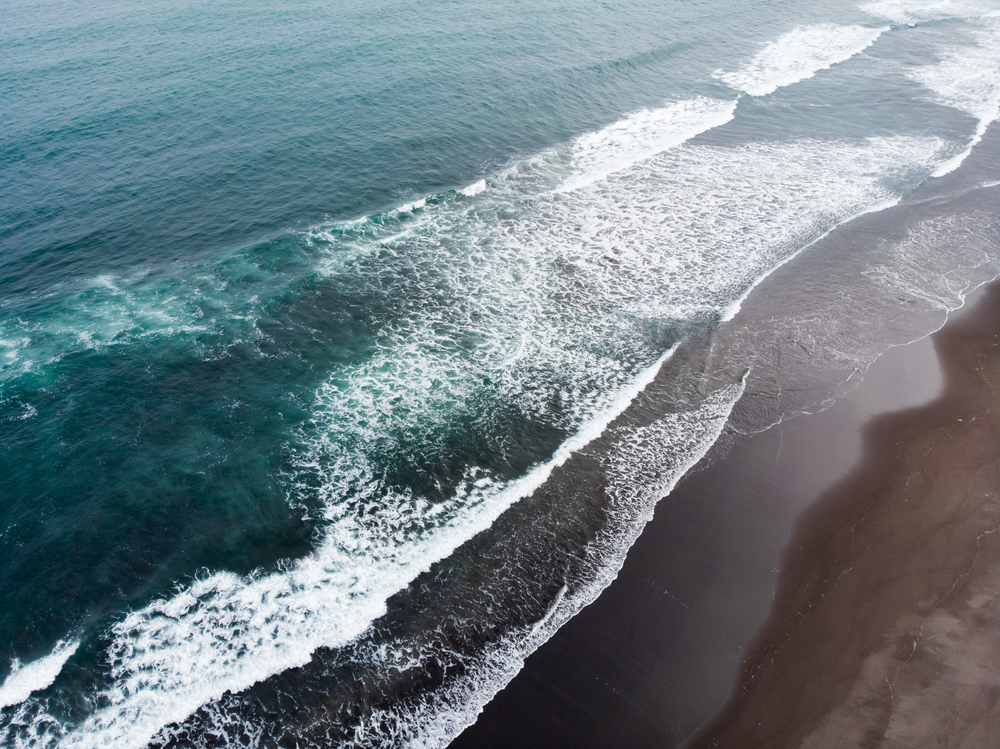
Note that Kamchatka, known for its picturesque landscapes and live volcanoes, is teeming with wildlife, including brown bears. The peninsula is sparsely populated with just over 300,000 inhabitants.
Scientists have worked to locate the sourcepollution a few days, researching theories, including the natural effect of microscopic algae. However, the emphasis was mainly on the potential anthropogenic causes of pollution.
Two obvious sources of pollution
Experts took water and soil samples at the sitenear Kozelsk, which has been used since Soviet times to store toxic substances deep in the ground. Thus, during the investigation, concerns arose that toxic substances could have entered the water from underground storage facilities.
"The most obvious answer, where could be the sourcepollution is the Kozelsk chemical landfill, ”Solodov said after prosecutors, natural resource inspectors and criminal investigators visited the site and checked the soil and water from the nearby river. The site where the chemicals were stored in 1979 has no legal owner today. Well-known, anyway.
Earlier, the governor promised on Instagram to conductInvestigate transparently and fire any official who conceals the extent of the pollution. He said that two military training grounds, Radygino and Kozelsky, would be checked, citing the "yellow tape". which was seen on the surface of a local river.
“Tomorrow early in the morning there will be inspections of two keylandfills that cause widespread concern, ”he said. Some experts have suggested that highly toxic rocket fuel may have leaked into the sea. The second test site, Radygino, is located about 10 kilometers from the sea and was used for exercises in August.
Vladimir Burkanov, biologist specializing inseals, in a commentary published by Novaya Gazeta, suggested that the old depots of rocket fuel stored in Radygino might have rusted and the fuel spilled into streams.
According to Solodov, inspectors found sectionsbarbed wire and damage to the protective coating on the territory of the unguarded Kozelsky training ground. The site “according to official data alone contains about 108 tons of pesticides and toxic chemicals,” Ivan Blokov, director of the Greenpeace Russia campaign, said in a statement.
Greenpeace has stated that its team is currentlywhile assessing the situation, I saw patches of "yellowish foam" and murky water in several areas, as well as some pollution drifting towards the volcanoes protected by UNESCO.
The reserve "Volcanoes of Kamchatka" suffered due to environmental disaster
Greenpeace has informed the UNESCO World Heritage Center of this situation.
A significant portion of the World Heritage Site"Volcanoes of Kamchatka" suffered from environmental disaster. The expedition of the Kronotsky Nature Reserve and Greenpeace found many dead underwater animals in the area of Utashud Island in the water area of the South Kamchatka Federal Wildlife Refuge. Mass death of marine life was recorded on the western coast near the village of Ozernovsky.
The waters of the South Kamchatka reserve are richendangered, rare species of animals that provide the biological diversity of the marine region. Several species of cetaceans and seabirds, and Steller's sea eagle and sea otters are vulnerable. The latter are in particular danger, since they feed on sea urchins, the mass death of which can lead to a reduction in the sea otter population, and their number in Kamchatka has been dropping lately.
The disaster in Kamchatka did not go unnoticedthe world scientific community and the UNESCO Committee. Together with the decision to exclude 15 thousand hectares from the South Kamchatka Natural Park, which is part of the Volcanoes of Kamchatka, a new environmental disaster could lead, among other things, to the fact that this unique territory will be included in the World Heritage List in danger, they fear activists Greenpeace Russia.
During the investigation and informationthere was a lot of discommunication, admits the director of the Kronotsky nature reserve in Kamchatka, Peter Shpilenok. The fact that not only the Khalatyr beach was damaged, but also the territory of the reserve was not immediately revealed. The video, which, among others, was shown on Instagram by Yuri Dud and thanks to which many in Russia learned about the problem, was filmed not on Khalaktyrsky beach, but much further north, he notes.
View this post on Instagram
On video - Kamchatka right now.In the photo wearing a respirator is Anton Morozov @snowave_kamchatka, the same surfer from our issue about Kamchatka who, together with his friends, turned Khalaktyrsky Beach into a world attraction. Here's what he writes: “Just 3 weeks ago, everyone started experiencing strange unpleasant symptoms after surfing. Cloudiness, dryness, pain and a feeling of a film on the eyes. My throat was sore, my ligaments were swelling and shrinking. The taste of the ocean is bitter, not salty, completely unusual. After a while, about 20 of us living in the camp, who ride often, suffered from poisoning. They decided it was an intestinal infection. And no parallels were drawn. It was strange, but the water seemed clear, we chalked it up to possible allergic reactions to plankton or other natural biological processes and waited for the forecast storm. There was hope that all this would pass with him. But this turned out to be the beginning. On Monday, the information went online. The authorities sent specialists to take samples. The water became more and more strange, cloudy, thick. Photos and videos came from different parts of the coast, showing mountains of dead inhabitants everywhere. Preliminary sample results showed an excess of petroleum products by 4 times and phenol by 2 times. Yesterday and today, many began to hastily leave the ocean. Symptoms appear even without contact with water. New information comes in every hour, and Greenpeace recently received satellite images of the river that flows into the ocean, and which, obviously, brought death to all living things. Pictures in the chronology of September 1, 9, 24 show that on the 9th the river was already pouring tons of poison into the ocean. It turns out that almost a month has passed. There was no reaction to prevent the disaster and save the situation. Probably, if the people responsible for this event had been more courageous and declared their mistake and began rescue operations, the scale of this could have been kept under control. But for a month now poison has been pouring out of the river, killing everything around.” (The first video is a spot in the ocean, the third is just creepy)
The video was shot on October 1 by a pilot of a local airline"Vityaz-Aero" Dmitry Zadirey. He noticed a spot with possible pollution in the area of the Kalygir and Malaya Medvezhka bays during a flight from Petropavlovsk to the Commander Islands, about 80 km north of Khalaktyrsky beach. According to him, then he "did not even know what kind of hysteria was going on about the Khalaktyr beach." “There were spots in the ocean, but it was something gigantic, dirty yellow-brown with yellow foam along the coast. I've been flying in Kamchatka for 30 years and have never seen anything like this, ”he recalls.
October 6 employees of the Kronotsky Nature Reserveinvestigated the coastal water area from Cape Nalychevo to Starichkov Island and came to the conclusion that 90% of benthic organisms in Avacha Bay died. In response, the authorities accused the reserve of incorrect presentation of the facts, since the conclusion was based on just a few dives. Emotional statements are understandable, Shpilenok believes: for the first time in their life, the specialists who faced such a phenomenon were really shocked, and the ocean for them is the meaning of life.
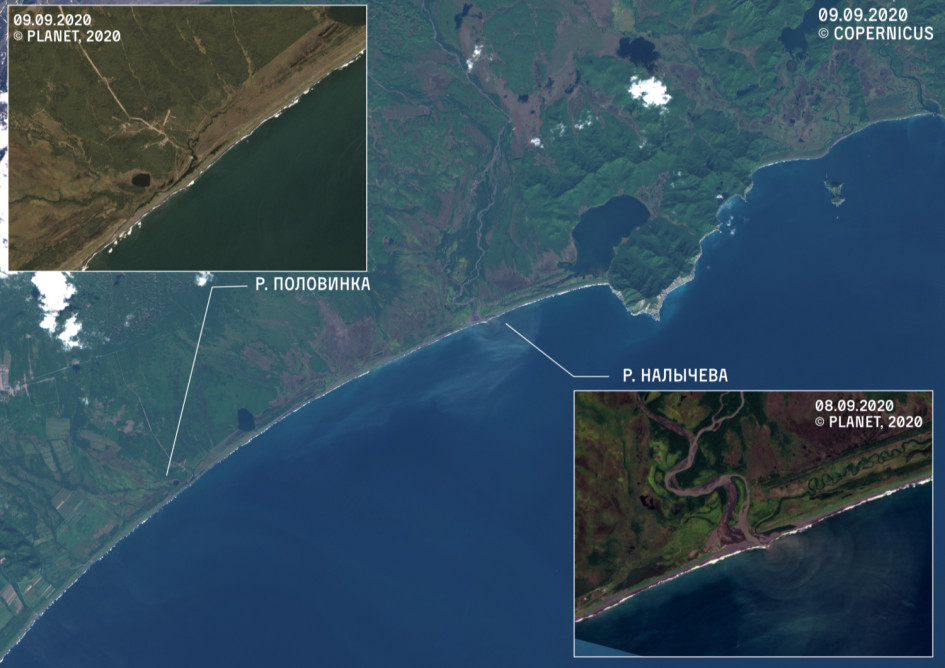 Photo: Greenpeace
How did the investigation of the disaster end?
Environment Minister Kobylkin said in the commentsfor TV, that tests so far have shown only slight increases in iron and phosphate levels, and suggested that the incident might not have been man-made, but caused by storm conditions and microorganisms that alter oxygen levels.
Environmental inspectors and experts fromResearch Center for Fisheries and Oceanography were to continue testing. Prosecutors and investigators announced that they would conduct checks on the subject of the crime, but did not publish any findings.
 Cape Lopatka, Pacific Coast (Photo: courtesy of KamchatUGMS)
The Ministry of Emergency Situations said it uses boats and drones to monitor the coastline, but added that "no pollution is visible."
October 23 at a round table on the resultsinvestigation into the death of marine animals in Kamchatka, organized by the Russian Academy of Sciences and the Ministry of Natural Resources, Vice-President of the Russian Academy of Sciences Andrei Adrianov stated that the cause of the environmental disaster in Kamchatka was a bloom of algae of the genus Karenia, representatives of dinoflagellates.
In the building of the Presidium of the Russian Academy of Sciencesthe Minister of Natural Resources and Environment of the Russian Federation, the Governor of the Kamchatka Territory, the President of the Russian Academy of Sciences and many other specialists who were present, including online, gathered.
In the final conclusion of his study andmeeting, scientists stated that, most likely, the death of aquatic organisms - marine and freshwater organisms - was not caused by human activity.
Speaking at the same meeting, Svetlana Radionova of Rosprirodnadzor said her agency had conducted more than 5,000 tests.
Thus, Rosprirodnadzor, based onseveral thousand samples excluded the anthropogenic factor of environmental disaster. According to the official statement, fears about a man-made cause were also not confirmed. However, traces of «toxic algae» were found. Experts emphasized that even in the analyzes of surfers who sought help from doctors, there are no traces of man-made impact.
In a separate criminal investigationinvestigators said they have eliminated oil spills and toxic waste as possible causes. They added that previously recorded high levels of phenol and petroleum products were not critical and had been observed in the bay for decades.
Environment Minister Dmitry Kobylkin said:that the situation in Kamchatka is improving. In addition, the day before he stated that “everything that happened there is the life of the ocean, and this is a natural phenomenon,” and it is impossible to calculate the damage from pollution at all.
Can the issue be considered closed? The Russian branch of Greenpeace is sure not.
What is wrong with the official conclusion on the situation in Kamchatka?
Elena Sakirko, Climate Projects Coordinator andEnergy in Greenpeace, Russia, said it would not rule out any theories for now pending the final results of the organization's independent research.
In an interview with AFP, she said that humanfactor could affect the algae. For example, if wastewater or phosphates from washing powder and fertilizers get into the water. Sakirko also said scientists are concerned that the incident could affect food chains in the region, causing long-term damage to wildlife.
WWF said its experts were also unable to draw any conclusions.
“Unfortunately, the data available today in the public domain does not fully confirm any of the versions of the ecological crisis off the coast of Kamchatka,” the official statement says.
However, Greenpeace activists believe that it is too early to close the case. These are the questions they still have.
Raw discharges?
If poisoning of benthic organisms is caused byalgae, we still don’t know what caused their explosive growth. In many regions where red tides occur, the cause is often an anthropogenic factor: untreated wastewater, phosphates (fertilizers, household and industrial wastewater). This cannot be called simply “ocean life.” The discharge of untreated wastewater into Avachinskaya Bay is noted from year to year in the yearbooks of Roshydromet, despite the fact that the bay is a fishery reservoir of the first category (the most stringent standard for water quality is applied there).
According to information published by the authorities of Kamchatka,in the samples from Malaya Lagernaya Bay, significant excess of MPC for benzo (a) pyrene and pesticides (DDT, cypermethrin, cyfluthrin, spiroxamine) is observed. This means that the pesticide version cannot be completely rejected. Further research is needed on their role in what happened.
Changing of the climate?
According to some scientists, this behavioralgae growth could be caused by rising ocean temperatures. The warming was insignificant (by 1-2 degrees in September 2020), in other regions much more serious temperature anomalies occur and do not cause a similar effect. Here, too, additional research is needed to elucidate the causes and mechanisms of such influence. It is important to note that temperature anomalies mainly occur as a result of global climate change. Therefore, this clearly cannot be called simply “ocean life” - it is the result of the impact, first of all, of fossil energy, responsible for CO2 emissions as a result of the combustion of coal, oil and gas.
Are there any analysis results for dead animals?
Government agencies took the dead for analysismarine mammals. Thus, Irina Yarovaya accompanied to Moscow the tissues of sealed seals found on the coast selected for research. The results of the study of the internal organs of marine mammals have not yet been published, but they are important to know to understand the situation.
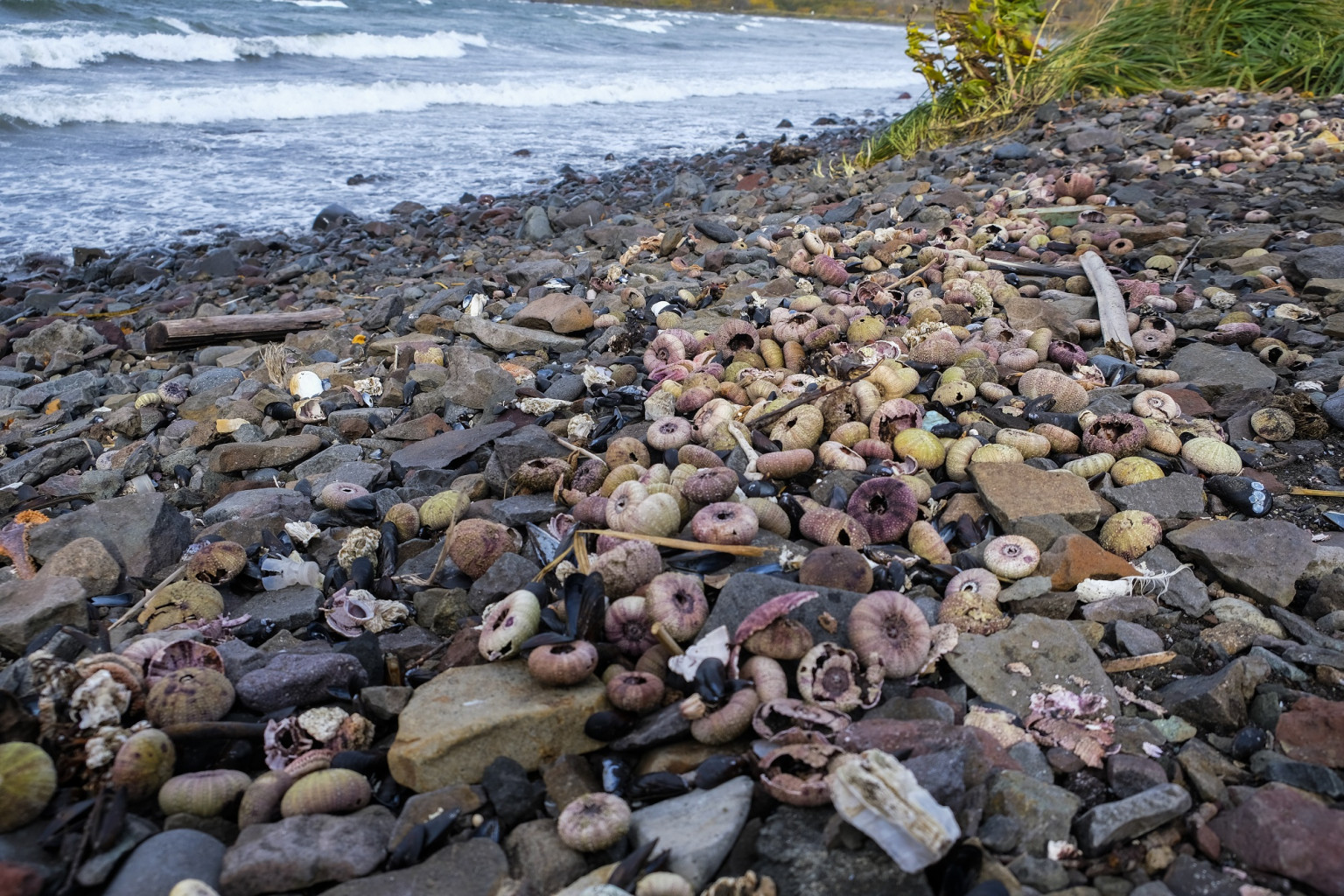 On October 7, Greenpeace activists investigated twobays: Bolshaya Lagernaya and Shlyupochnaya. They selected the dead mollusks and sea urchins for the study of internal organs for a toxic substance, the dead sea inhabitants were sent to the laboratory.
It is not yet clear why the sea urchins died, ifThe cause of the disaster is an algae bloom. Sea urchins are not predators or filter feeders, and their deaths are not typical during red tides. In the event of an extreme decrease in oxygen, which is observed during the massive development of toxic algae, sea urchins do not die in a short period of time because they have adaptive mechanisms to survive oxygen deficiency. At low temperatures, characteristic of the waters of the Avacha Bay in September, in the complete absence of oxygen, hedgehogs are able to live for about seven days.
But “red tides,” on the contrary, cause mass deaths of marine mammals. But only isolated cases have been reported in Kamchatka. It is not yet clear what this may be connected with.
Today information appeared that the formationthe composition of the expedition of Rosprirodnadzor and other departments to investigate the causes of the emergency, a vessel has been selected. This, in our opinion, suggests that the reasons for what happened are still unclear and it is too early to draw conclusions that this is “ocean life and a natural phenomenon.”
In addition, while the investigation into the causes was ongoingenvironmental disaster, other environmental problems of the region were revealed: hazardous waste landfills near the UNESCO World Heritage Site, a landfill lake near Petropavlovsk-Kamchatsky, discharges of untreated wastewater. Greenpeace noted that “there is a constant negative environmental impact” and while the team of activists is on the spot, they promptly report identified problems to the governor of the Kamchatka Territory.
What's the bottom line?
This year, Russia has suffered from a series of environmental disasters.
Just weeks after the Kamchatka incident, a 35,000 square meter oil spill was reported in the waters of the port city of Nakhodka in Russia's Far East.
The most devastating incident occurred in May, when about 20,000 tons of diesel fuel spilled from a fuel tank into nearby rivers in the Siberian Arctic.
Even if the disaster in Kamchatka was naturalAs a phenomenon, environmental disasters such as those that occurred in Norilsk and other parts of the Russian Arctic underscore the need for a transition to a new environmental policy. Russia needs to move away from polluting industries that destroy people's lives and nature itself, and turn its attention to renewable energy sources. This should be reflected in public policy. Right now.
Time will tell whether the situation in Kamchatka will worsen. One thing is clear - it is too early to put an end to the investigation of an ecological disaster.
Read also
The annual mission in the Arctic has ended and the data are disappointing. What awaits humanity?
Watch the new Hummer overcome obstacles on the road, moving like a crab
On day 3 of illness, most COVID-19 patients lose their sense of smell and often suffer from a runny nose