Stonehenge is a famous monument on Salisbury Plain in Wiltshire, England. Circle of stones for many
To accurately recreate the monument, researchersused laser scan data from other researchers as input to a 3D printer. They also used data from other studies to recreate rocks from scratch that are missing from the Stonehenge area. All modeled stones have been processed to reproduce the acoustic properties of real stones in England.
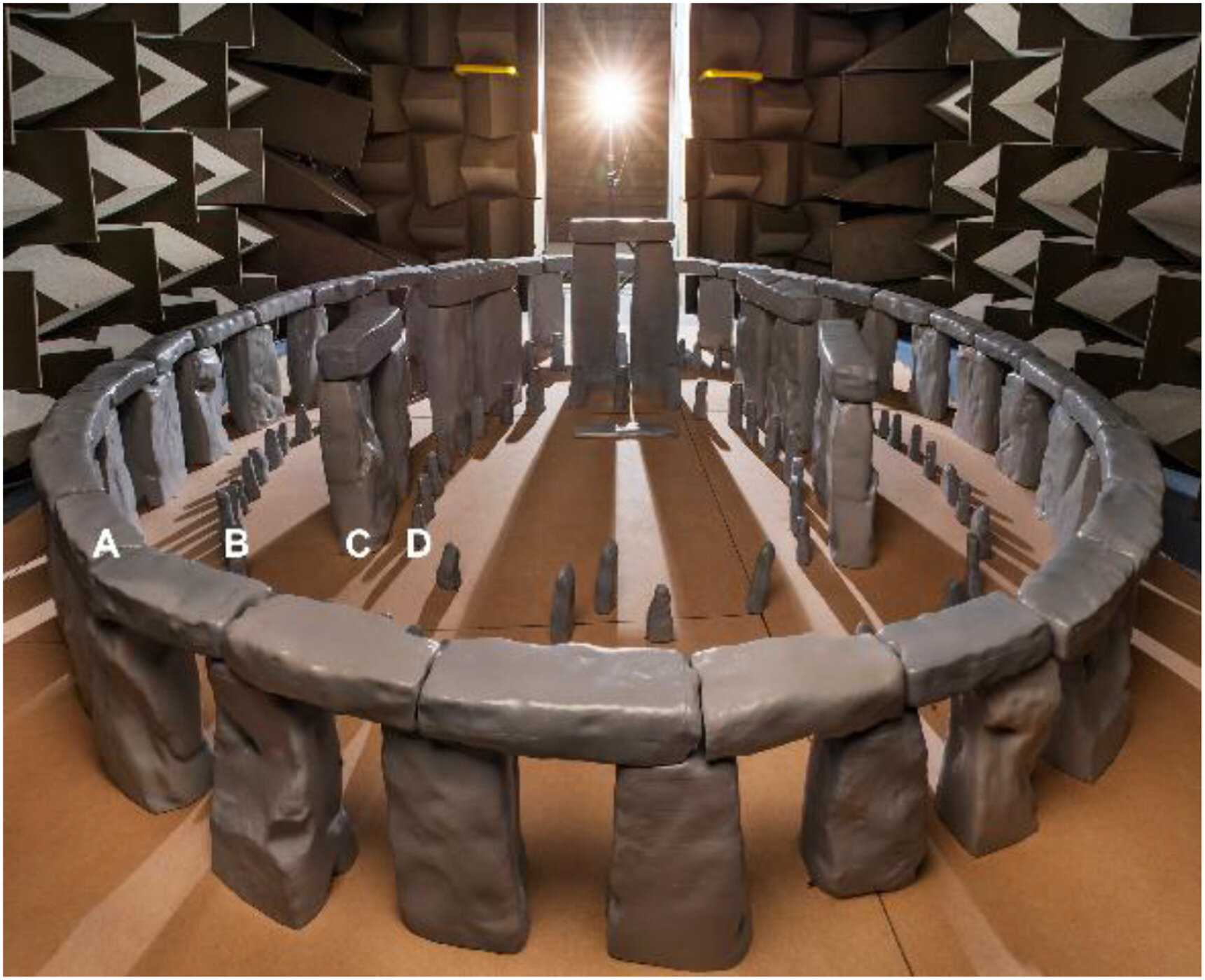 Model of Stonehenge in scale 1:12 in a semi-anechoic chamber. This is a monument after the rebuilding of the bluestones, around 2200 BC. Width about 2.5 m. Text annotations: (A) outer circle of the sarsen; (B) outer circle of bluestone; (C) Trilithon inner horseshoe and (D) Bluestone inner oval. Provided by:Journal of Archaeological Science(2020)
By creating your model at scale 1:12, the researchers installed speakers and microphones in and around their model and then tested its acoustic performance. Testing consisted of reproducing chirping noises ranging from very low to very high frequencies. Microphone data was recorded and then analyzed.
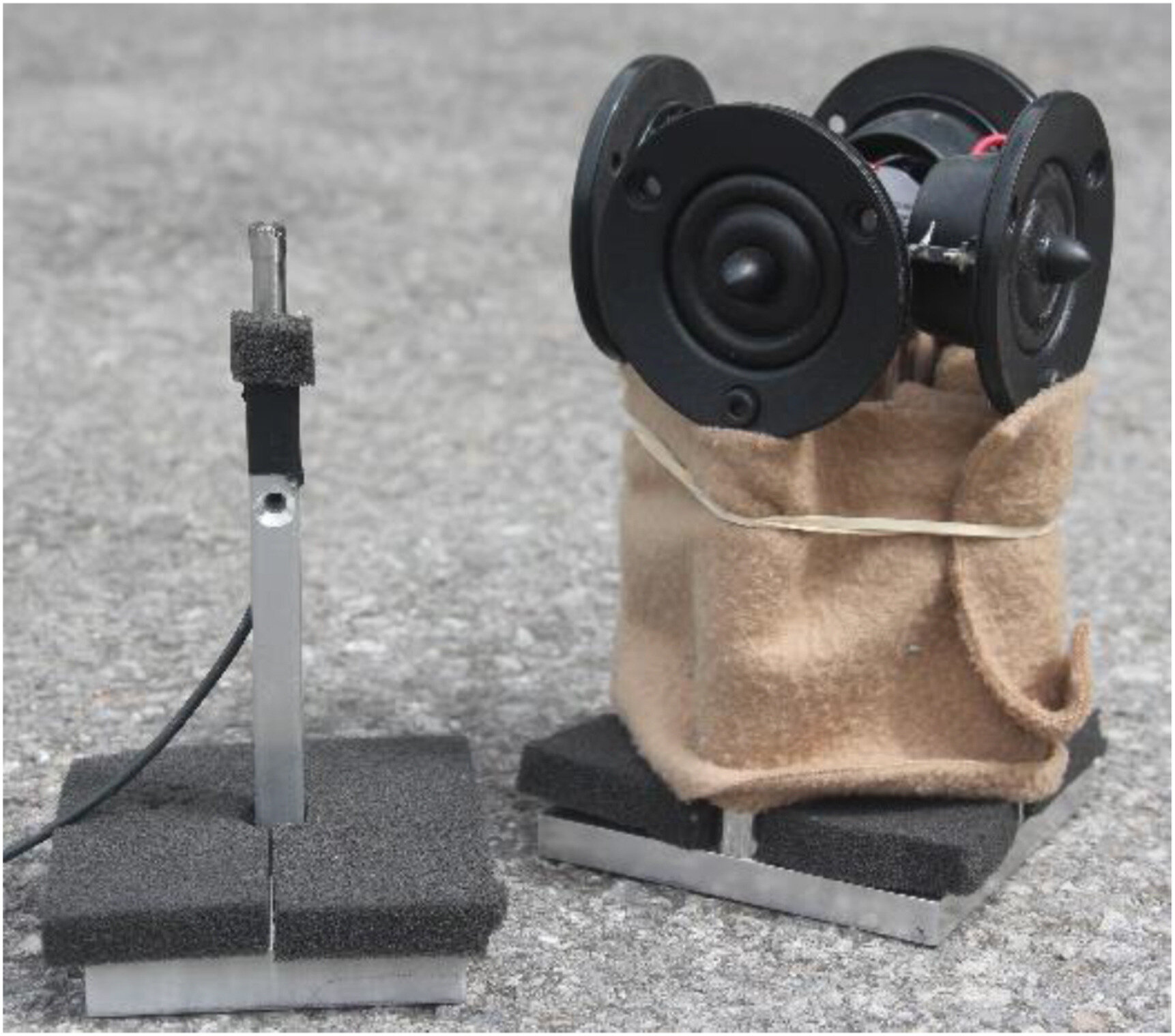 Microphone (left) and source (right). Provided by:Journal of Archaeological Science(2020) DOI: 10.1016 / j.jas.2020.105218
Researchers found that physical propertiesstones, such as their composition and shape, contributed to the appearance of reverberation inside the monument. Reverb is the process of gradually decreasing the intensity of a sound as it reflects repeatedly. In particular, scientists have found that the decay time up to 60 decibels is 0.6 seconds inside the monument, but not outside it. The researchers speculate that this degree of reverberation would improve the verbal communication within the monument. It would also improve the sound of music and drums - much like reverb is used in modern music recordings. They also noted that there was no echo on the ground due to the location of the stones.
The researchers also point out that they do not believethat Stonehenge was built solely for its acoustic properties - work by other researchers has shown that it was most likely used in funerary rituals. Its acoustic properties could be an additional feature.
Read also
The Andromeda halo is approaching our galaxy. We tell you why it is important
Symptoms of coronavirus in children. What you should pay attention to?
Unique molecule developed to store solar energy