The European Commission's statement is based on an assessment by the European Center for Disease Prevention and Control,
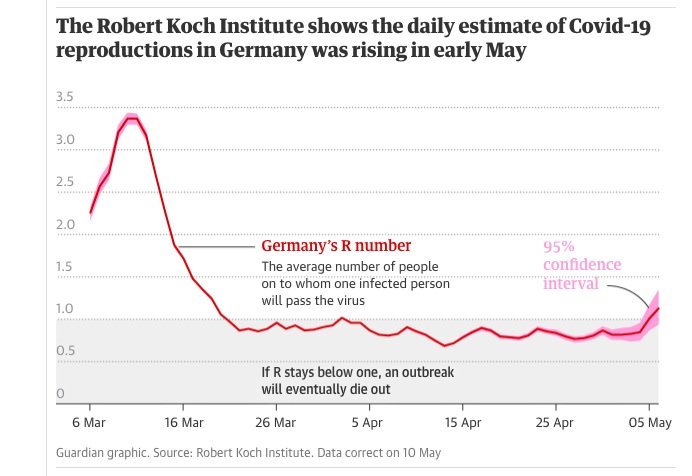
Virus transmission rate inGermanyin recent days has again exceeded criticalthe value of R1 is now R1.10. This indicator means that each patient infects more than one person over the entire period, while the epidemic dies out on its own if the R indicator is less than one. Last week in Germany, R was 0.65, but the easing of quarantine measures has increased the spread of the epidemic.
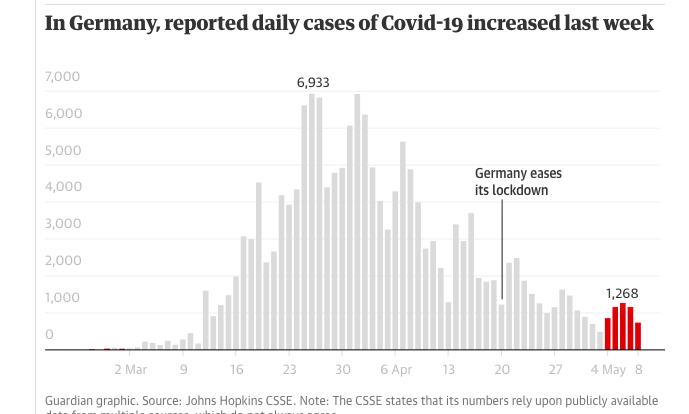
Moreover, in Germany - depending on the region -not only production and shops are gradually opening, but also restaurants and other places of public catering. In addition, matches of football divisions will resume in the country - so far without spectators, and the borders are gradually opening.
Wuhan city authoritiesChina, where the spread of the new type of coronavirus infection began, said they would test 14 million people for COVID-19 over the next 10 days - all residents of the city and nearby suburbs.
The main reason for testing the authorities calledsix new cases of coronavirus infection in the last day - while new patients with COVID-19 appeared in Wuhan for the first time since early April, and in early May, city authorities announced that there were no coronavirus infections left in the region. It is believed that new cases of infection, both in Wuhan and in the rest of China, are brought in by residents of other countries. There are 115 active cases of COVID-19 in China now, but this figure is also starting to grow gradually.
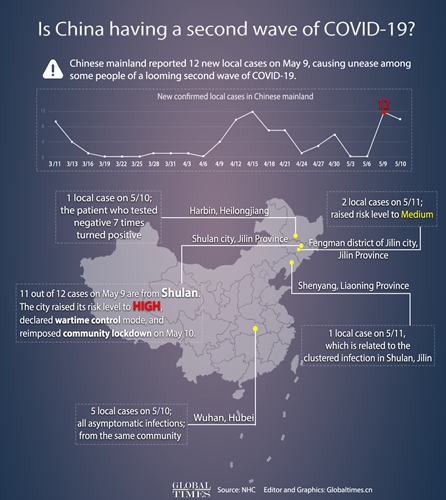
In China, as in many other countries, the situationWith the easing of quarantine, it strongly depends on the region, but almost all parts of the country have already opened after several months of complete isolation. Transport links between them have been resumed, all public places and sports facilities have already opened in the cities.
Another country whose authorities announced the beginning of the second wave of the epidemic was South Korea. On May 9, 87 new cases were recorded in the country.cases of COVID-19, at least another 1.2 thousand people may be infected. The source of all cases was a 29-year-old young man who violated the self-isolation regime by returning to another country and went to several nightclubs over the weekend.
Moreover, when the young man went to placesmass gathering of people, he had no signs of coronavirus infection. South Korean authorities note that the difficulty in identifying people who visited the same clubs as the infected person is that he went to underground gay clubs in Seoul, the audience of which is not always happy to publicly advertise this. The management of one of the clubs has already issued a statement warning that it would provide all available information about visitors in order to conduct tests for COVID-19.
Now the authorities have closed all clubs and entertainment venuesestablishments until June 7, but so far there is no talk of introducing a total lockdown - the country will only try to localize the sources of infection without completely closing all residents again and stopping the economy. Moreover, today in the country for the first time in the last month and a half, the number of cases again exceeded the number of those recovered from COVID-19.
How will the second wave of the coronavirus epidemic go
While experts in different countries cannot sayHow will the second wave of coronavirus infection unfold? On the one hand, existing experience and hygiene rules will reduce the number of infected people, and the awareness of people will lead to the rapid detection of the disease and a decrease in the level of social interaction between people.
A number of experts believe that the second wave will notwill lead to a new complete lockdown of countries. States will simply have to monitor the condition of all people, measure temperatures at the entrance to public places, require everyone to wear masks and gloves in crowded places, and track down those who have been in close contact with confirmed or only suspected coronavirus people using mobile applications.
This will continue as long ascoronavirus infection exists - either before the natural end of the epidemic, or before the creation of the vaccine. However, even if the vaccine is developed at the beginning of next year, it will not be able to immediately destroy the virus, so people will get sick with COVID-19 for several more years, and the country's authorities will look for sources of new cases.
See also:
- Scientists have created a single-atom transistor
- AI can predict the presence of COVID-19 without any tests. And very accurate!
- The non-standardists were smart and knew exactly what tools to make