What happened?
AMD has agreed to purchase its competitor Xilinx, one of the largest
The company believes that the merger will helpcapitalize on the most important segments of the industry - gaming, computing, automotive, industrial, aerospace and defense.
This deal will be one of the largest in the industry, according to The New York Times.
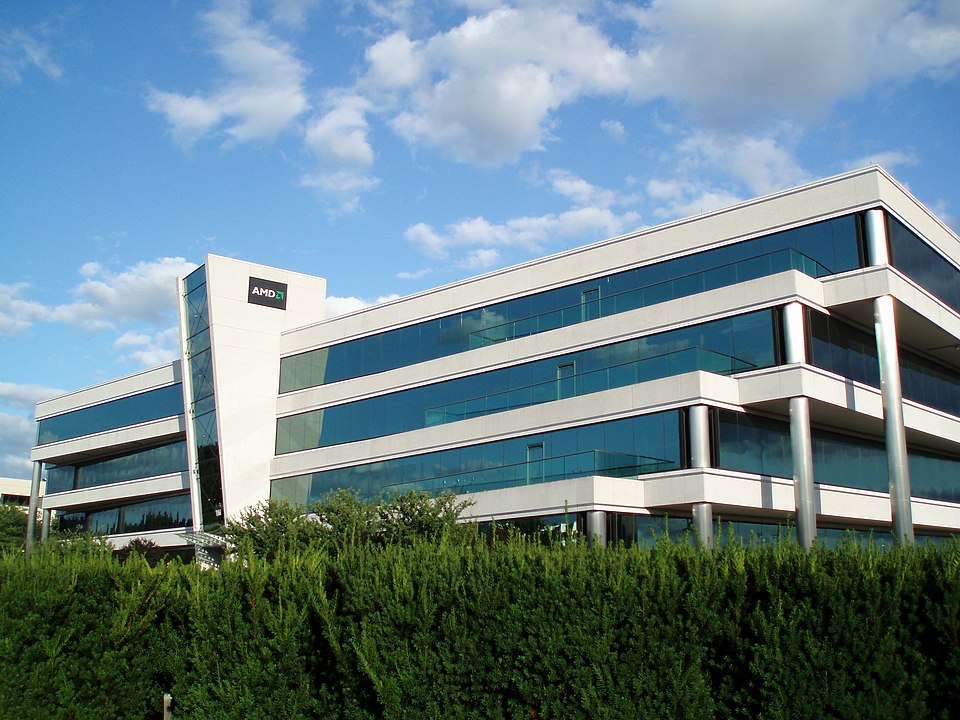
What are these companies?
- Advanced Micro Devices (AMD).
It is a manufacturer of integrated circuit electronics. One of the largest manufacturerscentral processing units,GPUsAndadapters as well motherboardsAndchipsetsfor them.
The company has not had its own since 2009microelectronic production and places orders at the facilities of other companies. AMD uses GlobalFoundries as a permanent manufacturing partner to produce its chips.
- Xilinx
It is an American developer and manufacturerintegrated circuits of programmable logic (FPGA, FPGA). Founded in 1984, the company achieved revenues of $ 1.84 billion in fiscal 2006/2007 with net income of $ 350 million. Xilinx's share in the global FPGA market was, according to the company itself, 51%.
Industry's first ACAP (Adaptive Compute Acceleration Platform) — Xilinx VERSAL:

And what is the essence of the deal?
Under the terms of the agreement, Xilinx shareholders will receivefor each share of the company for 1.7234 AMD shares. As a result of the deal, AMD shareholders will own approximately 74% of the combined company and Xilinx shareholders will own 26%.
The combined company will be headed by the CEO of AMDLisa Su, and Xilinx head Victor Peng will become president. He will be responsible for strategic business development. In addition, two Xilinx directors will serve on AMD's board of directors.
In total, the merged company will have 13 thousand engineers, and Xilinx will be a separate division, headed by the current CEO Victor Pen.
Note that the deal between AMD and Xilinx is one of the largest in the semiconductor industry, and has seen rapid consolidation lately.
Xilinx has also built deep strategicpartnerships in various emerging markets, including 5G networks, data centers, automotive, industrial, aerospace and defense. Xilinx has established itself as a strategic technology partner to a wide range of industry leaders.
Lisa Su, head of AMD
Is the deal already signed?
Not yet. Xilinx sale to AMD will only take place after shareholder and regulatory approval. AMD expects the deal to close by the end of 2021. Until that moment, companies will exist independently of each other.
AMD is set to achieve $ 300 million in operating efficiency 18 months after the close of the deal.
The start of negotiations was announced in early October. Then the media noted that AMD decided to enter the FPGA market, user-programmable gate arrays. Xilinx is the inventor of FPGAs (field programmable gate arrays) and one of Intel's biggest competitors in the field.
Similar deals:
Let us recall that earlier another largest deal for the processor industry took place: Nvidia announced that it was going to buy Arm for $40 billion.
Nvidia chief executive Jen-Hsun Huang said the main purpose of the ARM purchase is to integrate Nvidia's technology into ARM.
The company is going to build a research center forresearch of AI technologies, the development of which will be involved in drones, robotics, healthcare and other fields. For the science center, Nvidia will build an AI supercomputer based on ARM processors.
However, the deal may be opposedto speak regulators of the USA, China and Europe. Additionally, Arm's takeover could anger most of the world's processor makers due to potential problems.
NVIDIA previously announced the purchase of the British mobile chip architecture developer ARM, and before that it acquired the Israeli telecommunications company Mellanox.
What's the bottom line?
The deal is expected to expandAMD product range and explore new directions. For example, competitor technologies will enable AMD to develop in the 5G communications market. These factors will make AMD a major rival to Intel, especially in the big data and cloud center chip market.
Following the deal, AMD will have almost fullportfolio of computing equipment. In addition to x86 and Arm licensed processors, GPUs, GPU-based scalar processors, partially configurable SoCs, and low-power processors, it will include the FPGA line.
As a result, a clear trend can be observedtakeovers of some large companies by others. This process is followed by a strict monopolization of the IT sector, which has been actively growing in recent decades. US regulators are trying to control the process through antitrust proceedings: if the harmful influence is proven, the state has the right to divide the IT giants. In particular, Microsoft once lost an antitrust lawsuit.
In 2019, Bill Gates admitted that the legalthe case seriously affected the work of the corporation. As a result, the company lost out to Apple and Google in the smartphone market. Because of the same litigation, Gates resigned as CEO in 2000 and took up charity work. For the same reason, Microsoft has lost part of the Internet market, including advertising and search.
Read also:
The annual mission in the Arctic has ended and the data are disappointing. What awaits humanity?
Astronomers have discovered a star that pulsates with only one side
See the closest shots of the Sun's surface