What mission are we talking about?
127 years ago, Norwegian explorer and explorer Fridtjof Nansen set out
The idea of the mission was to recreate the historical journey of the Norwegian polar explorer.
NameMOSAiC(Interdisciplinary Drifting Observatory for the Study of Arctic Climate) reflects the complexity and diversity of this expedition.
In fact, MOSAiC is the first year-roundexpedition to the central Arctic studying the climate system of the region. The project, with a total budget of over 140 million euros, was developed by an international consortium of leading polar research institutes led by the Alfred Wegener Institute and the Helmholtz Center for Polar and Marine Research (AWI).
What did the mission study?
The Polarstern spent a year in the polar north. By the way, most of this time his engines were turned off. As a result, he could simply drift on the sea ice. This made data collection more accurate and the mission itself more sustainable.
So, what did the scientists want to find out? They weren't just worried about the climateIn the Arctic, experts sought to understand exactly how it was changing.
International experts conducted research in 5 main areas of interest.atmosphere, ocean, sea ice Andecosystem Arctic.
Atmosphere
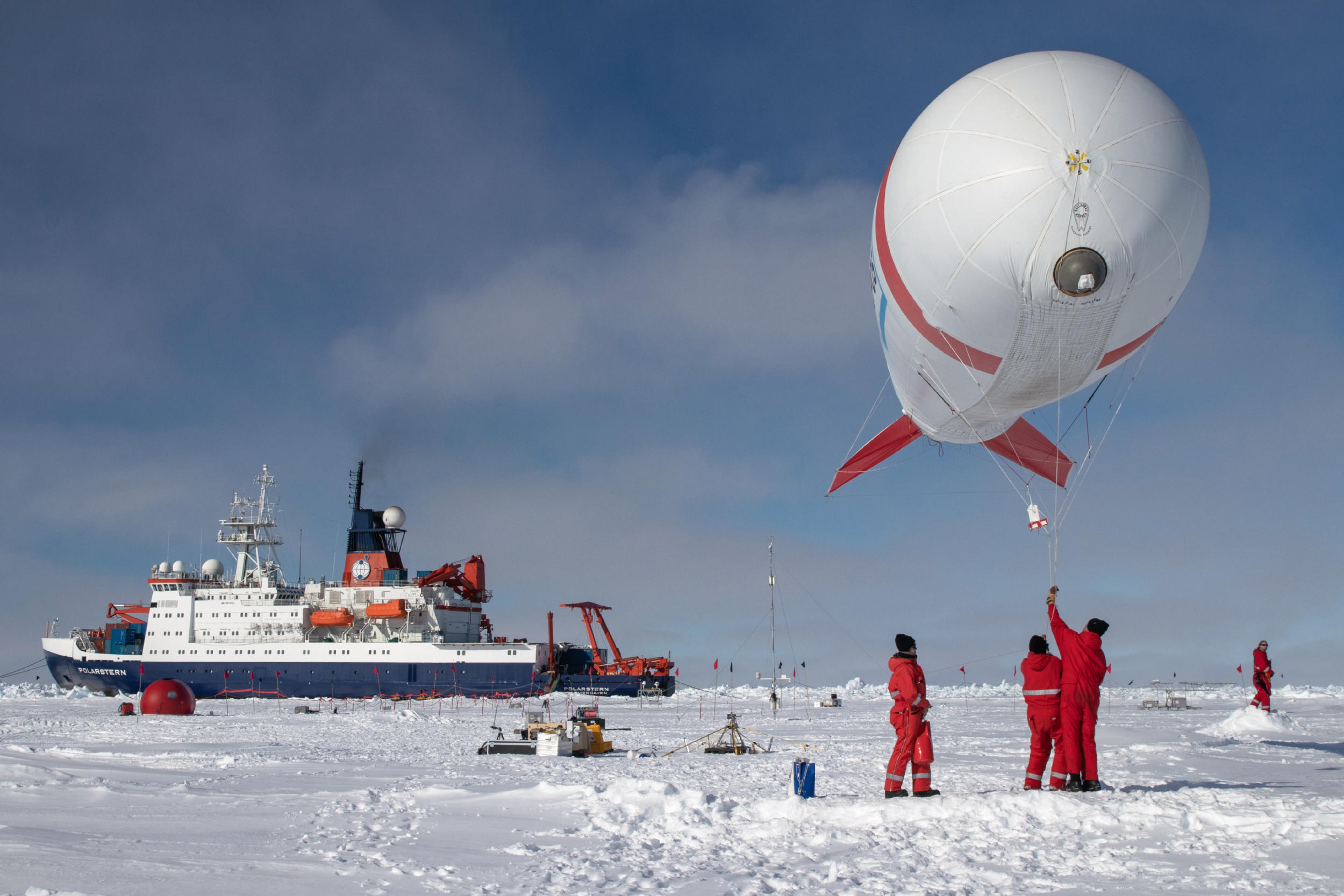
Consequences nowhere else on our planetclimate changes are not as large and obvious as in the Arctic. Understanding these effects is the main goal of the measurements that will be taken during the MOSAiC expedition. The measurements were carried out from the ice surface to the upper layers of the stratosphere at an altitude of 35 km.
 Source
The researchers paid special attention to very small-scale local processes on the ice and ocean surface, and the characteristics of Arctic clouds.As well as how different types of clouds affect sunlightExperts also studied snowfalls in the Arctic: how snow first forms in clouds and how the process is affectedtiny aerosol particles and droplets in the atmosphere of the region.
Whenever a smallcrack, a large amount of heat and water vapor penetrates deep into the atmosphere, heating it. And thanks to climate change, these cracks are forming much more often. Moreover, water vapor escaping through cracks causes the formation of clouds, which, in turn, dramatically alter the thermal balance of the Arctic. Whether they have a warming or cooling effect depends on the height and characteristics of the respective cloud - that's what the scientists were trying to find out. In addition, they were interested in whether these clouds are mainly composed of ice crystals or, despite the low temperatures in the Central Arctic, liquid water droplets?
Ocean
Over the past few decades, researchers have repeatedly studied the Arctic Ocean and, for example, the temperature of water or currents at different depths.However, this research work mainly consisted of occasional visits to the regions on icebreakers or short research flights during the summer months.Accordingly, most of the data was collected in just a few (summer) months.During the MOSAiC expedition, scientists were able to track a wide spectrum for the first timephysical parameters throughout the year with the help of a distributed network created on the ice floe.
One of the central research tasks,which was supplied by MOSAiC, to provide a better understanding of how sea ice evolves. The work of oceanographers has been especially focused on the circulation of the ocean in the upper layers of water. Namely, on the large-scale circulation of ocean currents, which carry huge amounts of water into and out of the Arctic.
Ice
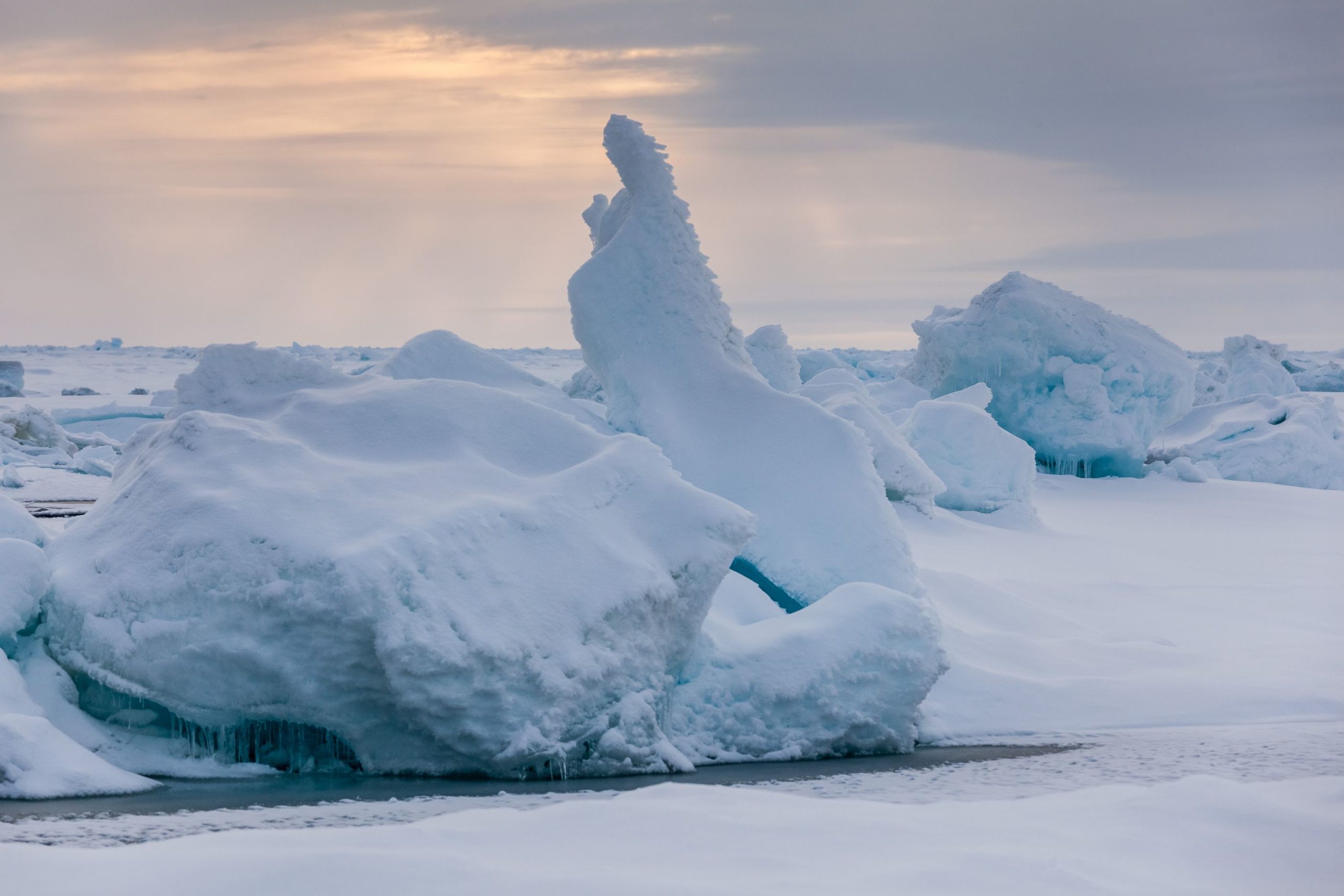
Climate change is transforming Arcticsea ice. Today it is thinner, younger and more prone to drift than traditional multi-season pack ice several meters thick. But ice is not just a clearly visible barrier between the ocean and the atmosphere; it also has a great influence on the various processes that take place in both of them.
In addition, sea ice interacts witharctic ecosystem; and substances produced by arctic organisms. They, in turn, control biogeochemical processes throughout the region's system. In light of these complex relationships, a vital question arises: Given the changes in ice, how is the climate in the Arctic changing and how will this affect the climate in other parts of the Earth?
 Source
Accordingly, sea ice as centralan element of the climate and ecosystem of the Arctic became one of the main research areas of the MOSAiC expedition. For the first time, researchers had the ability to continuously monitor changes in ice during each season.
Here are the main questions scientists have asked
- When do pack ice ridges or channels in ice form? How do ocean currents and winds in the atmosphere cause ice drift?
- How local and regional exchanges are changingenergy when changing the thickness and characteristics of snow and sea ice? How do changes in the respective seasons affect the overall annual balance? And how do these processes and changes look on satellites and in model studies?
- What steps need to be taken to betterunderstand the condition of sea ice and ultimately make better predictions? These studies directly combine the findings of oceanographers and, in turn, serve as the basis for the research conducted by the atmospheric team.
Ecosystem
The central part of the Arctic Ocean is one of the most extreme placesMonths of total darkness, sub-freezing water temperatures, and the presence of sea ice for most of the year are some of the region's many unique natural conditions.Although they all seem extreme from a human perspective, the Arctic Ocean is home to thousands of species of tiny plants (microalgae) and animals.They live inside sea ice or are attached to it in the water column (plankton), as well as in waters and on the seafloor.
Although over the past decades has been achievedsignificant progress in the study of the Arctic ecosystem, understanding of its functioning remains an important contribution of MOSAiC scientists. Year-round sampling and experimental work by biologists have provided a unique understanding of the entire food web and the importance of its members.
To better understand the region's unique ecosystem, MOSAiC biologists took ice and water samples using a wide range ofMany experiments have been conducted to examine the interactions of food webs and responses to environmental change.
Understanding the Arctic ecosystem now hascritical as the Arctic Ocean is undergoing dramatic environmental changes with the loss of summer sea ice and rising water temperatures. MOSAiC's research is a milestone in shaping the next decades of Arctic marine biological research.In addition, the results can steer society in the right direction when making strategic decisions about climate change.
What did you find out?
On board the RV Polarstern and on the sea ice next tohe, in the so-called ice camp, created large-scale research centers devoted to key aspects of the joint Arctic climate system.
The leader of the expedition, Professor Markus Rex, has returned with an important warning to humanity. “Sea ice is dying,” he warned.
“This region is in danger. We were able to witness how ice disappears even in areas where it should have been several meters thick, even at the North Pole itself - this ice is no longer there, ”said a scientist from the Alfred Wegener Institute during a press conference in Bremerhaven ...
 Source
In the summer, researchers were personally convinced ofthe dramatic impact of global warming on ice in the region, which mission leader Marcus Rex says is considered the "epicenter of climate change."
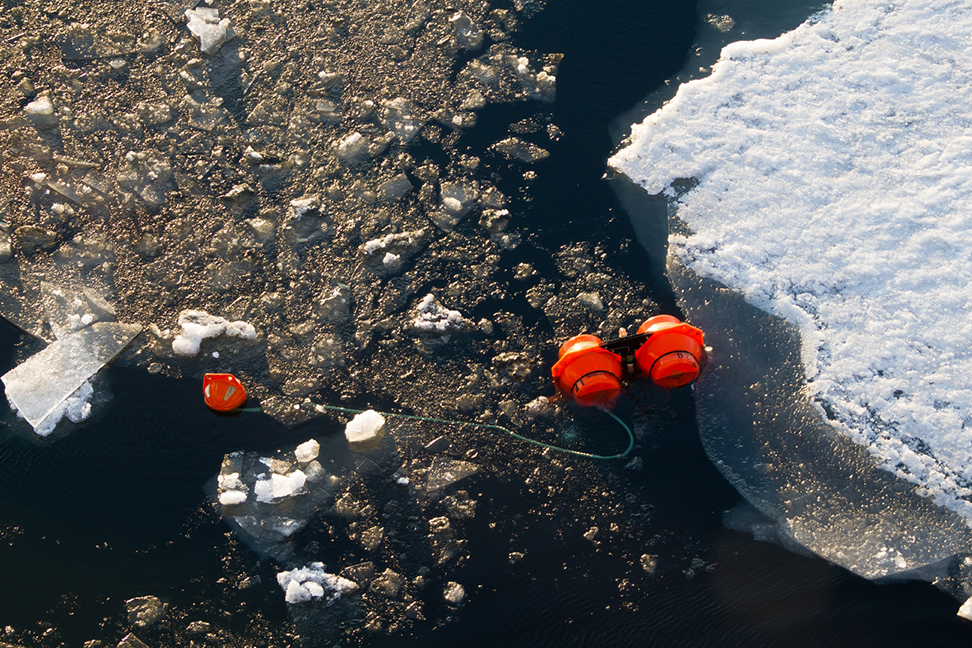
“We could see wide stretches of open water,reaching almost to the pole, surrounded by ice that was riddled with holes created by massive melting, ”explains Rex. His main conclusion, which everyone should hear: "Arctic ice is disappearing at a tremendous speed." The researchers' observations were corroborated by images from US satellites showing that in 2020 Arctic sea ice reached the second lowest summer minimum on record since 2012.
Analysis of mission samples
The Polarstern mission, dubbed MOSAIC,spent a total of 389 days collecting data on the atmosphere, ocean, sea ice and ecosystems to help assess the impact of climate change on the region and the world. To carry out research on the sea ice, four observation posts were installed within a radius of up to 40 km around the ship.
Researchers collect water samples from under the iceat the polar night to study the plankton of plants and bacteria and better understand how the marine ecosystem functions in extreme conditions. The € 140 million ($ 165 million) expedition also brought over 1,000 ice samples ashore.
Now that the Arctic Odyssey is coming toIn the end, serious work will begin on the analysis of samples and data obtained or recorded in the field. The analysis process will take up to two years. The main goal is to develop models that predict what kind of heatwaves, heavy rains or storms will be in 20, 50 or 100 years.
“To build climate models, we needonsite observations, ”explained Radians Kalmer, a female researcher at the University of Colorado who was on board the Polarstern from June to September, in an interview with AFP. The team used drones to measure temperature, humidity, pressure and wind speed to create a picture of conditions in the region, which would be "very useful for creating an accurate climate model," she said.
Mission difficulties
From the moment the ship departed from Tromsø,Norway, September 20, 2019, the team observed long months of total darkness, with temperatures as low as -39.5 Celsius. In addition, the mission participants noticed about 20 polar bears. Negligible for such a vast field of research and years of observation.
In the spring, the mission was almost disrupted due to the pandemiccoronavirus. However, COVID-19 only briefly interrupted the expedition, but not due to the fact that the participants fell ill. The restrictions forced the ship to leave the ice at some point in order to go for the next shift of scientists. Other ships and aircraft were supposed to take the participants directly to Polarstern, but international travel restrictions made this nearly impossible early and mid-this year.
During the expedition, several hundredresearchers from 20 countries spent time aboard a German ship that traveled with ice along a wind route, essentially drifting through glaciers. The journey itself was a huge logistical challenge. It is also important to note the problem of feeding the crew. During the first three months, the ship's cargo consisted of 14,000 eggs, 2,000 liters of milk and 200 kg of swede.
However, the ship's chef Sven Schneider stated that hedid not underestimate the importance of his role in the mission. “My job was to maintain the morale of 100 people living in total darkness,” he said in an interview with the German weekly Die Zeit.
What kind of future does the Arctic hold for humanity?
The leader of the expedition, Professor Markus, described the MOSAiC project as a huge success.
He explained that the mass of data and samples thatnow owned by researchers, will create an accurate simulation. Scientists use it to predict future climate change, which will be much more reliable.
According to him, the MOSAiC scientists managed to show the inner workings of an intricate watch.
“We have considered all the elements down to the variousscrews of this arctic system. And now we understand the entire movement better than ever before. And maybe we can recreate this Arctic system on a computer model, ”he told BBC reporters.
The floating ice retreated to an area of just under 3.74million sq. km (1.44 million sq. miles). The only time this minimum was broken was in 2012, when the area of pack ice was reduced to 3.41 million square kilometers.
The downward trend is about 13% over the decade, on average for September.
“This reflects warming in the Arctic,” concludesProfessor Rex. “The ice is disappearing, and if we have an ice-free Arctic in a few decades, it will have a serious impact on the climate around the world.”
How did the mission go?
For one year the Polarstern ship wasthe center of the largest Arctic research expedition in history, spending a full year cycle in a maze of massive Arctic ice. The research vessel, flagship of the Alfred Wegener Institute, has completed its mission and has become a symbol of both German and international polar research.
Originally commissioned in 1982, the Polarstern is stillremains one of the most modern and versatile polar research ships in the world.Between 1999 and 2001, the ship was completely overhauled and is now equipped with the latest equipment and technology.
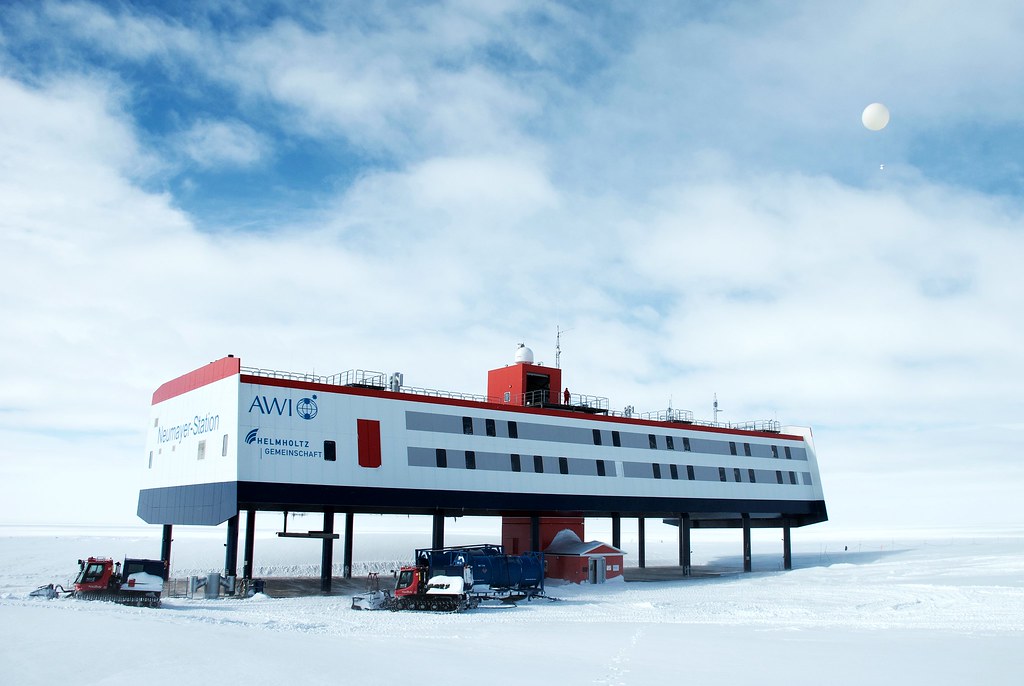
Having traveled about 50,000 nautical miles a year,Polarstern has undertaken scientific research and has also replenished the stocks of research stations at the Alfred Wegener Institute such as Neumayer Station III. It is a research institute in Antarctica, serviced all year round. Until 2019, Polarstern covered over 1.7 million nautical miles, which is approximately 3.2 million km.
 CC license
Tandem Polarstern and MOSAiC
Even for the reliable Polarstern and her experienced crew, the MOSAiC expedition presented a major challenge.Only thanks to special technical details, this ship could become the center of an expedition of such a large-scale mission.Polarstern is not only capable of operating in the pack ice zone, but sea ice is at least 3 m thick and has lasted more than 2 annual cycles of build-up and melt.In the form of extensive ice fields, it is observed mainly in the Arctic basin.To put it simply, multi-year ice.
With its double-walled steel body and 20,000 horsepower, the Polarstern also easily overcomesthick layers of ice by ramming.
Equipped for long-term operationswith arctic winter temperatures down to –50 ° C, Polarstern is also able to withstand winter in the ice of the polar seas. However, the interior of the ship, where about 100 researchers, technicians and MOSAiC crew members work and live, is not cold at all.
Also Polarstern had variousvehicles - helicopters, snowmobiles, Pistenbullies, etc. This allowed researchers to measure and collect data not only at the central observatory, but also in a remote distributed network. State-of-the-art onboard computer systems ensured reliable and regular recording, storage and transmission of all scientific data collected.
Read also
Research: Earth's ecology has changed dramatically over the past 70 years
Scientists have changed the structure of the solar battery and increased its efficiency by 125%
On day 3 of illness, most COVID-19 patients lose their sense of smell and often suffer from a runny nose