Scientists have created a new hydrogel with a special structure similar to a loofah. It uses sunlight to
Materials known to be sensitive totemperature, hydrogels soak up dirty water at low temperatures and then release it in purified form when heated. However, the closed pores of most such materials do not allow them to process water quickly enough for most people, according to scientists at Princeton University.
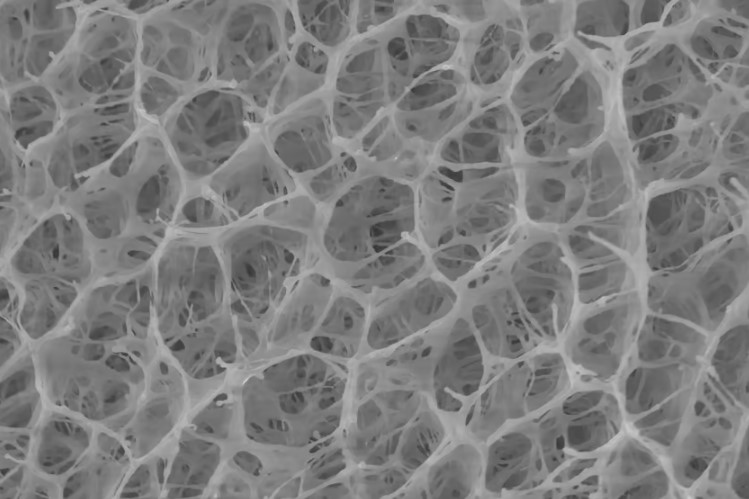 Microscopic image of a loofah-like hydrogel structure with open pores.
Xiaohui Xu/Princeton University
With this in mind, the authors of the new developmentreproduced the structure of a natural loofah sponge with very open pores. They used a mixture of water and glycol as the polymerization medium to produce a PNIPAm (poly(N-isopropylacrylamide)) hydrogel with large open pores. It is a thermosensitive polymer first synthesized in the 1950s. It can be synthesized from commercially available N-isopropylacrylamide. The scientists then coated the internal pores of the gel with two other polymers, PDA (polydopamine) and PSMBA (poly(sulfobetaine methacrylate)).
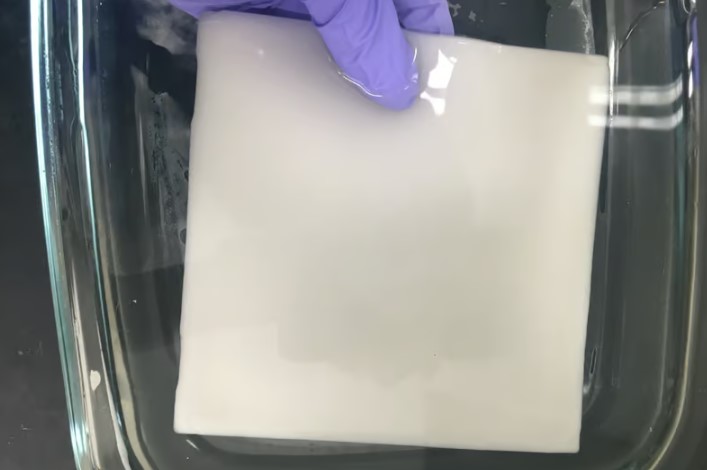 The loofah structure hydrogel can be used to purify water in poor regions or in disaster areas.
Xiaohui Xu/Princeton University
The experiment showed that the obtained materialabsorbs dirty water at room temperature, then releases 70% within 10 minutes when heated by artificial sunlight. This was four times faster than a previously tested closed-cell hydrogel. Additionally, even under lighting conditions simulating partly cloudy skies, the loofah gel released the same amount of water within 15 to 20 minutes.
Luffa or loofah is a genus of herbaceous vines of the familyCucurbitaceae. The genus is native to tropical and subtropical regions of Asia and Africa. There are more than fifty species in total. They are dried and used as a natural shower sponge.
Read more:
Scientists transplanted human “brain” into rats and told what happened in the end
Two photos of the Earth with a difference of 50 years were compared at NASA: what scientists found
Found a rare planet, very similar to the Earth. She is close to us
Cover: loofah washcloth, Qurren, CC BY-SA 3.0, via Wikimedia Commons