The image shows dust storms, which are also called “Martian dust devils.” They
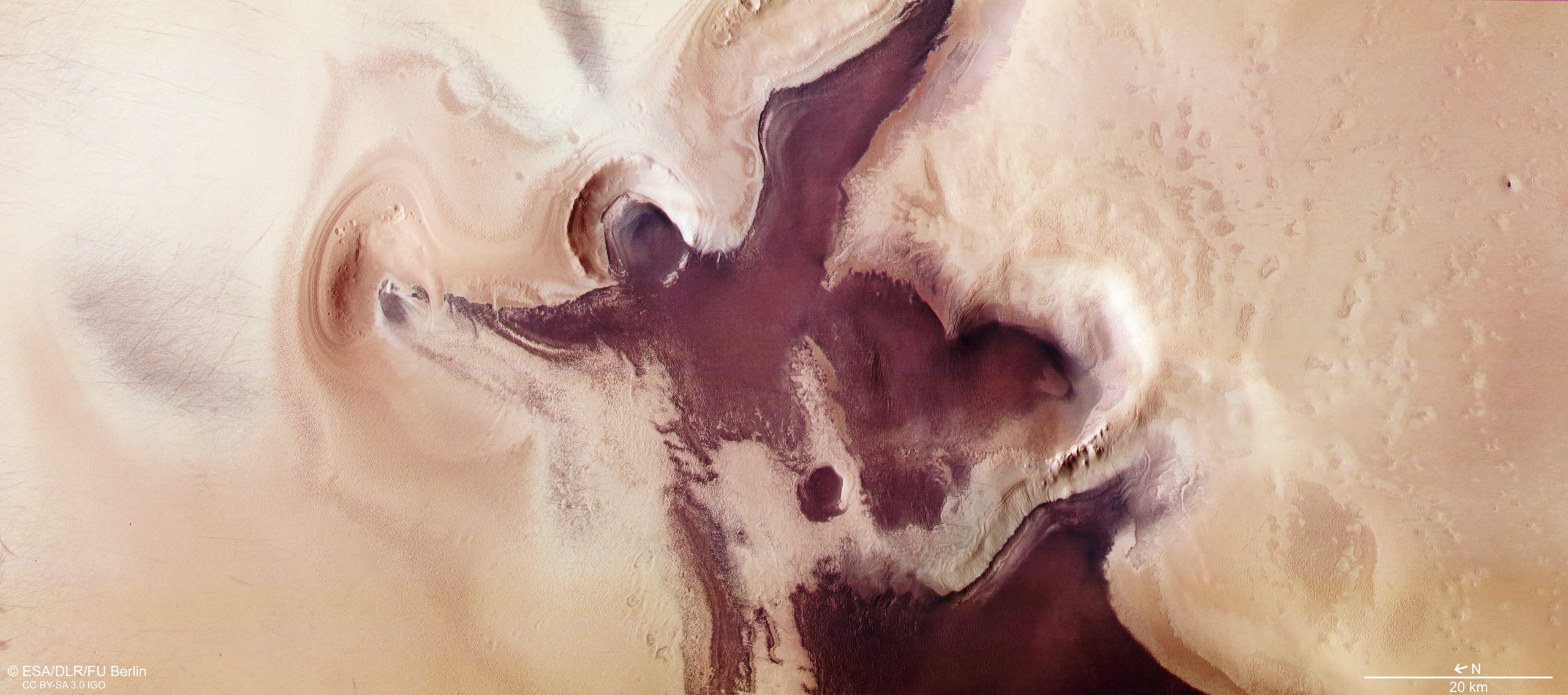 Image courtesy of ESA.
Also in the picture you can replace the steep inclinedimpact crater walls. The feature is the product of a meteorite collision that cut deep into the crust of Mars, cratering and exposing layers of ancient sediment below, according to ESA.
This image contains data collectedESA's Mars Express spacecraft using a high resolution stereo camera (HRSC) on November 8, 2020 (orbit 21305). The terrain resolution is approximately 15m / pixel and the image is centered at approximately 148 ° E / 78 ° S.
On the topographic map below, the blue and purple areas show low elevations, and the red, yellow, and white areas show higher elevations.
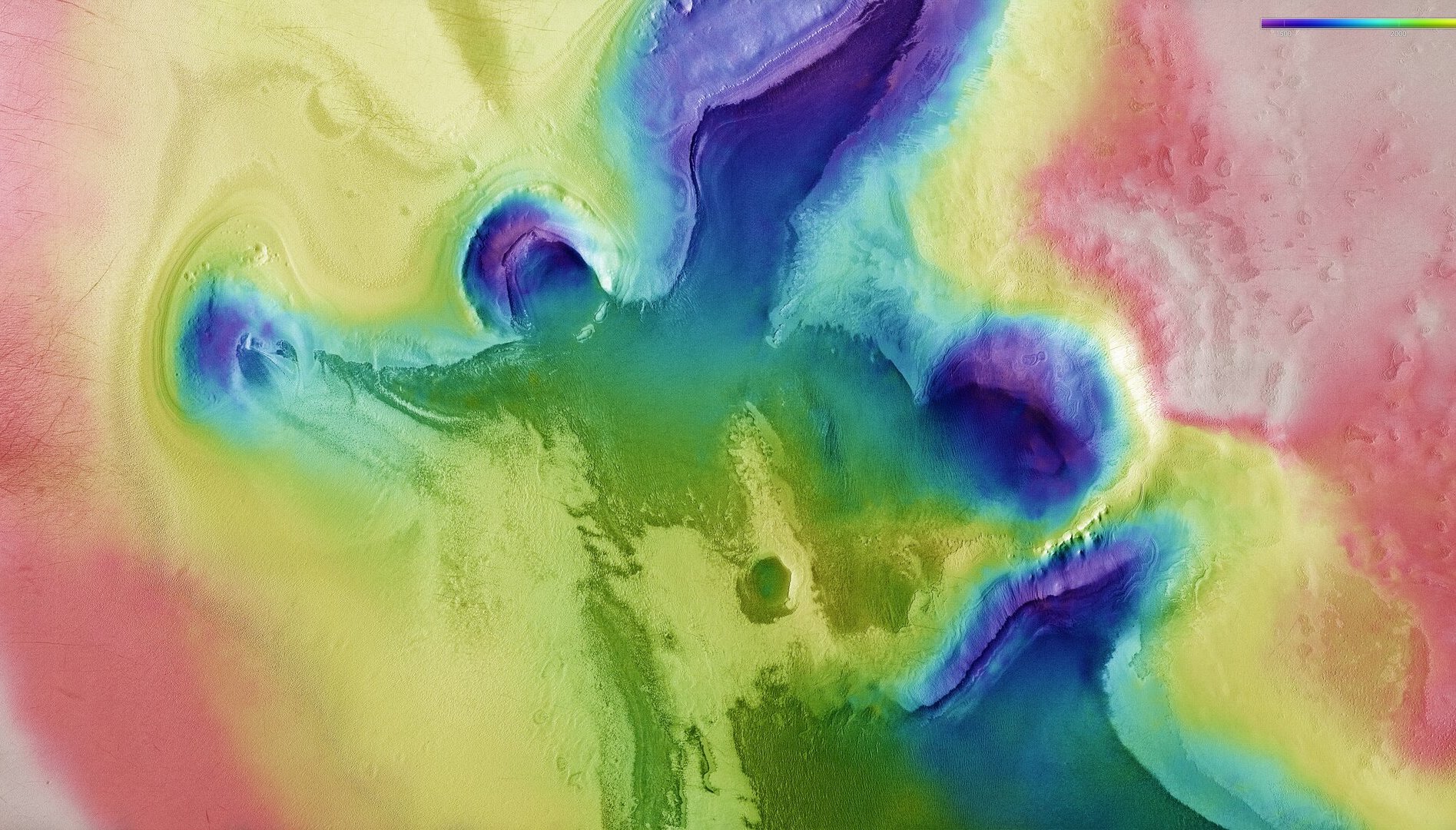 Image courtesy of ESA.
Read also
Check out the most beautiful pictures of Hubble. What has the telescope seen in 30 years?
In Russia, they created a durable material from garbage to cover roads
Extraterrestrial life is found in meteorites. What is known about her and where is she from?