Cholera is a waterborne disease that occurs as a result of drinking water.
Global warming and increased frequencyExtreme weather events cause outbreaks of cholera, a disease that affects 1.3 to 4 million people worldwide each year and causes up to 143,000 deaths. A new study shows how cholera outbreaks in India's coastal regions can be predicted with an 89% success rate, in the first demonstration of using sea surface salinity to predict cholera.
Research published inInternational Journal of Environmental Research and Public Health,aims to predict cholera outbreaks in the North Indian Ocean, where more than half of global cases were reported between 2010–16.
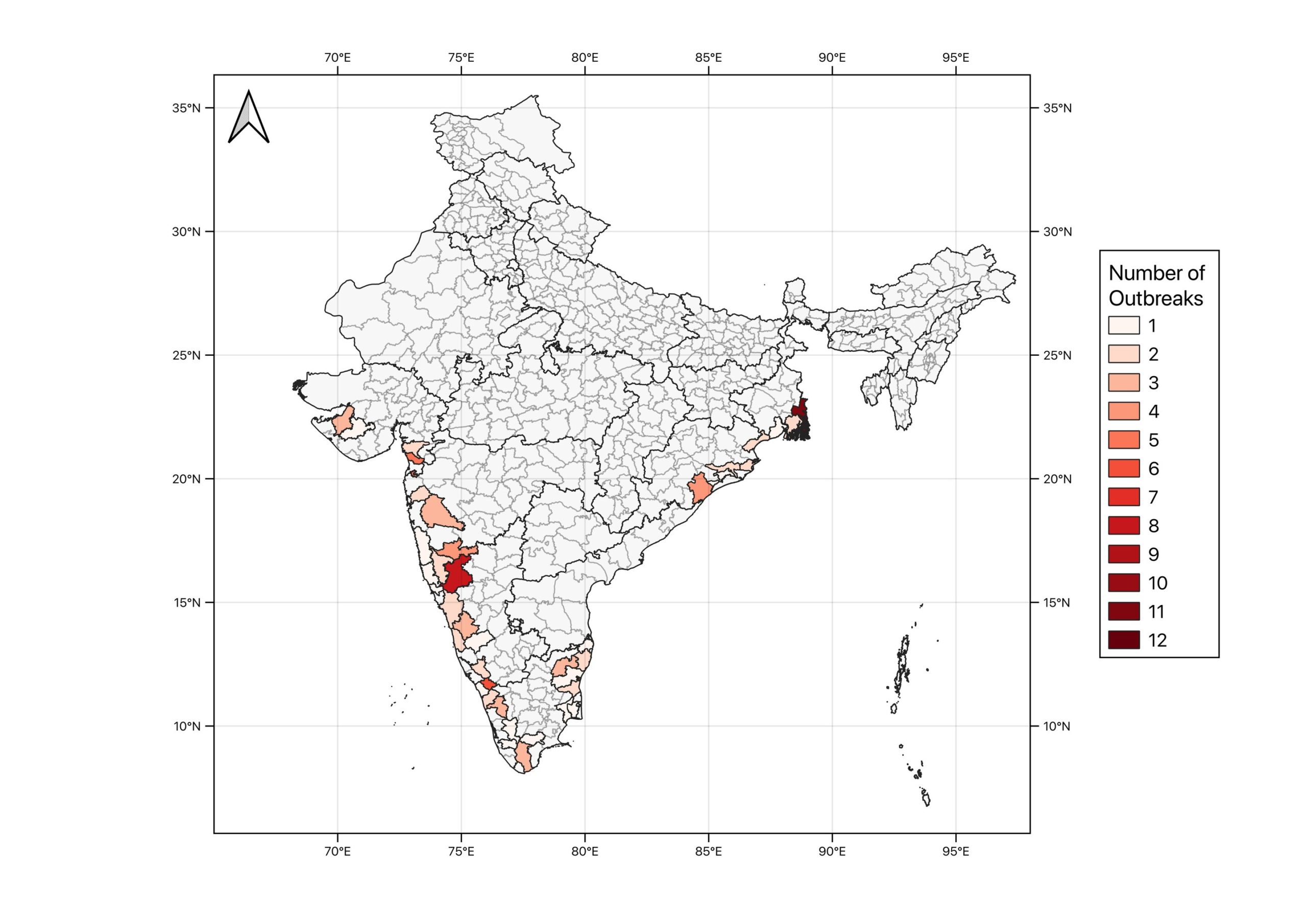 Number of cholera outbreaks reported inweekly epidemiological reports published by India's Integrated Disease Surveillance Program (IDSP) between January 2010 and December 2018 in 40 Indian coastal regions selected in the study. Only the cholera reporting areas for which all seven Essential Climate Variables (ECV) datasets were available are shown. Credit: Campbell et al., 2020.
The relationship between environmental factorsThe incidence of cholera is complex and varies with the season, with various lagging effects, such as the rainy season. Machine learning algorithms can help overcome these challenges by learning to recognize patterns in large datasets to make testable predictions.
The study was led by AmyCampbell during her year-long internship at the European Space Agency's Climate Bureau ESA. Amy, along with her co-authors at Plymouth Marine Laboratory (PML), used a machine learning algorithm popular in environmental science applications that can recognize patterns in long data sets and make testable predictions.
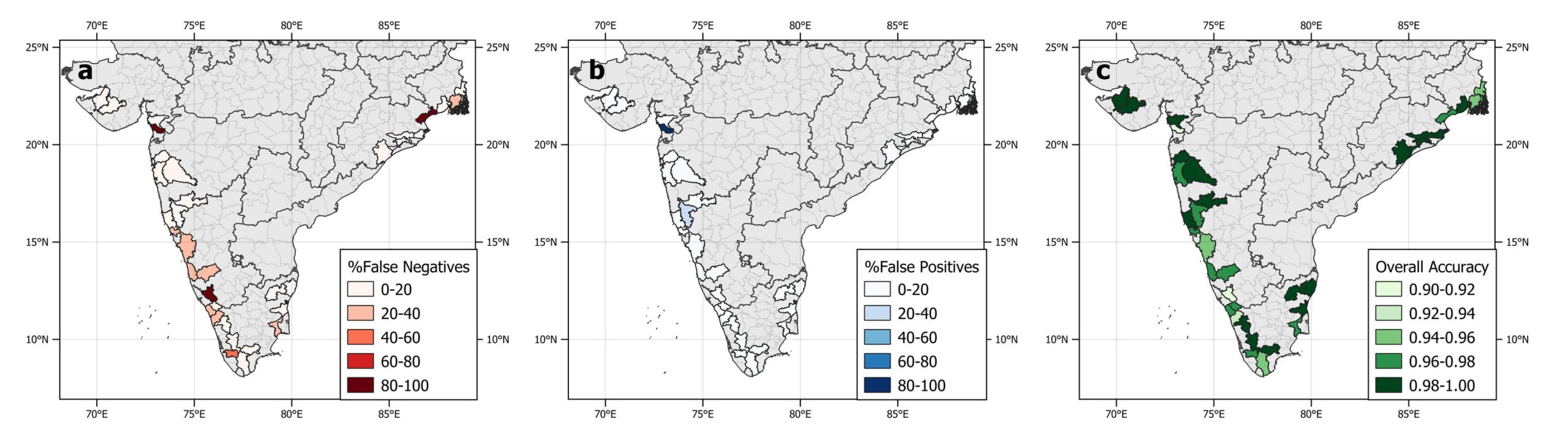 Model performance metrics resultsrandom forest as applied to invisible test data for selected areas in coastal India that reported cholera outbreaks. Coastal areas where no cholera outbreaks were reported during the study period and coastal areas are shown in gray. Credit: Campbell et al., 2020.
Algorithm trained on disease outbreaks, ohreported in coastal regions of India between 2010 and 2018, and examined the relationship with six climate records from satellites generated by ESA's Climate Change Initiative (CCI).
Including or removing environmental variables andsubparameters for different seasons, the algorithm identified key variables for predicting cholera outbreaks such as land surface temperature, sea surface salinity, chlorophyll concentration, and sea level anomaly.
Read also
Check out the most beautiful pictures of Hubble. What has the telescope seen in 30 years?
In Russia, they created a durable material from garbage to cover roads
Extraterrestrial life is found in meteorites. What is known about her and where is she from?