A group of scientists from the Ludwig Maximilian University in Munich suggests that black holes can reach
At the center of most, if not all galaxies,There are supermassive black holes with a mass millions or billions of times greater than the mass of the Sun. For example, at the center of our galaxy is Sagittarius A*, whose mass is about 4.5 million solar.
Currently the largest known blackthe hole feeding the TON 618 quasar has a mass of 66 billion solar masses. The sheer mass of TON 618 has led scientists to wonder if large black holes still exist and if there is an upper limit to their size.
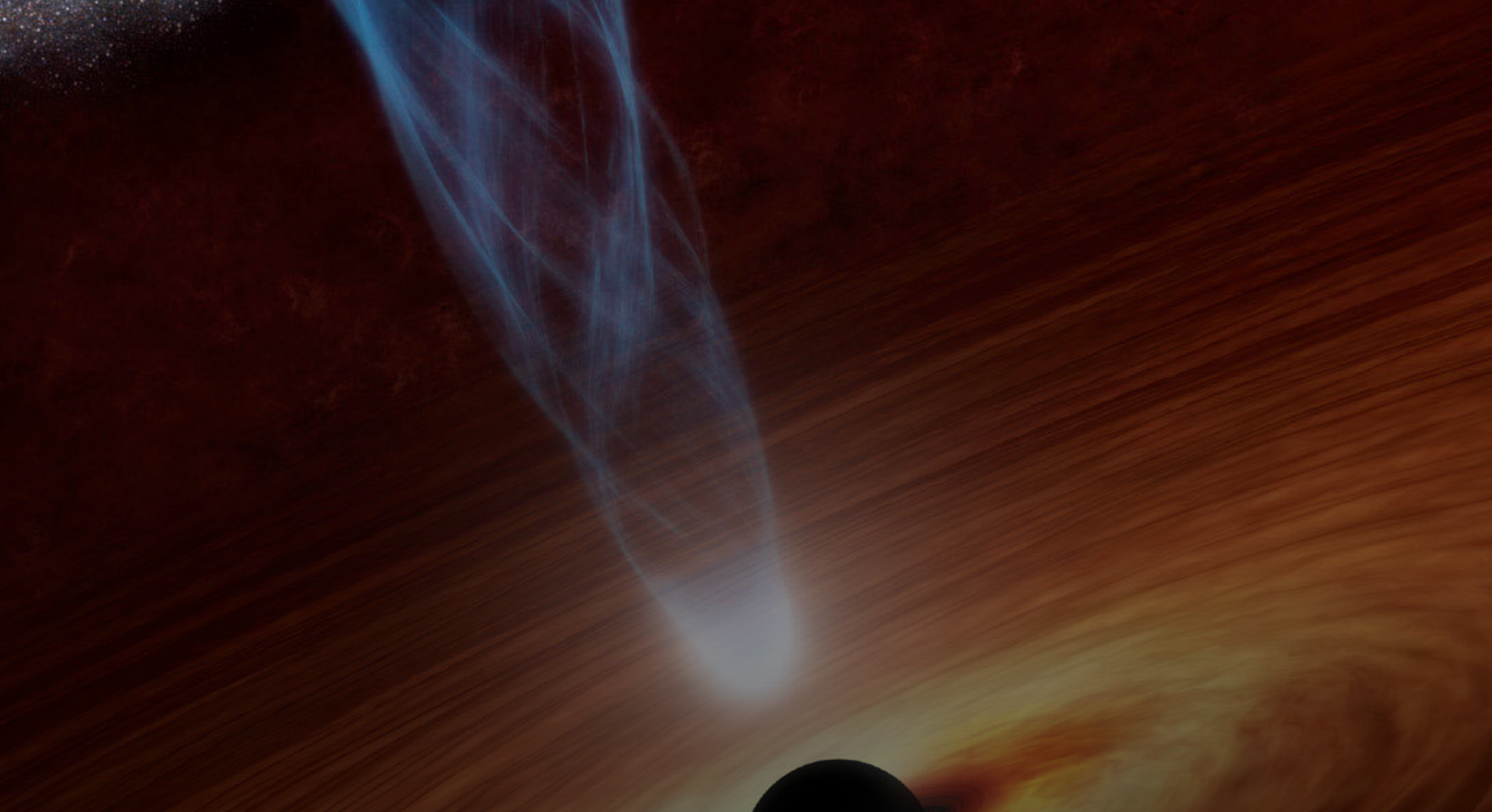
New method developed for detecting colliding supermassive black holes
Scientists have calculated that black holes could be in100 billion times more massive than the Sun, but this is not the limit. They called these hypothetical objects "colossally massive" or "colossally large" black holes. The researchers also noted that there is currently no evidence that such black holes actually exist.
Researchers suggest that such black holesin the hearts of galaxies are formed in the form of small black holes merging and absorbing the matter around them. However, previous studies have shown that this model ran into difficulties in explaining how black holes could reach supermassive sizes when the universe was only a few billion years old.
“It's surprising that little attention has been paid to the possible existence of stepped black holes so far,” said study co-author Florian Kuehnel.
Read also
The Doomsday glacier turned out to be more dangerous than scientists thought. We tell the main thing
Two pieces of evidence of extraterrestrial life emerged at once. One on Venus, the other - no one knows where
Hybrid vehicles are more environmentally hazardous than diesel vehicles. We tell the main thing