Scientists have explained that massive planets begin their lives as specks of dust that are too small for
Planets are born from protoplanetary disks -rotating disks of gas and dust around new stars. Ring-shaped structures have been observed in these discs, and it is believed that over time the rings coalesce into larger structures, eventually leading to the formation of planets. But much about this process remains unknown.
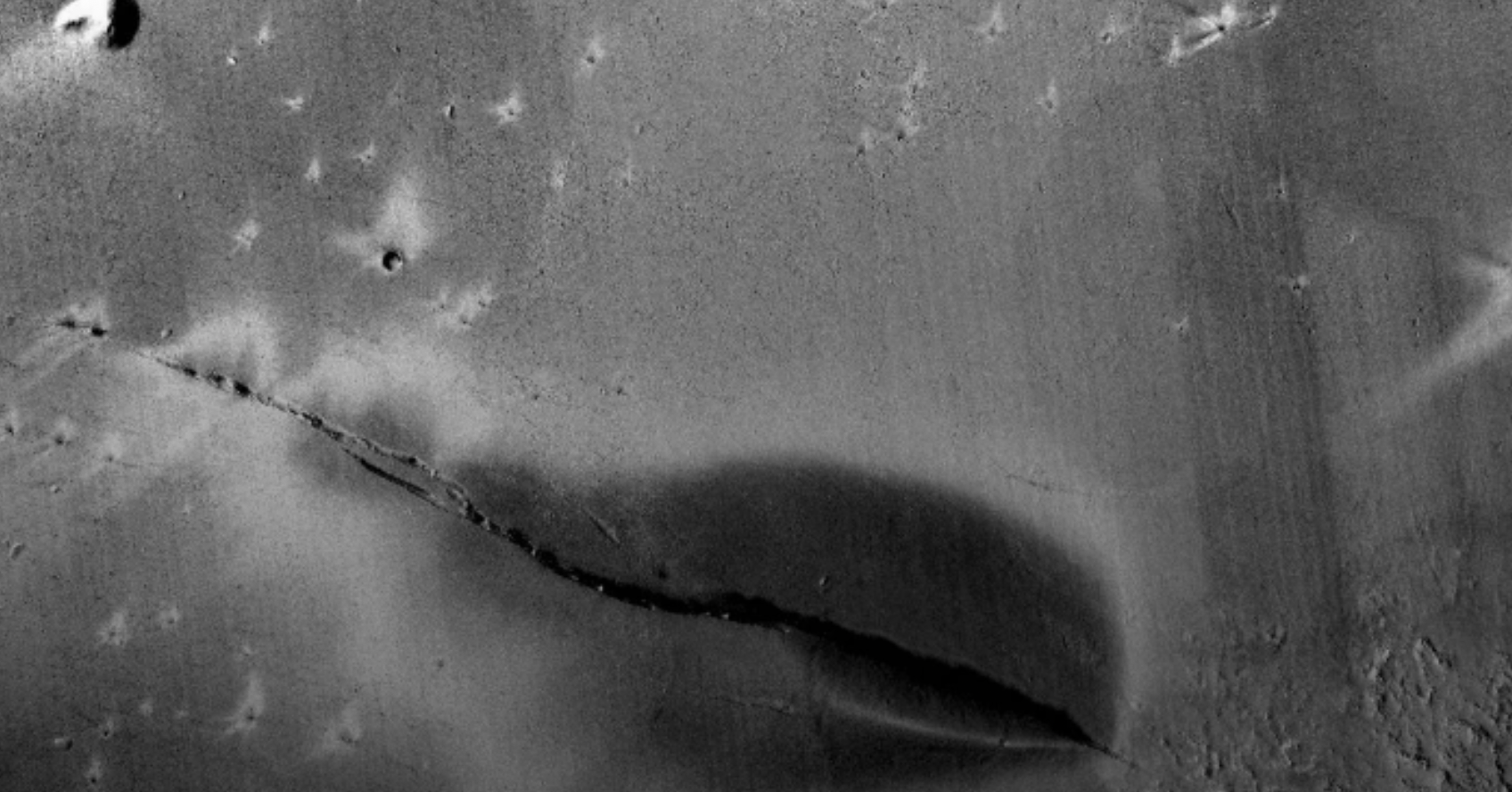
A recent volcanic eruption on Mars suggests there may be life beneath its surface.
Now Ohashi and his colleagues have explored the possiblethe scenario of the formation of these rings by computer simulation. Their results showed that dust can collect into larger particles during the protostar stage, while the star itself is still forming, and much earlier than modern theories of the formation of cosmic objects predict. “We found that the ring structures formed even in the early stages of disc formation,” notes Ohashi. "This suggests that the dust grains may get larger earlier than we previously thought."
This is an unexpected conclusion, since on the protostellarAt this stage, the dust disk is still in a flow state - it is hardly a promising place for dust agglomeration. However, the team found similarities between the simulations and observations of 23 ring structures in disks with the ALMA device in Chile and other telescopes.
In the future, the team hopes to capture images of ring structures around protoplanetary disks at multiple wavelengths. This will allow them to compare simulations with observations in more detail.
Read on:
- Look at the photo of a Chinese rocket falling to Earth
- Scientists have conducted the largest genetic study of super-longevity
- The intensity of the new powerful laser is comparable to the light of the Sun falling on the Earth