What is a quantum computer
The main difference between quantum computers and traditional, transistor,
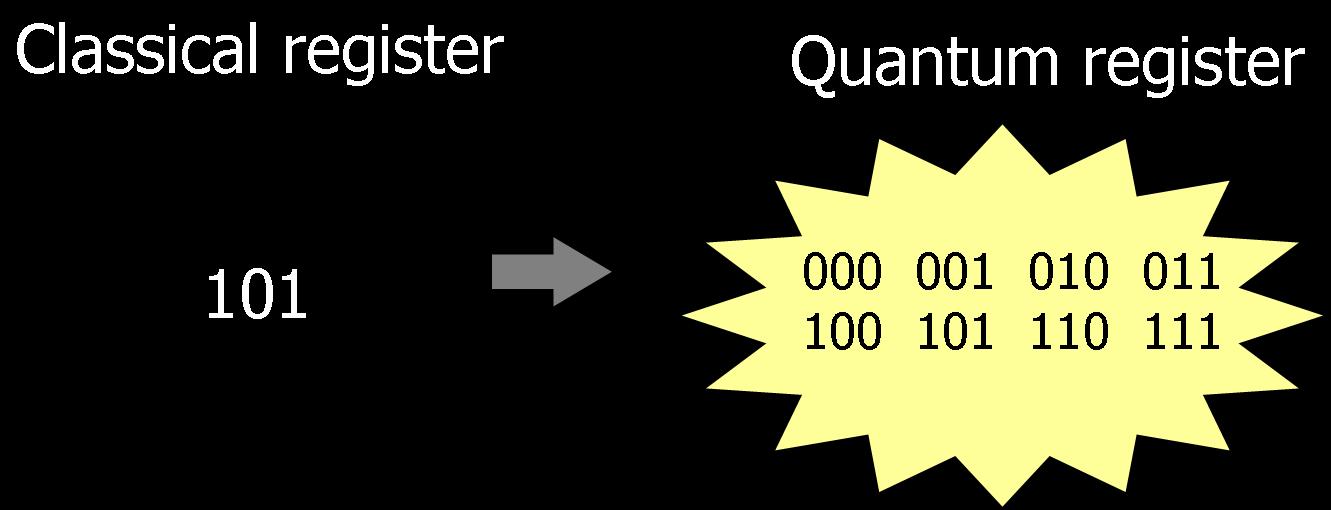
In a classical computer, one bit can storeonly a number: zero or one. Quantum physics, however, allows a superposition of states. A quantum bit can be in zero and one states at the same time - and this opens up incredible opportunities for ultra-fast computing.
For this he needs thousands of super-powerfulprocessors. As a result, the calculations, which will take a powerful gaming computer a week, the supercomputer performs in a day. However, it is important that the programs work correctly, taking into account the technical features of the machine. Otherwise, what works correctly on 100 processors will slow down a lot by 200.
Quantum computers store and process datausing quantum bits - qubits. The latter can not only be turned on and off, but also be in a transient state, or even be turned on and off at the same time. Continuing the analogy with light bulbs: a qubit is like a light that you turned off, but it still continues to blink. Or Schrödinger's cat, which is both alive and dead.
Since the lights in a quantum computer are on and off at the same time, this saves a lot of time. Therefore, it solves complex problems much faster than even a very powerful classical device.
In 2001, Isaac Chuang, headIBM lab research group, an MIT adjunct professor and a pioneer in the field of quantum computing, has constructed a quantum computer based on a single molecule. The results, which were published in Nature, represented the first experimental implementation of Shor's algorithm - a quantum factorization algorithm (factoring a number into prime factors) that allows one to factor a number in time.
When you have too many atoms it islooks like a big forest. It was very difficult to control one atom with the previous one. The challenge is to implement [the algorithm] in a system that is sufficiently isolated: at the same time, it must remain quantum mechanical long enough for you to actually be able to implement the entire algorithm.
First Name Last Name
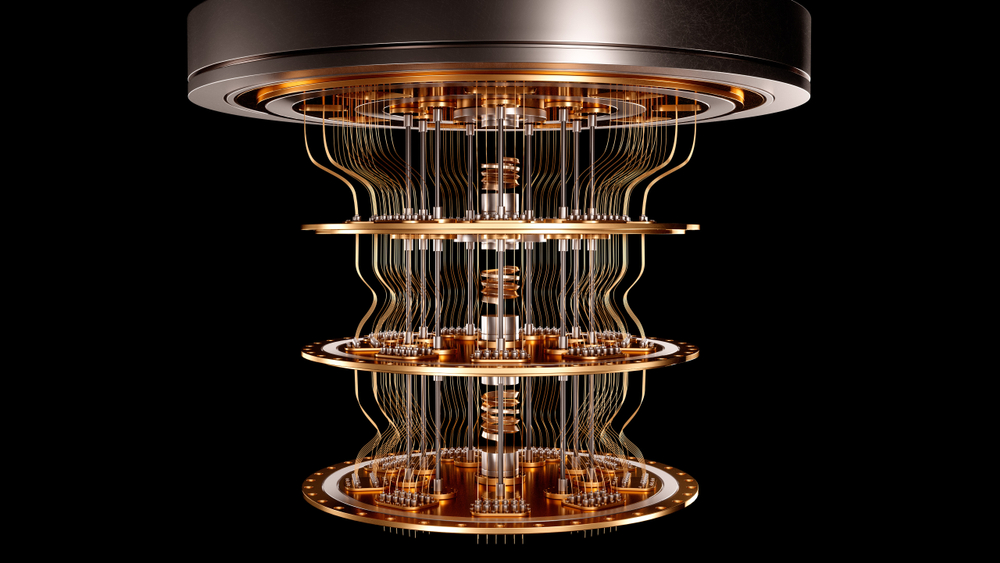
Quantum computers don't look like ordinary computers. These are large metal cylinders with twisted wires that are lowered into refrigeration units.
They can be used for different tasks,including calculations in chemistry and physics or to create new materials. Another area of application of a quantum computer is cryptography and security issues. These issues are felt most acutely by financial organizations and banks, which is not surprising: recently there have been scandals about leaks and hacks.
The capabilities of a quantum computer will allowget access to any information, so it's time to think about protecting it with the help of relevant technologies, or using a quantum computer to create improved encryption.
What does "quantum superiority" mean?
Quantum excellence is the ability to solve a problem that is beyond the capabilities of the most modern supercomputers.
In recent years, significant progress has beenachieved in the development of a superconducting platform. The essence of quantum superiority lies in the fact that a quantum computer quickly solves a problem for which a classical supercomputer takes enormous time.
The first breakthrough happened at the end of October 2019,when Google announced that they had developed the quantum computer Google Sycamore: according to their data, the system coped with a task in 200 seconds that would require about 10 thousand years of work of classical supercomputers. This is what they called the term "quantum superiority".
However, the work of the company was met with a shareskepticism, and competitors from IBM calculated that in fact the problem used can be solved in a couple of days - enough for an advantage, but not for a full-fledged superiority.
The next milestone in the development of quantum computersfell on the beginning of December 2020. On December 4, it became known that Chinese scientists have created a prototype of a quantum computer "Jiuzhang", which coped with the standard verification algorithm 10 billion times faster than Sycamore, a 53-qubit prototype of a quantum computer from Google. The company said its development has also reached quantum excellence.
Scientists have tested computational ability"Jiuzhang" using the special GBS algorithm. The system coped with it 100 trillion times faster than the most powerful supercomputer in existence. In addition, the developers said that the computing power of their device is 10 billion times greater than Sycamore.
In 2001, Chuang, a pioneer in quantumcomputation, constructed a quantum computer based on a single molecule that could be held in superposition and manipulated by nuclear magnetic resonance to multiply 15. The results, which were published in Nature, represented the first experimental implementation of Shor's algorithm. But the system was not scalable; as more atoms were added, it became more difficult to control the system.
How will the new quantum computers be used?
One of the most important applications of quantumcomputer now - decomposition into prime numbers. The fact is that all modern cryptography is based on the fact that no one can quickly decompose a number of 30-40 digits (or more) into prime factors. On a typical computer, it will take billions of years. A quantum computer can do this in about 18 seconds.
If we assume the fact that the presence of a quantumcomputer after a while will become a social norm, in which case there will be no secrets in the entire cyberspace, since any encryption algorithms can be immediately hacked and gain access to anything. This applies to everything - from bank transfers to messages in the messenger.
Quantum computers are also great formodeling complex situations, for example, calculating the physical properties of new elements at the molecular level. This, perhaps, will allow faster finding new drugs or solving complex resource-intensive tasks.
What else can he do?
- Databases and search by them.
Working with Big Data will become incredibly fast.Shazam, routing, neural networks, artificial intelligence - all of this will receive an incredible boost. It will also be possible to build models of the interaction of complex protein compounds. This will be a very important step for medicine, opening up opportunities for creating future drugs, understanding how different viruses affect us, and so on.
- Applications to cryptography.
Due to the tremendous speed of decomposition into simplemultipliers a quantum computer will allow decryption of messages encrypted by the widely used RSA cryptographic algorithm. Until now, this algorithm is considered relatively reliable, since an efficient way of factoring numbers into prime factors for a classical computer is currently unknown. Thanks to Shor's quantum algorithm, this task becomes quite feasible if a quantum computer is built.
- Research in artificial intelligence.
Quantum computers are, in theory, a good fitfor machine learning needs. They manipulate large amounts of data in a single pass and are capable of simulating an exponential-sized neural network. In 2013, Google announced the opening of a quantum research laboratory in artificial intelligence. Volkswagen is conducting research into the use of quantum computers to develop self-driving cars and new types of storage batteries (using quantum computers from Google and D-Wave). In November 2018, the concern announced the development of a traffic management system (with the integration of unmanned vehicles into it), working using D-Wave quantum computers.
- Molecular modeling.
It is assumed that using quantumcomputers will be able to accurately simulate molecular interactions and chemical reactions. Chemical reactions are quantum in nature. For classical computers, only relatively simple molecules can be calculated. According to experts' forecasts, simulation on quantum computers opens up new prospects for the development of the chemical industry, in particular, when creating drugs
And what about Russia?
Russia is actively involved in the quantum race, aboutThis was written by Nature about a year ago. A "roadmap for the development of quantum computing" has also been adopted. In terms of current status, Russia has created key elements for all major quantum computing platforms.
The next step is to scale them anddemonstration of problem solving with the help of them. It should be noted that the program is focused not only on hardware and processors, but also on software. The next breakthrough in quantum computing definitely requires original ideas - a traditionally strong point of Russian scientists.
At the end of November 2020 it became known aboutcreation of the National Quantum Laboratory (NKL) consortium. The consortium, which included Rosatom structures, the Skolkovo Foundation and universities, will export quantum technologies and develop infrastructure. But the main task is to create a quantum computer.
As part of the "roadmap" "Quantum computing"it is planned to build a nanofabrication center with an area of 2 thousand square meters on the territory of Skolkovo. m, as well as an advanced laboratory complex with an area of more than 3.5 thousand square meters. m.
Among the main indicators specified in the "roadmap ”, which are planned to be achieved, including through the creation of the NKL, - by the end of 2024, the consortium members must create computing systems on various quantum platforms with a capacity of 30 to 100 qubits, register 40 international patents per year.
Read also:
The Doomsday glacier turned out to be more dangerous than scientists thought. We tell the main thing
See the largest iceberg ever taken from the air
China first tested "artificial sun"