Scientists from Cornell University have developed a method that allows them to determine with an accuracy of 100 m where
Olivines or magnesian-ferruginous silicatesformed inside magma chambers. As these volcanic crystals grow, they sometimes accidentally capture small bubbles of carbon dioxide. As a result of the eruption, materials are brought to the surface, researchers can find and study crystals with the inclusion of liquids rich in carbon dioxide.
The gas concentration inside the crystal depends onpressure inside the focus during its formation, scientists explain. By analyzing the material using Raman spectroscopy, it is possible to determine how far the magma lay and what is the depth of the incandescent reservoir.
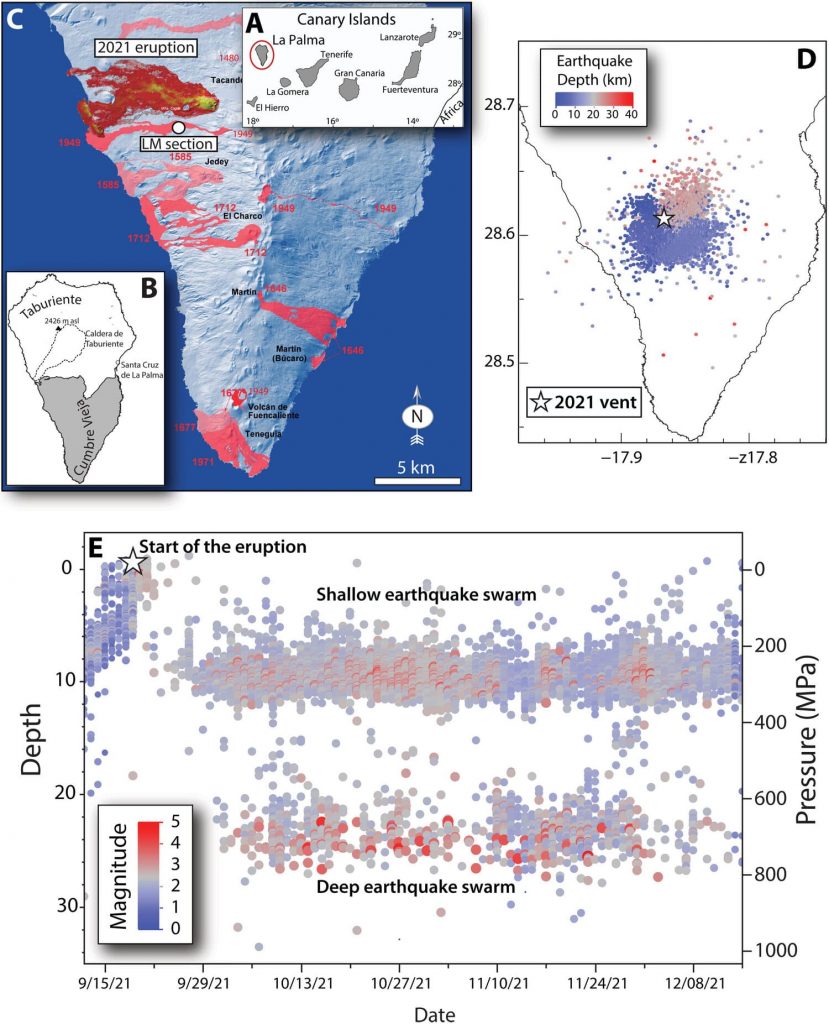 Analysis of the depth of the volcanic source using the example of the 2021 eruption of the Cumbre Vieja volcano on the island of La Palma in the Canary archipelago. Image: Kyle Dayton et al., Science Advanses
The researchers note that if traditionalmeasurement methods give errors of several kilometers, then the method proposed by them determines the location of the source with an accuracy of up to 100 m. At the same time, only a few days are needed for analysis.
The awakening of a volcano is usually accompanied byseveral small eruptions, the authors of the work note. The materials thrown out by the first of them can be used to predict further developments, assess risks and threats to local residents.
Read more:
Two photos of the Earth with a difference of 50 years were compared at NASA: what scientists found
Mysterious green rays were noticed in the sky over the USA: where did they come from
Scientists transplanted human “brain” into rats and told what happened in the end