SpaceX founder and Tesla CEO Elon Musk spoke in more detail about the brain chips that
What are these chips?
We are talking about the startup Neuralink, which is working ontechnology for connecting the human brain to a computer system. Previously, almost nothing was known about the company’s work; it was called Musk’s “secret” project. The main goal of the company is to develop technology that will allow the implantation of electronic interfaces in paralyzed people so that they can use computer equipment and smartphones to communicate.
On July 17, 2019, the first presentation of Neuralink took place. It was the first time they showed what exactly the company does and what stage its research is at.
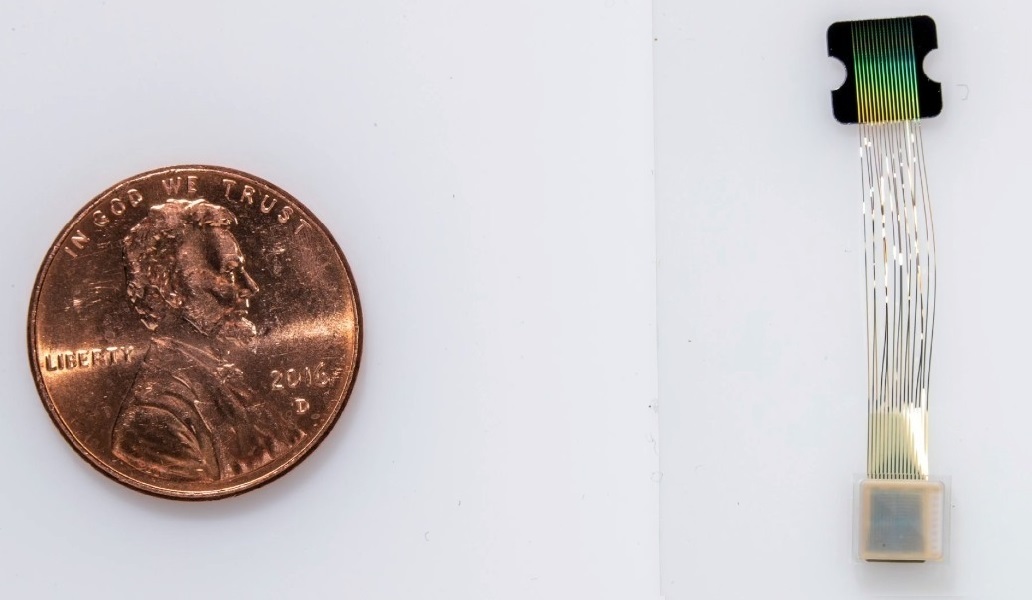
Neuralink scientists plan to usespecial “threads”, each 4–6 microns thick, capable of transmitting information to the main processor. These “threads” will be implanted into the human brain. In theory, you can use them in any way you like. Here we can really talk about improving human abilities.
The "bundle" of six neuron threads contains 192electrodes, which are implanted into the brain with the help of a robotic surgeon. During the operation, the surgeon tries to avoid interaction with blood vessels, which minimizes inflammation.
Signals that are transmitted by "threads" thensent to the PC using the "adapter" attached to the skull. This device is attached to the ear. The exact size of the "adapter" is still unknown, but judging by the sketch shown by the company, it is smaller than the auricle and flattened from the sides. Ultimately, according to Musk, it is planned to be able to create a "symbiont" - a human brain, enhanced by artificial intelligence.
Elon Musk's Neuralink looks to begin outfitting human brains with faster input and output starting next year https://t.co/V3IYkjatTc by @etherington pic.twitter.com/F1IiAR1TR7
— TechCrunch (@TechCrunch) July 17, 2019
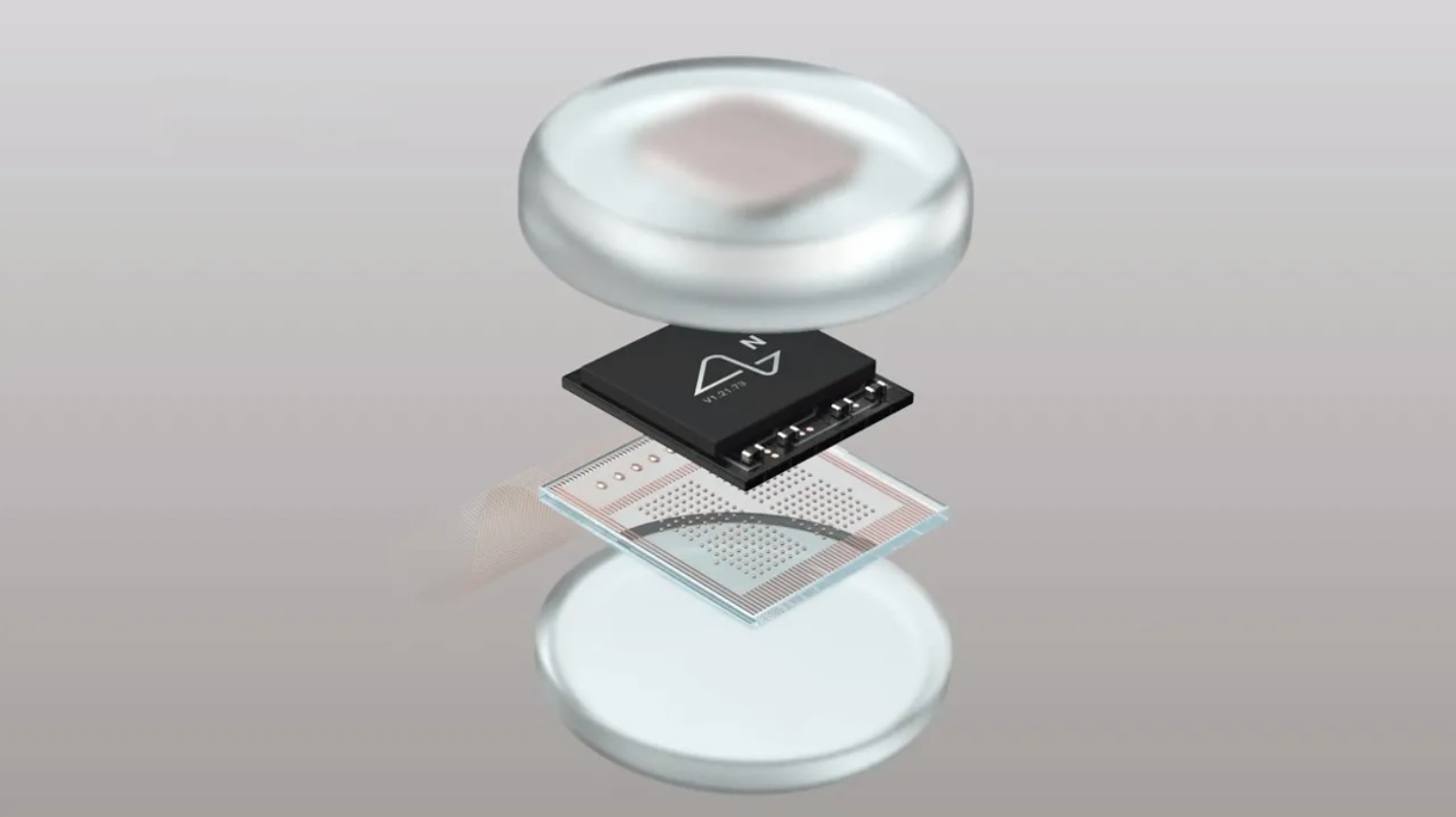 Image: Neuralink
Who is the chip being developed for?
The main goal of Neuralink is to create a secureneurointerface capable of capturing brain activity and processing signals without the risk of rejection by the body. It will help in the study and treatment of neurological diseases and disorders of the brain, restoration of motor functions, treatment of blindness, paralysis, epilepsy, depression, Parkinson's and Alzheimer's diseases.
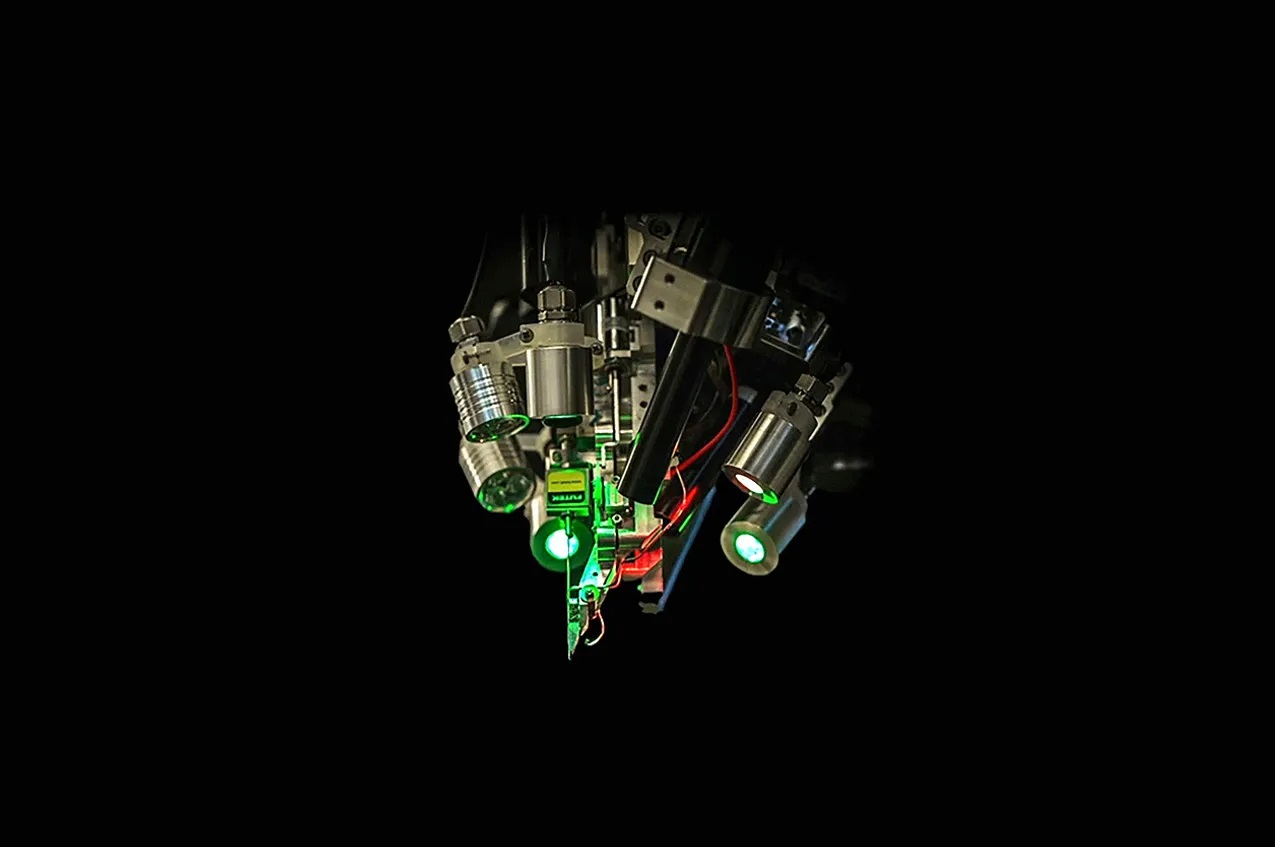 Needle feed. Image: Neuralink
With Neuralink, paralyzed people cancontrol phones and computers with the power of thought, for example, write messages, browse websites, or communicate "telepathically" as soon as "the technology works both ways."
In the future, the company plans to create a miniature wireless implant, and its implantation, according to company representatives, will not be more difficult and painful than Lasik, laser vision correction surgery.
In 2020, Neuralink plans to receiveapproval from the US Department of Health and, together with neuroscientists at Stanford University, conduct the first trials on paralyzed patients.
Musk said the technology "can also extend the range of hearing beyond normal frequencies and amplitudes."
In addition to this feature, the entrepreneur said that owners of the new chip will be able to broadcast music directly into their brain. The development can also be used to regulate hormone levels.
The first iterations of the Neuralink device may beused to help people suffering from neurological and brain disorders such as Parkinson's, though Musk ultimately hopes the technology will allow humans to compete with artificial intelligence.
The first human clinical trials were scheduled to begin in 2020.
More information about Neuralink will be presented at the event on August 28.
How much does development cost?
The company received funding from investors. We are talking about $ 150 million, of which $ 100 million was provided by Elon Musk himself. The company currently employs 90 people.
What's the bottom line?
Despite investor and government interestThe United States to the field of neurobiological startups, not everyone risks investing in implantation, writes The Wall Street Journal. Joshua Wolf, co-founder and managing partner of Lux Capital, said that he “can't even think about technologies that involve drilling holes behind the ears.”
Neuralink President Max Hodak admits: the road to the development of technology will be very long. To get started, a company not only needs a test permit, but also huge support from engineers and scientists. “We have no illusion that we will be able to conduct all scientific research on our own,” he said.
Read also
Spain and Great Britain record record high temperatures
Germany bans disposable plastic straws, appliances and utensils
Astronomers have found the best place on Earth for a telescope