Mission "Hayabusa-2". Start
Hayabusa-2 is a JAXA (Japan Aerospace Exploration Agency) mission
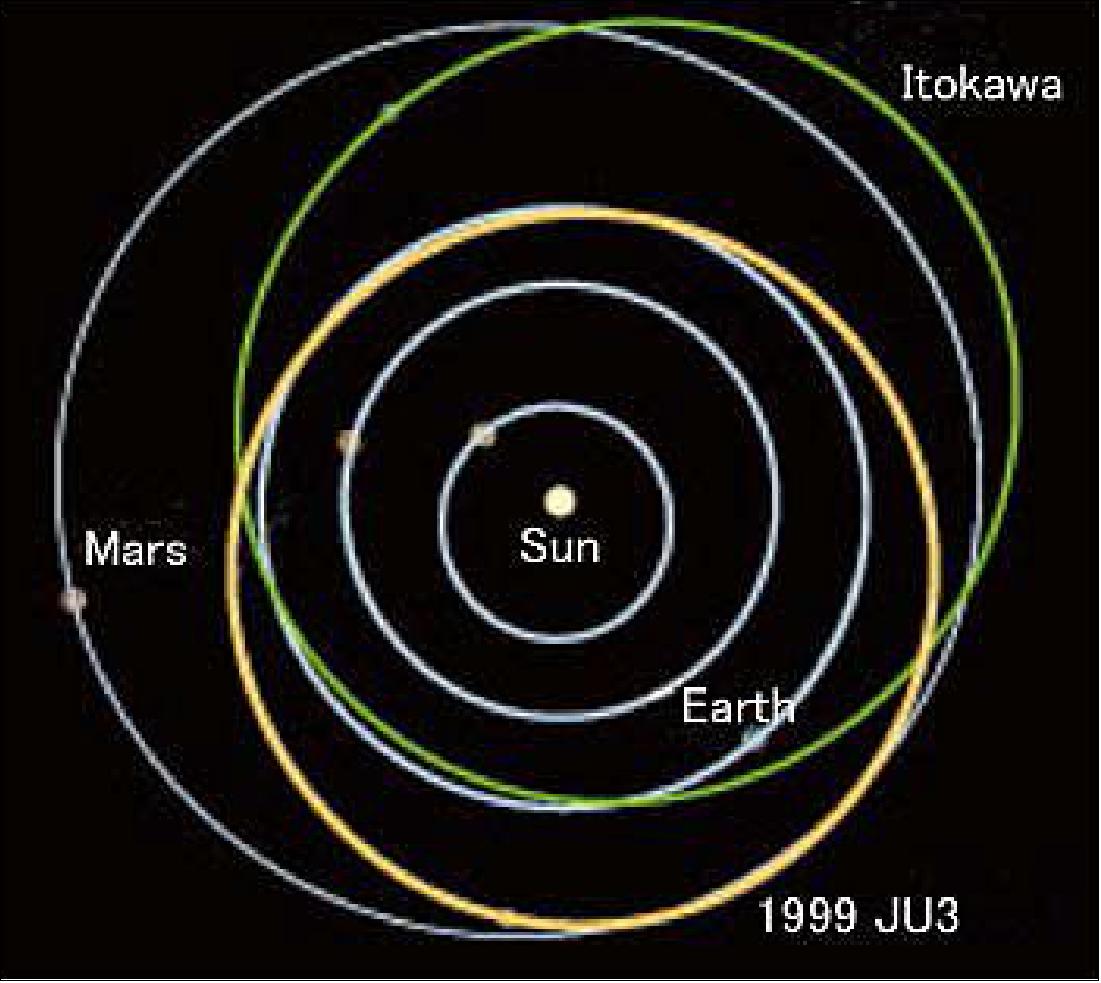 Illustration of the orbit of asteroid 1999JU3 in the solar system. (Image courtesy of JAXA)
The purpose of the Hayabusa 2 sample return mission is to visit and investigate the C-type asteroid 1999 JU3.
Which asteroid is Hayabusa-2 exploring and why?
C-class asteroids are dark carbonaceous objects and are the most common class of asteroids. SpectrumTheir chemical composition is in turn close to that of the nebula from which the Sun formed, which served as the material for the protoplanetary disk.However, C-type asteroids lack hydrogen, helium, and other volatile elements.Such asteroids may contain minerals.
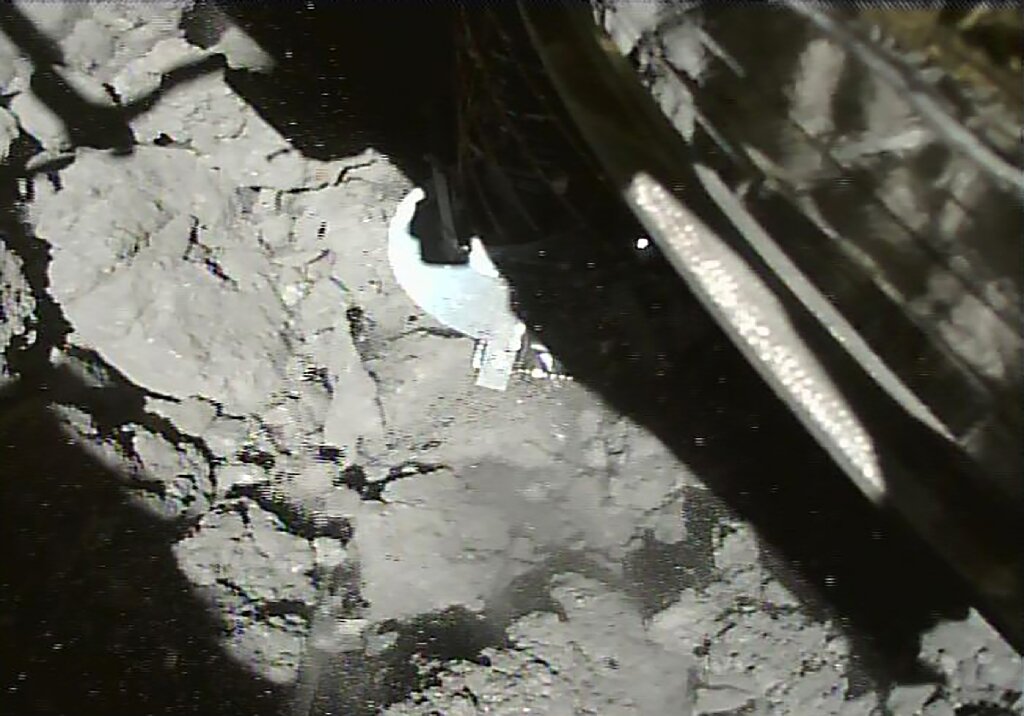
Asteroid 1999 JU3 —better known asRyugu is a space object about 920 m long. It is of particular interest to researchers. The fact is that Ryugu consists of material 4.5 billion years old. Measurements taken from Earth suggest that the asteroid's rock may have been in contact with water throughout its existence. Scientists hope that this carbonaceous asteroid will contain organic and hydrated minerals. This feature distinguishes Ryuga from Itokawa, which was an S-type rocky asteroid (rocky composition).
Where is the mission now?
The Japanese Hayabusa-2 probe has already left orbitaround a distant asteroid and is heading towards Earth with samples that could shed light on the origins of the solar system. The probe will drop the long-awaited samples sometime in late 2020, JAXA said. According to preliminary estimates, on December 6, Hayabusa-2 will deliver a capsule with a unique cargo to Earth, which will land in southern Australia.
We hope that Hayabusa 2 will provide us with newscientific knowledge. The probe will bring carbon and organic matter back to Earth—these samples will provide data on how matter is dispersed throughout the solar system, why it exists on the asteroid, and how it is connected to Earth.
Project Manager Yuichi Tsuda
How did the mission go?
The JAXA mission sent a probe measuringwith a refrigerator at 300 million km from Earth. There, the ship explored the asteroid "Ryugu", whose name is translated from Japanese as "Dragon Palace". This is a reference to the Ryugu-jo Castle - in Japanese mythology, the underwater palace-residence of the mythical dragon Ryujin, the ruler of the underwater world and the sea element, who is considered the patron saint of Japan. This is also a reference to the fable “The Bell from the Dragon Palace”, where the abbot of the Ryugu-jo Temple is revealed secrets about the nature of the Earth.
In April, Hayabusa2 fired an impactor at the asteroid to “excite” materials that had not previously been exposed to the atmosphere.
Let us remember that an impactor is a device forforced fractional sedimentation of aerosol particles. The ultimate goal is to determine their number and size, or to separate particles in a volumetric gas flow.
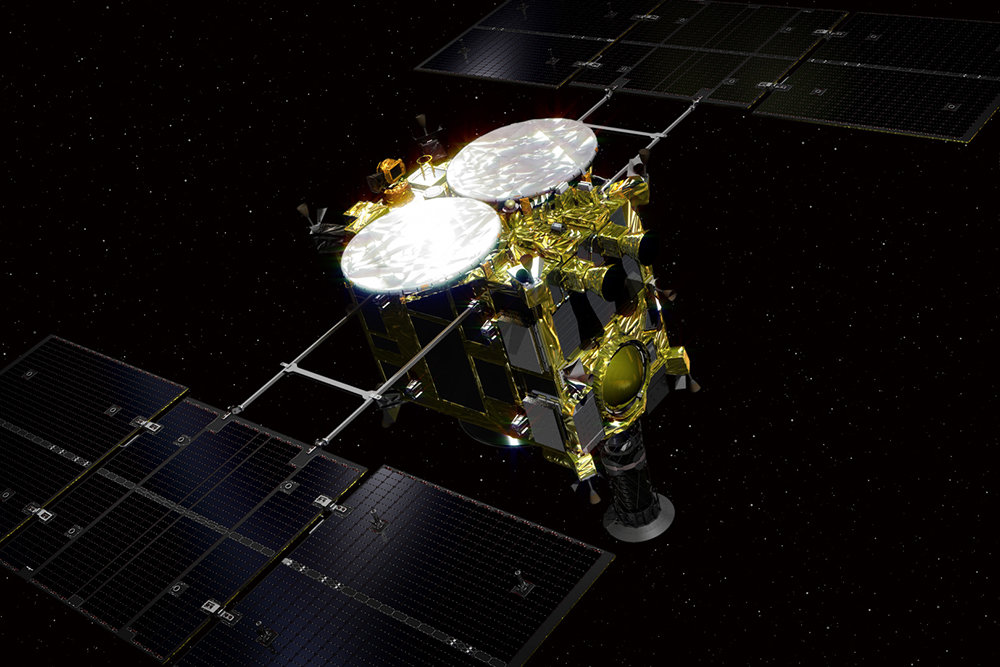
Then the ship is "perfect", according to the headmission, landed on the surface of the asteroid to collect samples. They, scientists hope, will help to understand what the solar system was like when it was created about 4.6 billion years ago.
“I'm sad because the mission is coming soonwill end, but I'm going to do everything possible to get the probe home,” Tsuda said. “For the last year and a half, Ryugu has been the center of our daily life.”
What's next?
On November 18, Hayabusa-2 was ordered to go home, to escape from the asteroid's gravitational field. Today he has started the main engines and is heading for Earth.
Tsuda said that the six-year mission, the costwhich amounted to about 30 billion yen ($278 million), exceeded all expectations. However, the mission director admitted that his team had to overcome many technical problems. It took the probe three and a half years to reach the asteroid, but the return journey will be much shorter because the Earth and Ryugu are much closer to each other due to their current position.
Hayabusa 2 is expected to deliver samples to the South Australian desert. JAXA is currently in talks with the Australian government on how to organize this, Tsuda said.
As a reminder, an earlier probe returned with samplesdust from a smaller potato-shaped asteroid in 2010, despite various setbacks during its epic seven-year odyssey, and has been hailed as a scientific triumph. After the completion of the mission, the first-generation probe was in the Earth's orbit for some time, and then re-entered the Earth's atmosphere and burned up.
According to the current plan, Hayabusa-2 boldlywill continue his journey into space after dropping his capsule to Earth. Perhaps the ship will "conduct another exploration of asteroids," JAXA spokesman Keiichi Murakami previously told AFP.
"The team has just begun to study what tasks can be assigned to the ship after the capsule is dropped," but there are no concrete plans for a new destination yet, Tsuda concludes.
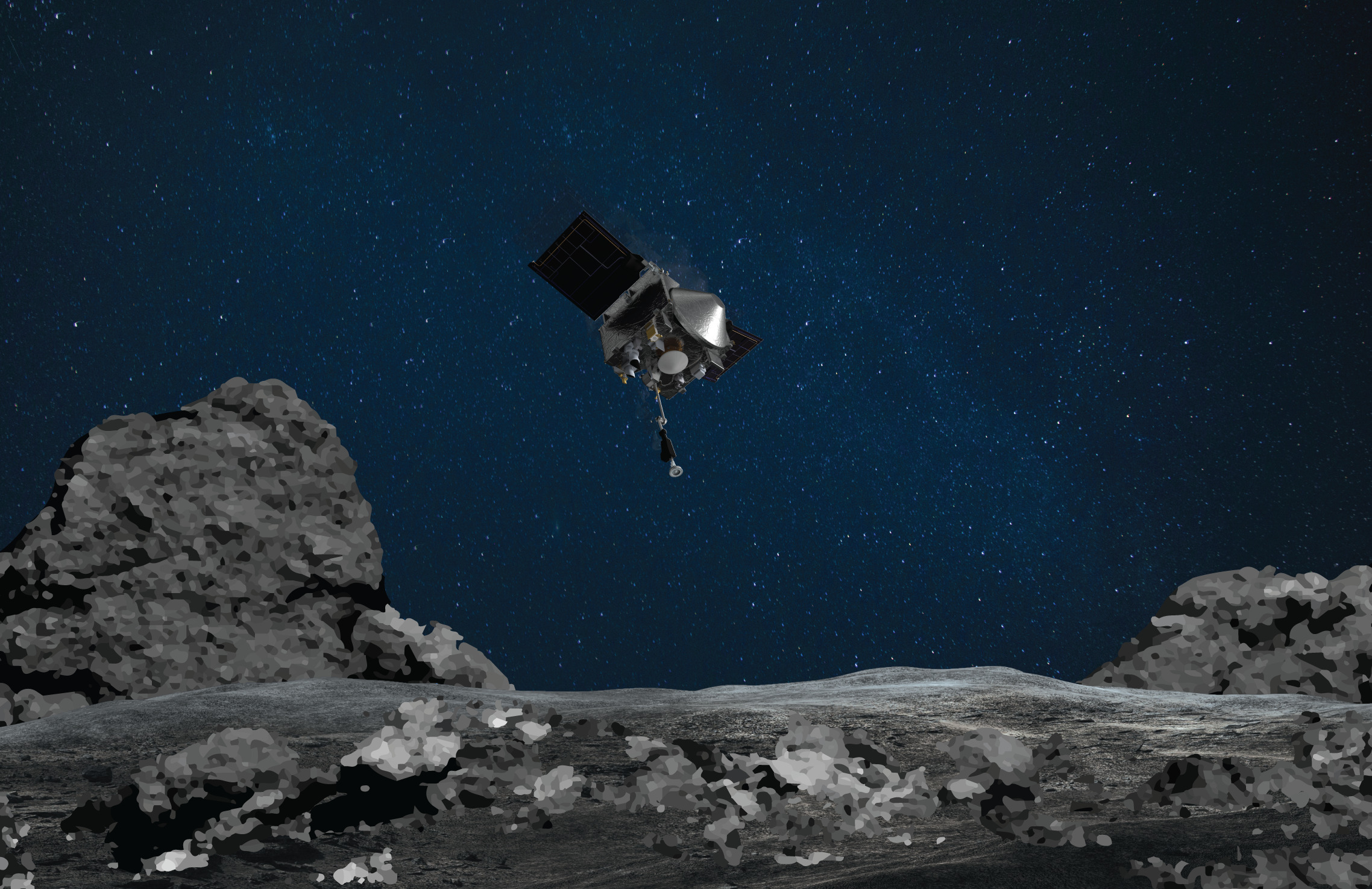
Another mission to collect materials from an asteroid- the American spacecraft Osiris-REx - scattered part of the soil collected from the asteroid Bennu 333 million km from Earth. Osiris-Rex launched from Earth in September 2016.
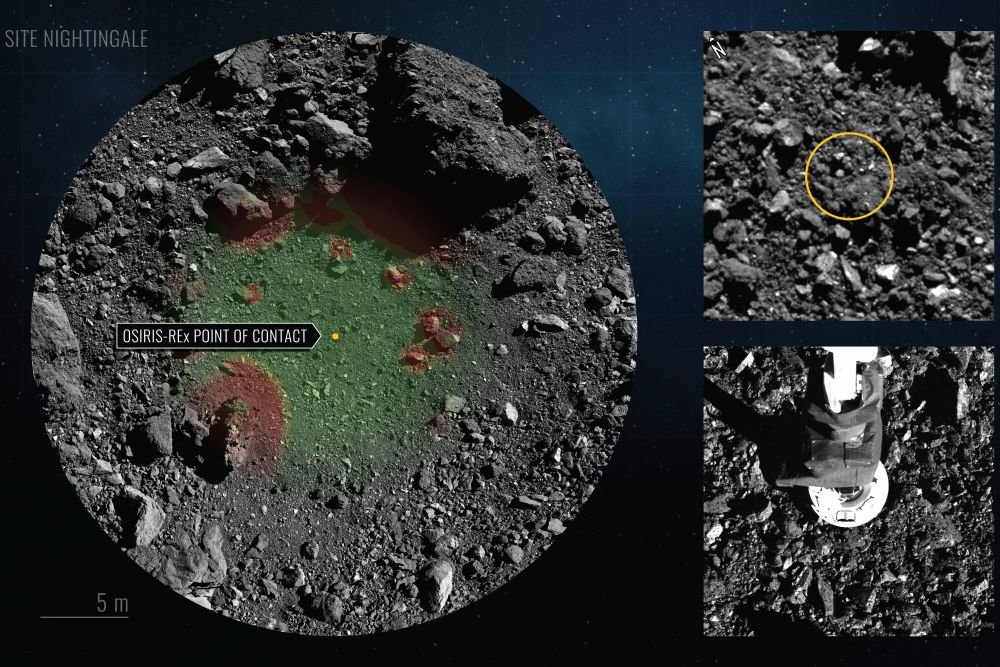 NASA has released a photo showing the surface of asteroid Bennu and the process of sampling. Photo: NASA / AFP
The machine has reached its working position ata distance of 20 kilometers from asteroid Bennu in December 2018 and has been in its orbit ever since, preparing for a rendezvous. Despite the partial loss of soil, NASA called the soil sampling mission a success. However, the ground with Bennu will have to wait for a long time. The return of images to Earth is planned in 2023.
What secrets will Hayabusa-2 reveal?
When our solar system formed around5 billion years ago, most of the material from which it was created eventually became the Sun, and fractions of a percent - planets and solids, including asteroids. The planets have changed a lot since the early days of the solar system due to geological processes, chemical changes, space bombing and more. But the asteroids remained practically intact. They are too small for global space processes. That is why they are useful for researchers studying the early solar system and the origin of life on Earth.
“Knowledge of the evolutionary processes of asteroidsand planets are essential to understanding the origins of the Earth and life itself said Tomokatsu Morota, an assistant professor in the Department of Earth and Planetary Science at the University of Tokyo. “The Ryugu asteroid is located relatively close to the Earth, and it is much easier for Hayabusa-2 to deliver the necessary samples to our laboratories.”
Read also
Found the alleged kingdom of the disappeared Hittites. What have archaeologists found?
The Doomsday glacier turned out to be more dangerous than scientists thought. We tell the main thing
Matter around a black hole was first obtained in a laboratory. What does it mean?