How many people use scooters and how?
Companies - from multinational corporations to local start-ups,
“Bird is founded to help create cleanerand a hospitable world ”, - these are the words on the website of the electric scooter rental service, one of the world leaders in this field. "Scooters reduce vehicle use and reduce traffic on the roads," the report also said. "They help reduce pollution and improve air quality."
Scooters that do not require dockingports can be moved door-to-door, allowing owners to avoid strenuous searches for parking spaces while still driving a zero-emission vehicle.
On paper, electric scooters have the greatest potentialcatalyst for a radical reduction in urban traffic. According to the National Institute of Statistics and Economic Research INSEE, 70% of trips between home and work in France are 5 km or less.
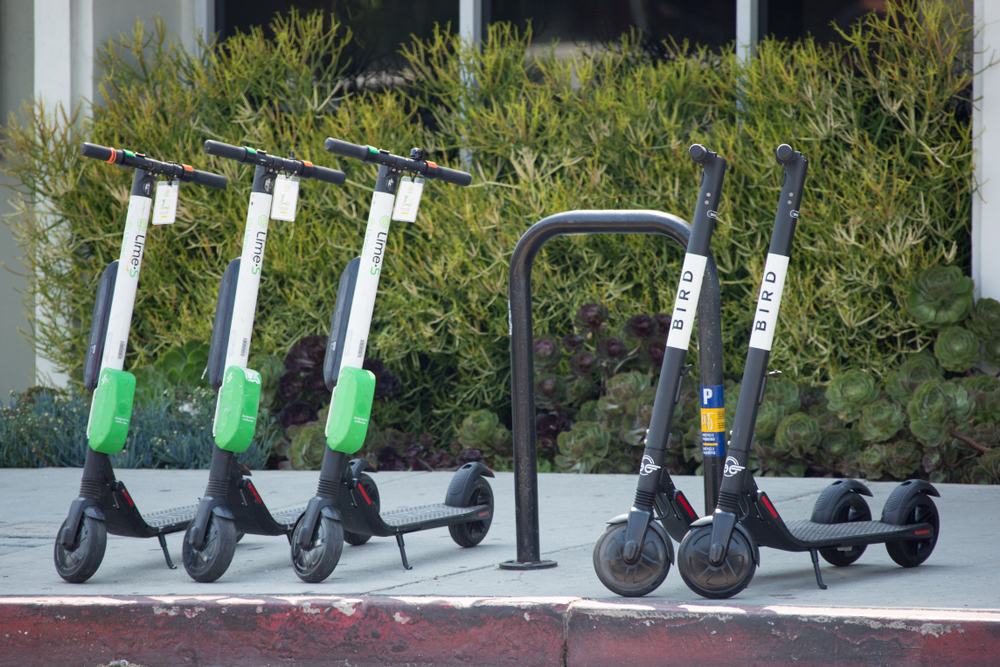
The micromobility of electric scooters may closeneeds for all passenger trips less than 8 kilometers. By the way, this distance accounts for 50 to 60% of travel by car or public transport in China, the European Union and the United States. This is the conclusion reached by experts of the consulting firm McKinsey in their new report. It focuses on the potential of electric scooters as an environmental replacement for conventional cars.
According to the National Association of Urban Transportation Authorities, there were more than 40 million rides on shared scooters in the United States back in 2018.
Lime, a major player in the electric scooter market,funded by Uber and parent company Alphabet, found that roughly one in three trips in 26 cities around the world replaces driving.
In Russia, everyone uses electric scootersmore people. There are parking lots not only in Moscow and St. Petersburg, but also in other regions. Similar to Uber, the taxi ordering app Citymobil has added electric scooter rentals to its maps.
Scooter owners make billions, and city dwellers feel like I am helping the environment with trendy two-wheelers. Everyone wins. Or not?
What's wrong with electric scooters?
The switch to electric scooters is estimated to have saved a total of 6,220 metric tons of carbon emissions over the past two years.
But do electric scooters live up to all this hype?
Regarding Lime's statements, a survey conducted byA 6t study group of 4,500 residents in Paris, Lyons and Marseille found that only 19% used scooters to get to work or school. Among them, more than 40% are visitors from other cities.
Without access to electric scooters 44% of respondentssaid they would walk, 12% said they would ride a bike and 30% would use public transport. Cars were hardly mentioned by the respondents. In addition, the survey found that more than 40% of people use electric scooters for entertainment purposes. But at least this contributes to a more mixed use of this type of transport, experts say. This will draw people's attention to scooters and encourage them to abandon cars.
Except that there really aren't that many peopleuse two-wheeled vehicles as an alternative to the car, there is another problem. There is a great deal of uncertainty about the lifespan of common electric scooters. It depends on equipment and usage.
And, yes, this is a key question, because their deadlineservices are an important part of what determines their environmental impact. Scientists have been saying for years that the best way to help the planet is to reduce consumption.
“Today it is impossible to say whethere-scooters are good or bad for the environment because we do not have long-term statistics on the life cycles of these vehicles, ”explains Denis Benita, transport engineer at Ademe.
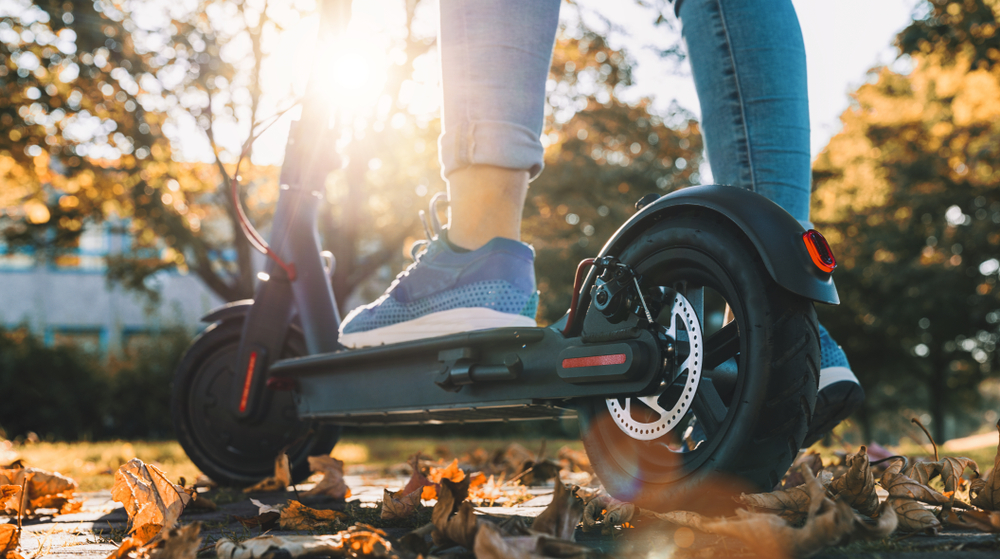
One study from Louisville, Kentucky.showed that the average lifespan of a public scooter is 28 days. Other experts say they have a lifespan of around three months.
This is clearly not enough to call them environmentally sustainable or at least neutral mode of transport.
How are problems solved?
However, companies are trying to make scooters more reliable and therefore more beneficial to the environment.
The International Energy Agency saystransportation is responsible for 24% of its carbon footprint, and last year a North Carolina State University study found e-scooters emit more emissions per passenger-kilometer over their entire lifespan than buses.
Wayne Ting, CEO of Lime, said that his company's latest generation of e-scooters is much better than the previous generation, and their lifespan has increased significantly.
“The electric scooter today lasts twice as long aswhen we first came to France in June 2018, ”a Lime France spokesman told AFP. The company also stated that it recycles all equipment: “every part, down to the last screw, is reused,” explains a company spokesman.
Bennett Schlenker, head of Bird France, noted thatthey had a similar path. However, they have learned a lot and are trying to make scooters a more environmentally friendly mode of transport. He noted that by combining engine parts, the company plans to extend their service life by two years. Bird said the company is committed to making their electric scooter travel carbon neutral by reducing emissions and lower manufacturing costs.
Another problem with electric scooters is battery usage.
Market of electric scooters and motorcycles,which, according to Markets & Research, which could be worth $14 billion by 2025, has largely shifted to lithium-ion (Li-ion) batteries, which are lighter and last longer than other types. However, this type of battery cannot be called problem-free. Using lithium is always an environmental risk - from mining the metal to toxic waste. However, Lime said it recently partnered with a company that will recycle 70% of used scooter batteries.
Read also
Found the alleged kingdom of the disappeared Hittites. What have archaeologists found?
The Doomsday glacier turned out to be more dangerous than scientists thought. We tell the main thing
Voluntary death. We tell how the euthanasia procedure works around the world