Biologists from the University of Cambridge have observed for the first time the unusual behavior of an endangered
Jets of water emitted by animals canfly a distance of up to one meter before falling into the water, and the “douching” session lasts from 3 to 6 hours. At the same time, the stream with the fry soars above the surface of the river and attracts fish.
Spawning in freshwater mollusks. Video: Cambridge University
Biologists took samples from several musselsliquid for analysis. The study confirmed that the droplets contained viable larvae. When released into the air, the faces fly a long distance and can attach to the gills of fish to complete their transformation into adults.
Scientists note that many molluscs usefish as a symbiotic organism that helps young fish develop. But none of the other species had seen this behavior before.
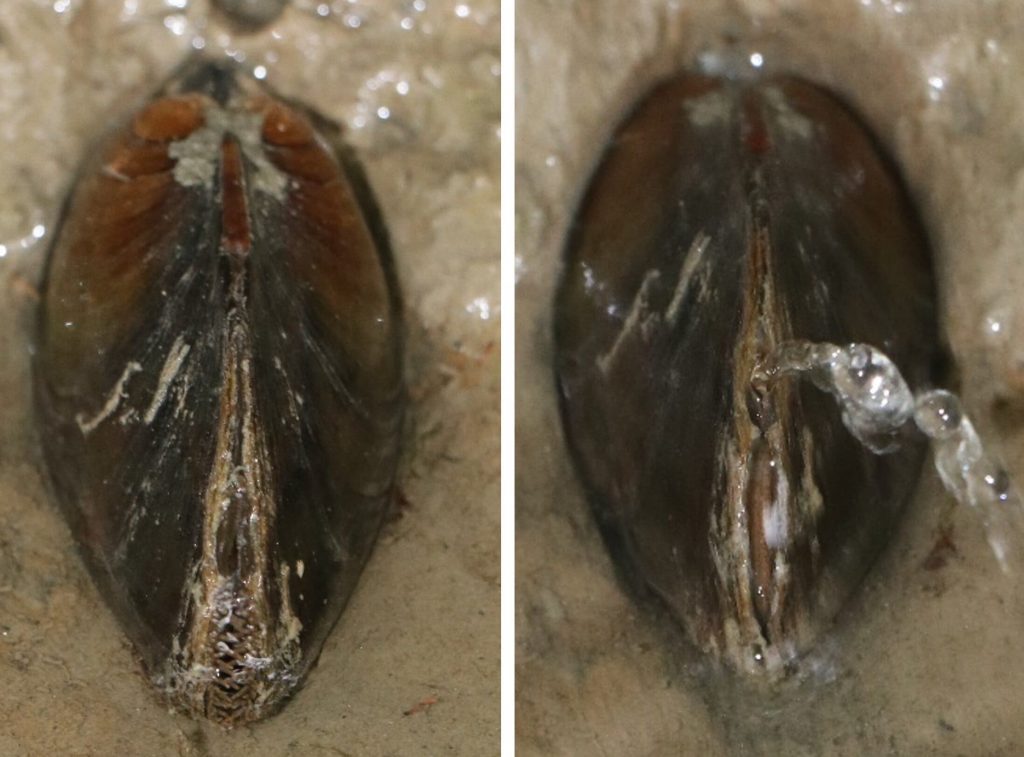 The jet that the molluscs throw out contains the larvae of future fry. Image: University of Cambridge
Researchers attribute it to the fact that fatthe barley can only use certain fish for the development of offspring. These species were attracted by falling jets of water. Scientists believe that mussels shoot jets to increase the chance that their larvae will attach themselves to the right fish. Getting into the air, and not into the water, the larvae fly long distances from the parent mollusk.
The thick barley belongs to the species that areEndangered. One possible reason is the need to get out of the water during spawning, scientists believe. At this point, the molluscs become vulnerable to predators. Understanding how these animals reproduce will help develop measures to protect and restore their population.
Read more:
2,700-year-old temple found in Sudan He surprised scientists
Astronomers find two planets around the Sun's twin star
Named the country where the inhabitants have decreased IQ