Google maps will show information about the occupancy of establishments and supermarkets
Google Maps users around the world
The ability to see information about the workload onGoogle Maps is one of the most popular features of Google Maps since its launch in 2016. During the pandemic, this information became an important tool. He helped people quickly understand how busy the place would be, how many people were there right now. Users can make more informed decisions about where and when to go. The company noted that between March and May, interactions with these features increased by 50% as more people viewed, studied and compared the data to choose the best days and times to visit.

Now the cards, as the company promises, willshow the congestion of not only establishments or retail outlets, but also beaches, parks and other outdoor places. The information of the map will be shown directly "in the direction of travel" of the user, in order to find out how busy a particular place is at the moment, it will not need to be searched through the search line in maps.
Also, Google promises, map userswill see what security measures a supermarket, pharmacy or gas station is taking (for example, whether they require wearing masks, whether the premises are equipped with protective screens or their employees regularly check the temperature).

Important Health and Safety Informationcompanies are now the focus of Google. All the information you need comes directly from companies, and soon Google Maps users will also be able to share it.
As noted in the company, soon Google Maps users will be able to see information about employment in real time, without even looking for a place.
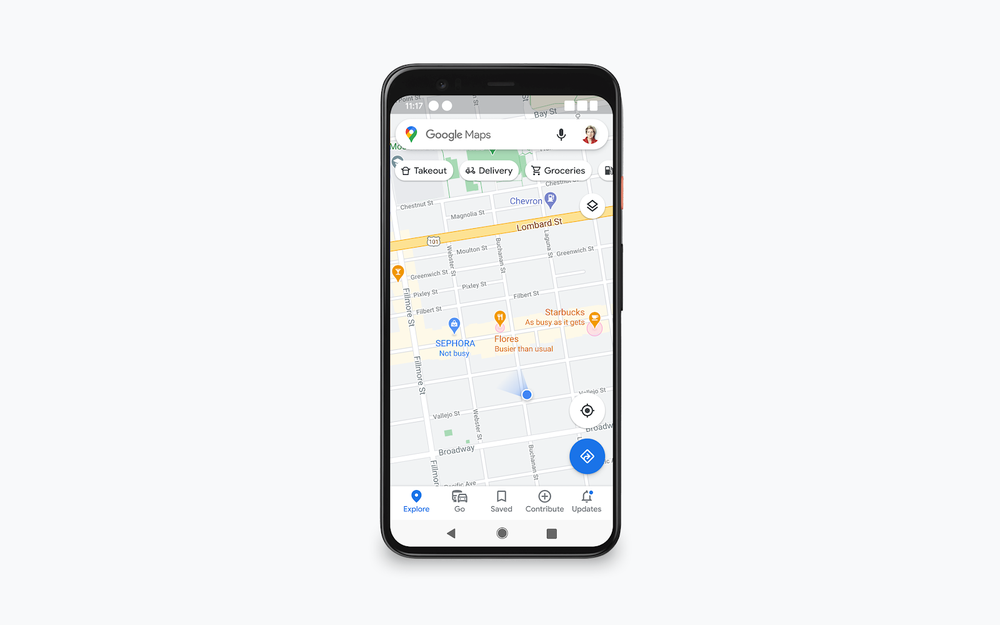
This will help the user choose and plan the best route.
Google will search for a song, even if you can only whistle or hum it
Today Google is adding to its toolssearch is a new "hum to search" feature that lets you hum (or whistle or hum) an annoying song that's stuck in your head, and then use machine learning techniques to identify it.
New feature available today in the appGoogle for iOS and Android or Google Assistant - just ask Google “What song is this?” Or hit the newly added Search for Song button, then hum. Google will show you the results based on how likely it thinks the match is. You can then click on the results to listen to them.

So how does it work? It is easy to explain this by the fact that the melody of the song is similar to her fingerprint: each has its own unique personality. Google has created machine learning models that map a user's whistling or singing to the desired digital fingerprint.
Google explained that machine learning modelsare used to "convert sound into a number sequence representing the melody of a song", which can then be compared to existing songs. The company says it trains these models on "a variety of sources, including people singing, whistling or humming, and studio recordings," removing track components such as instruments and voice quality to focus only on that number sequence. Therefore, the «buzz» function for searching should work no matter how perfect the user's hearing is.
The new ringtone finder is available in English for iOS and over 20 languages for Android, and the company plans to add even more features in the future.
Google will be better at handling typos in queries and more
As noted by Google, in every tenth search enginethe request has spelling errors. The company is already doing a pretty good job of dealing with them with the "you had in mind" feature. The company is now launching an enhancement to this algorithm, which uses a 680 million parameter deep neural network to better understand the context of your search query.
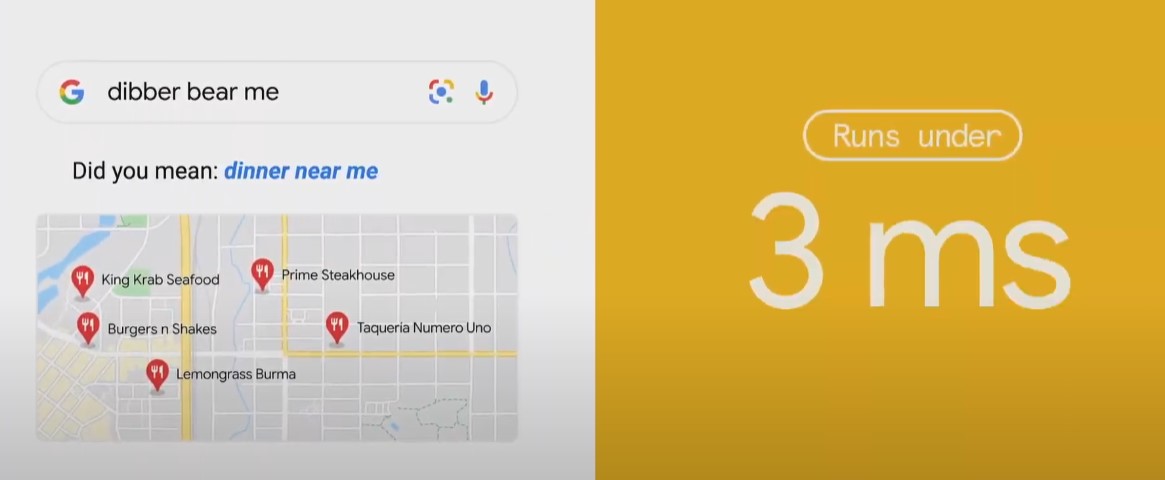
Integration with data sources
Another great new feature is integrationwith various data sources that were previously only available as part of the Google Open Data Commons into search. Now, if you ask questions about something like “working in Chicago,” the Google Knowledge Network will kick in and show you graphs with this data right on the search results page.

Indexing part of pages
Another update that the company announcedtoday is its system's ability to index portions of pages to better respond to niche queries such as "how can I tell if my windows have UV glass?" The system can now point you directly to a paragraph on the DIY forum. Overall, according to Google, this new system will improve around 7% of queries.
For broader questions, Google is now also using its artificial intelligence system.
Search for key points in a video
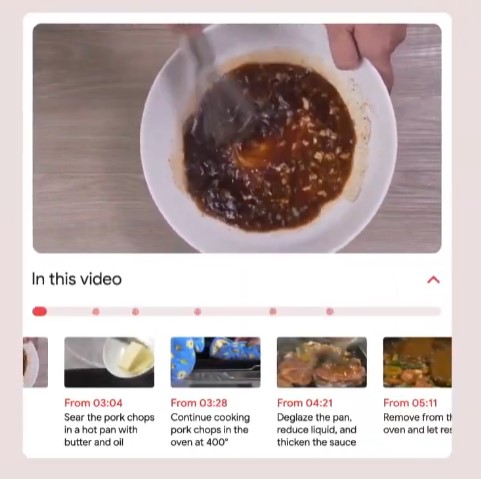
These days, a lot of content can be found invideos. Google is now using advanced computer recognition and speech recognition to mark key points in videos. This feature has been around before, but the updated new algorithm should make the search process easier, especially for videos whose creators have not yet tagged content.
Google Lens
Other updates include innovationfor Google Lens, which allows you to ask the app to read an excerpt from a snapshot of a book - regardless of language. Lens can now understand mathematical formulas and then show you step-by-step instructions and videos to solve the problem. This works not only with mathematics, but also with chemistry, biology and physics.

New product search
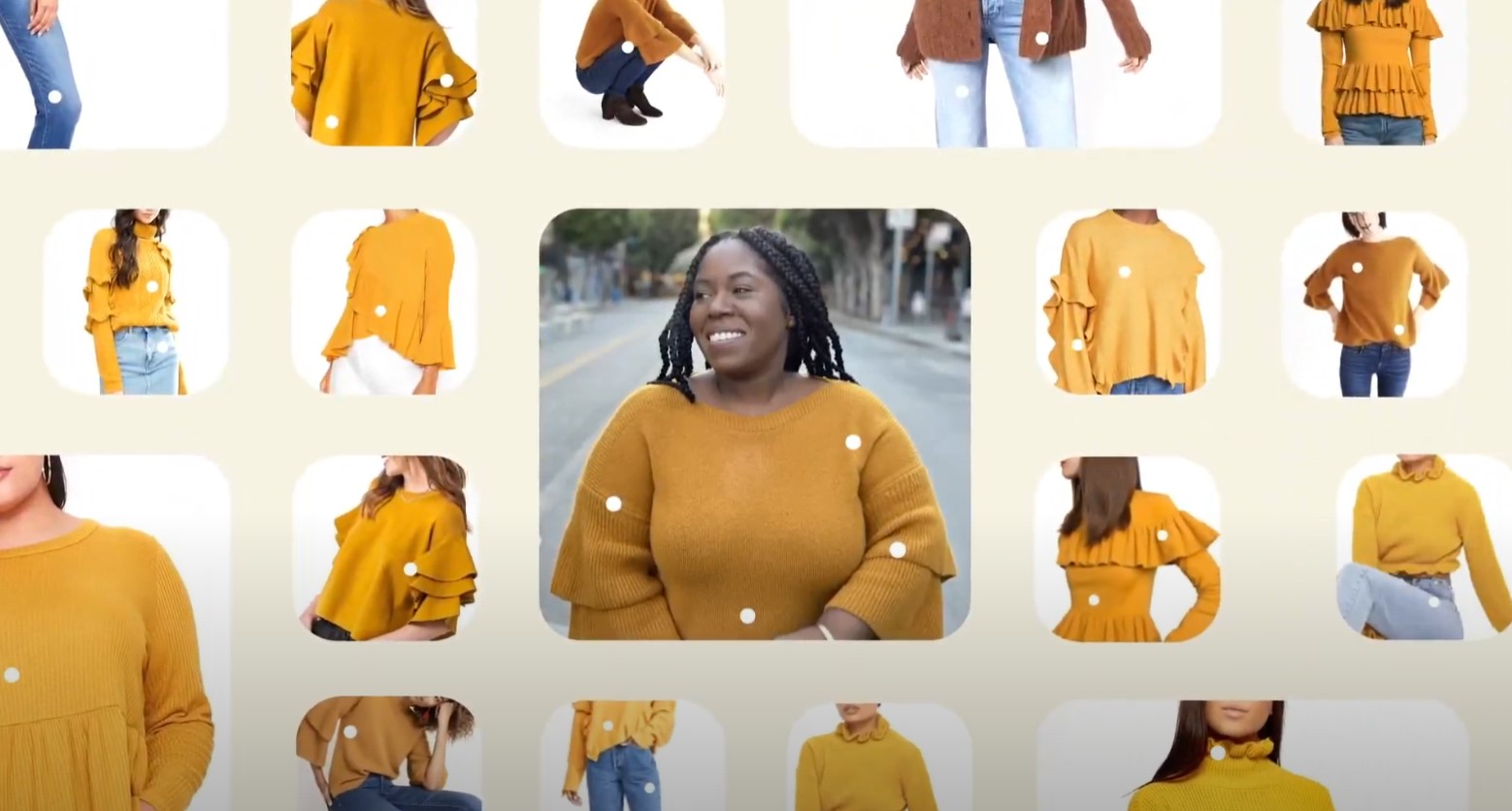
Considering that the holiday season is approachingshopping, it's no surprise that Google has also launched a number of updates to its shopping services. Specifically, the company is launching a new feature in Chrome and the Google app where you can now long press on any image and then find related products.
The full presentation of Google updates (of course online, it's 2020) is already available online.
Read also
Previously, the Earth and the Moon had a common magnetic shield. It saved the planet from the sun
There may be universes in black holes. We tell you about the new discovery
On day 3 of illness, most COVID-19 patients lose their sense of smell and often suffer from a runny nose