Collaborative research team consisting of Professor Heng Joon Cha and doctoral student Seongwook Woo
By 2017, the world produced 8.3 billion tonsplastic waste, of which less than 9% were recycled. It is known that polystyrene, which accounts for about 6% of total plastic production, is difficult to degrade due to its unique molecular structure.
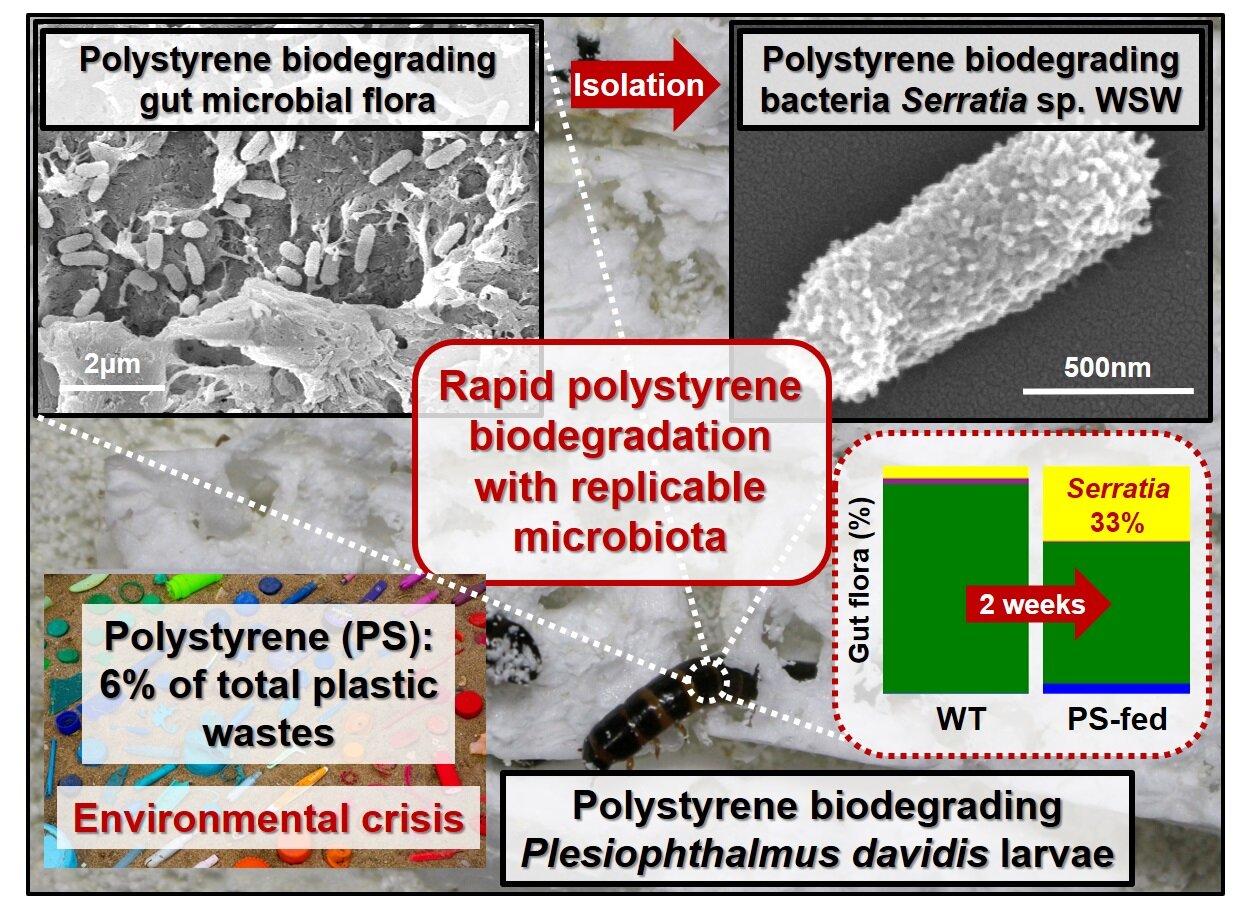
The research team found that the larvaethe dark beetle found in East Asia, including the Korean Peninsula, can consume polystyrene and reduce both its mass and molecular weight. The team also confirmed that isolated intestinal flora can oxidize and alter the surface properties of the polystyrene film.
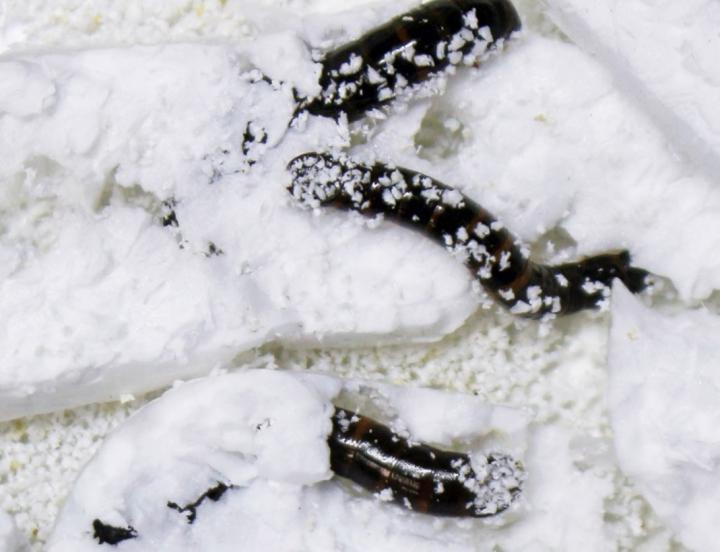 Dark beetle larvae chew on styrofoam. Credit: Hyun Joon Cha (POSTECH)
In addition, it was found that the intestinal flora of these larvae consisted of a very simple group of bacterial species (less than six), in contrast to the intestinal flora of other common polystyrene insects.
A unique diet of dark beetle larvae thatwas found in this study to enable other insects that feed on rotten wood to break down polystyrene. In addition, the development of an efficient flora degrading polystyrene using bacterial strains found in the simple intestinal flora of P. davidis is highly anticipated.
 Credit: POSTECH
This study is also notable in thatthe first author of the article, Songuk Woo, was interested in insects since childhood and wanted to make the world a better place with their help. His research clearly demonstrates that the discovered beetle larvae can save the planet from plastic by destroying it.
Read also
Look at the huge “wall” of hundreds of thousands of galaxies behind the Milky Way
Comet NEOWISE is visible in Russia. Where to see her, where to look and how to take a photo
It turned out what caused the Mayan civilization to leave their cities