
The presentation of the annual Apple Worldwide Developers Conference (WWDC) in 2020 will go down in history
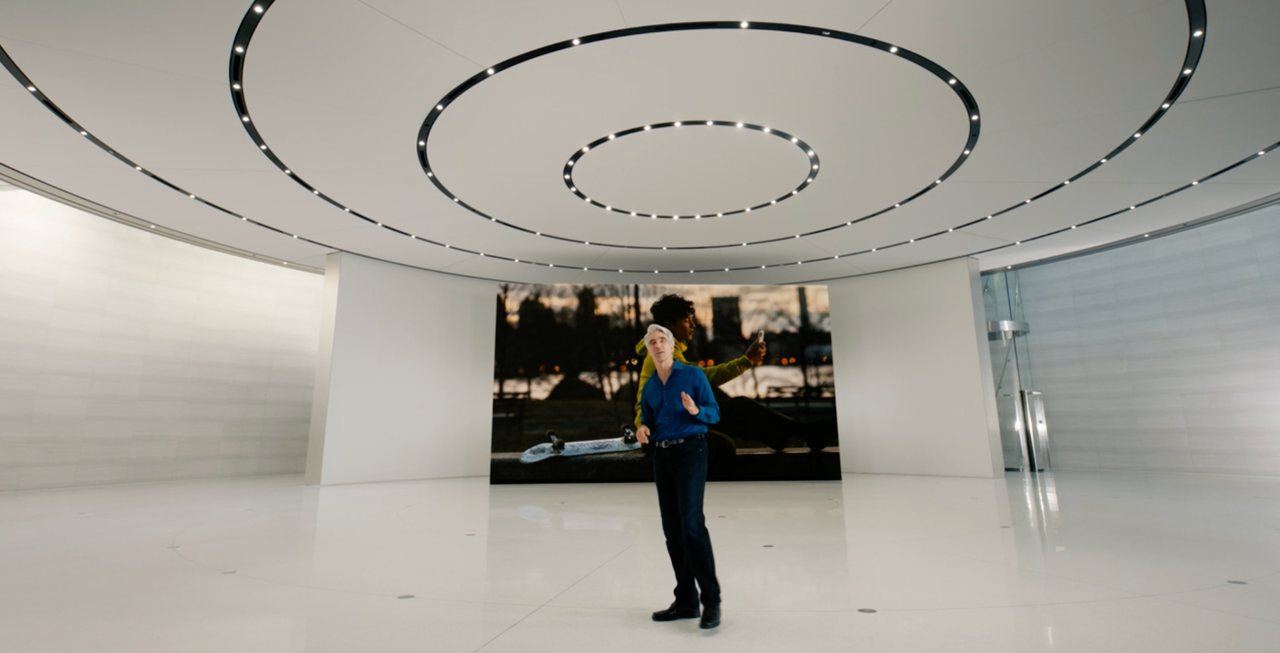
Firstly, the direction attracts attention,setting new standards for such presentations in the industry. All presentation companies strive to be like Apple (Chinese companies are especially sensitive about this). To be fair, only Samsung has managed to come closest to Apple in this regard, mainly due to its leading position in the Android smartphone market, which attracts the highest interest all over the world. After the first minutes of the presentation, you realize that this is now the “new normal” that we heard so much about during quarantine. Indeed, the virtual studio looks impressive and allows you to show the speaker close-up, where he is not lost against the backdrop of a huge stage. At the same time, all these pauses associated with physically going on stage disappeared. And for a multimillion-dollar Internet audience, it no longer makes sense to show a couple of thousand people in the audience and demonstrate all this applause and laughter in the audience, drawing parallels with the off-screen laughter of sitcoms.
</ img>
I wouldn’t be at all surprised if now all presentationsApple will look exactly like this - why stage a performance for two thousand people if you have an audience of millions of viewers around the world? Apple has once again created a new benchmark standard for such performance. The fact is that Apple has always been a company where design and visual image were (as well as usability, by the way) raised to the rank of religion. Don’t forget that the company’s DNA also includes a part of Pixar, which was bought by Disney but created by Steve Jobs, so 3D virtual scenes don’t look at all something new and unnatural for Apple.
Tim Cook, who pusheda politically balanced speech about new times, touching upon the issue of racial inequality, which is important for the company's home country, which has again become relevant in recent months. As expected by the CEO, he talked about the social responsibility of the company entrusted to him, and gave the presentation of new products to his “generals."
What's New in iOS 14
If you omit all these flirtations with widgets andThe “picture-in-picture” function, which appeared again, I remember, in the Galaxy SIII (where it was then called Pop Up Play), only a few things are really interesting for our consumer. One of which, for example, is the support of the Russian language in a translator that can work autonomously, without an Internet connection (thanks to the neural networks and their support on the processor side in new iPhones). And received a convenient horizontal mode of operation, in which the system itself determines the language and allows two people to communicate.

</ img>

</ img>


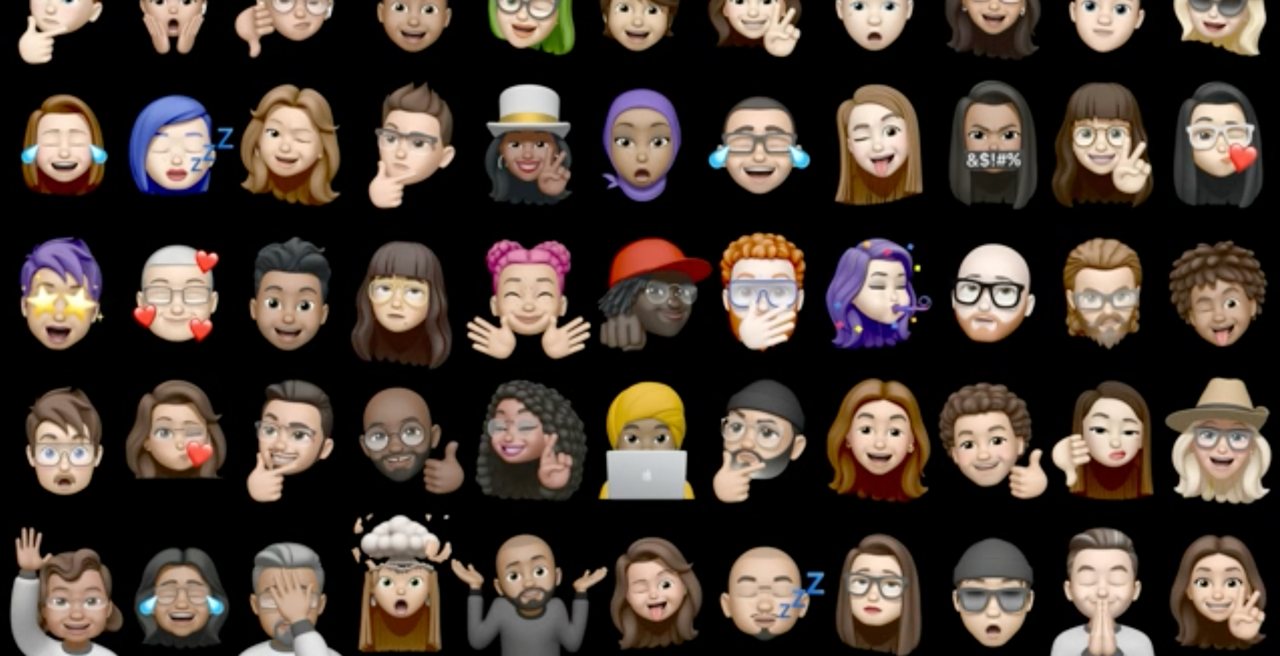
The exchange application has been thoroughly improvediMessage messages, which introduced the ability to create groups, pin conversations and new customized emoji called (a new word in our lexicon) memoji. The number of their combinations reaches a trillion (!), which immediately leaps ahead of similar experiments by Samsung and Huawei by two heads. Everything is taken into account - profession, race, hats, hairstyle and even age. Now you can produce new stickers in batches. There is a huge field for user experimentation where they like to do it (in messages). All this sounds strange from the perspective of technology, of course, but such is the nature of people.
</ img>
The Apple branded application has changed fromcartography, but for our country all these delights are not yet relevant, as for most countries of the world - in addition to the USA, they added Great Britain, Ireland and Canada. There, the capabilities of the maps can actually exceed the navigation and visual capabilities of Google Maps, even to the point of walking and cycling routes, telling cyclists, for example, elevation changes and areas where they need to get off the bike and ride alongside. Special attention in the maps is paid to routes for electric cars with optimal charging along the way (for California and San Francisco, where Tesla is made, of course, this is relevant, but not for us).
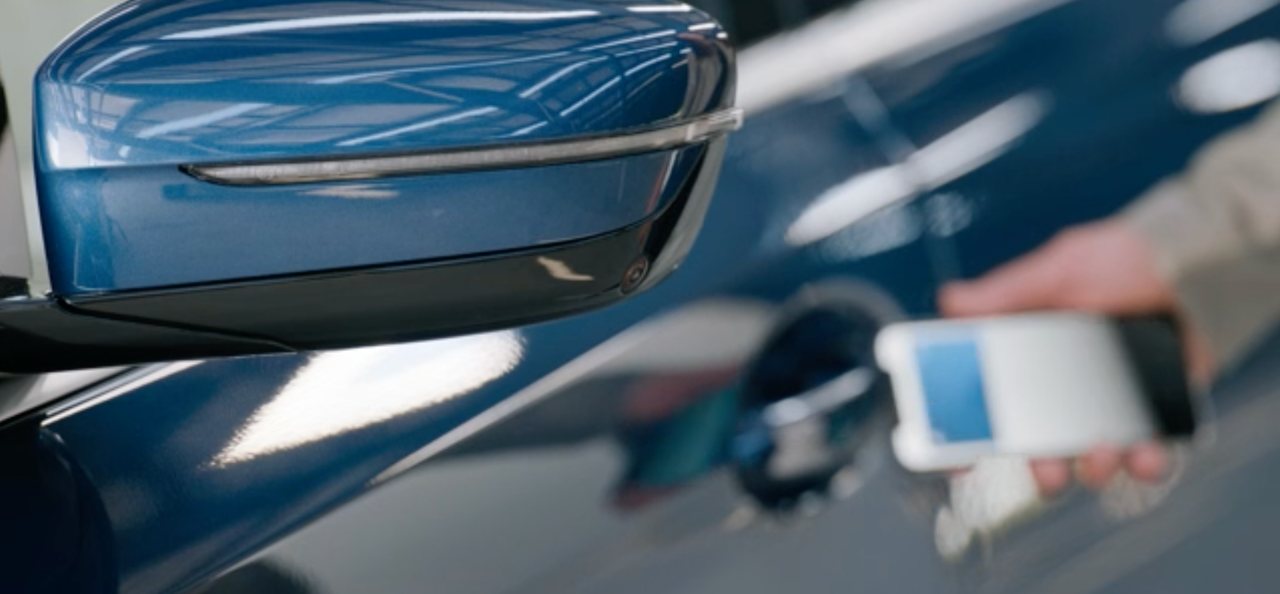
By the way, about cars.The most useful application for motorists, Car Play, has been updated. In the US, 97% of new cars already support Car Play, in the world 80%. In addition to new little things in the form of new wallpapers and the ability to group applications with Car Play support by topic (parking, gas stations, navigation, restaurants), the main innovation was the appearance of an electronic NFC key for the car! This is truly the future of technology, which Apple is pioneering. The electronic key allows you to open and start the car. But that's not all! The electronic key can be shared in a message (the U1 chip in new iPhones is responsible for the security of such operations), and there are several degrees of access, which will be appreciated by parents of children who will no longer be able to take a car without parental permission. The electronic key itself will be stored in the Wallet application along with any purchased tickets. Car companies will begin supporting this feature starting next year. That is, you won’t be able to use an electronic key in your current car yet, but in a couple of years it will already be a standard function of a new car (and the fleet of iPhones with U1 will grow during this time).
</ img>

</ img>

</ img>


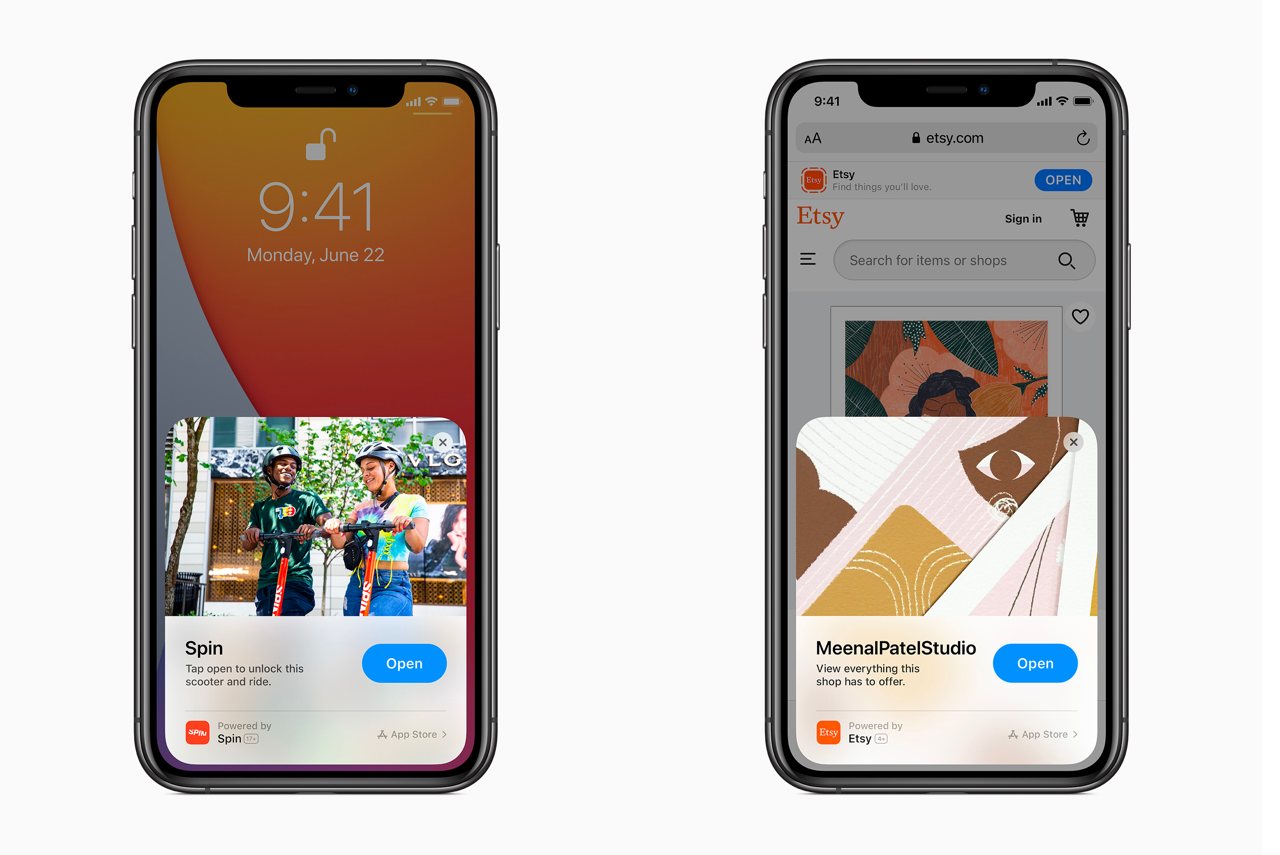
Another interesting and turning pointbecomes the appearance of App Clips. These are small (up to 10 megabytes in size) versions of applications that allow you to make purchases without registering in services. Apple Pay is used for payment, and credentials from Apple ID are used for registration. Life becomes simpler and you can make impulse purchases without exhausting registrations on websites and services. Strictly speaking, you don’t even have to install full versions of applications.
</ img>
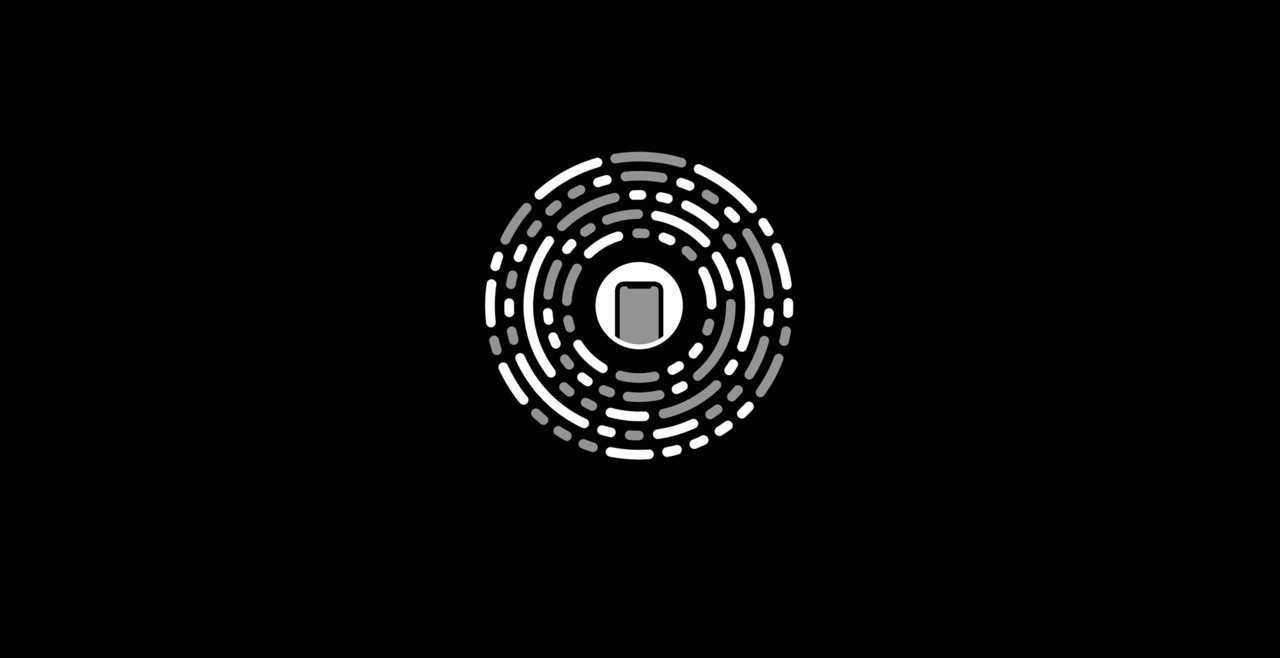
You can use the App Clip via NFC contactless communication by scanning a QR code or a special App Clip code that will look like this:
</ img>
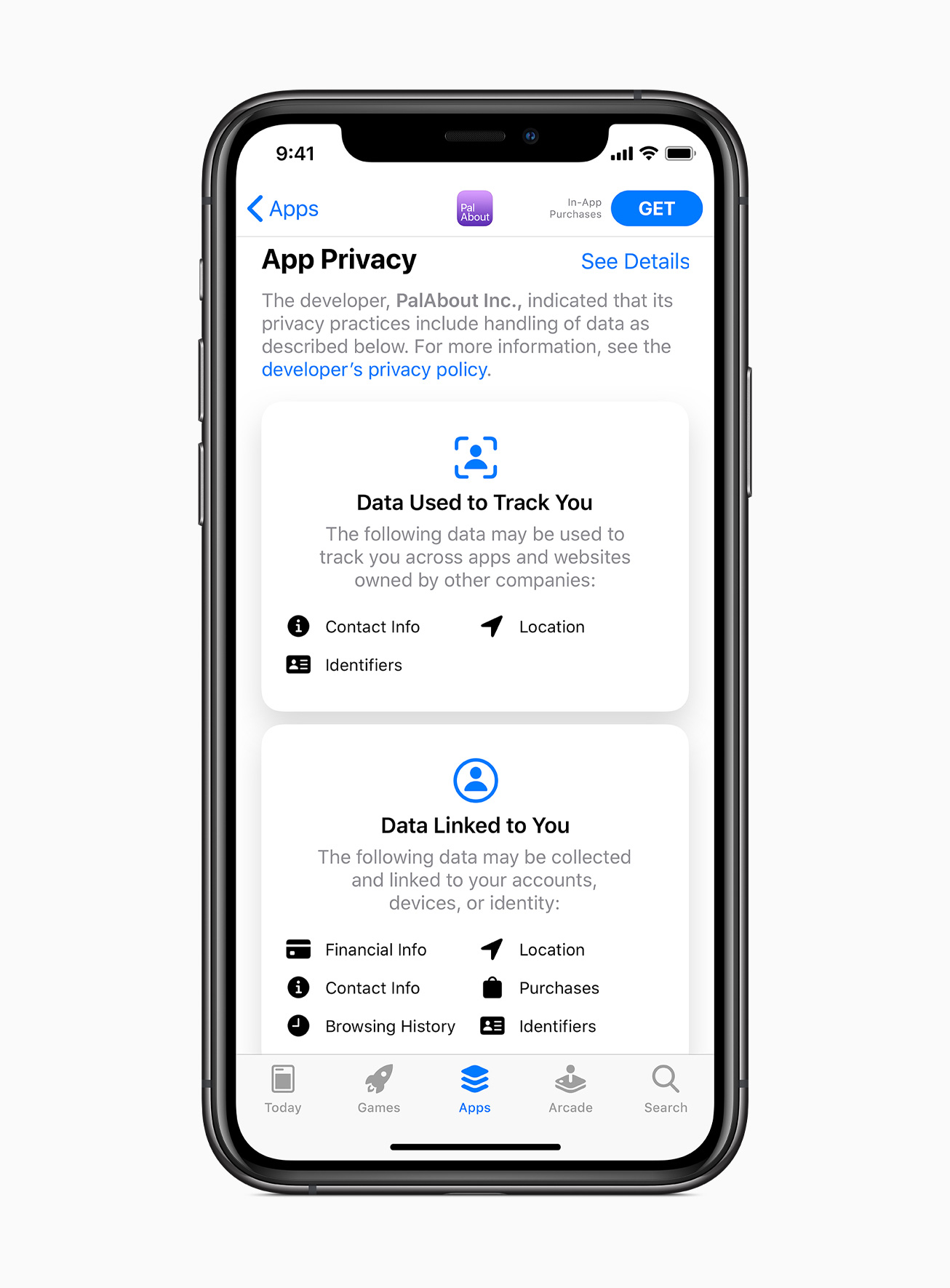
Speaking of applications. Now the rights that each application receives will be more clearly and visually demonstrated to the user by analogy with the list of ingredients on the package of products.
</ img>
IOS 14 will be available for models starting with iPhone 6. The timing of the update has not yet been clearly announced.
What's New in iPad OS 14
Updates on the iPad OS are less significant. The new interface (when the developers promise something else? Really boring) promises to be "more simple and intuitive." As in iOS, new maps will appear, iMessage will be updated, the Safari browser will be taught new things to Siri (for us, it’s not so important for us yet).

</ img>
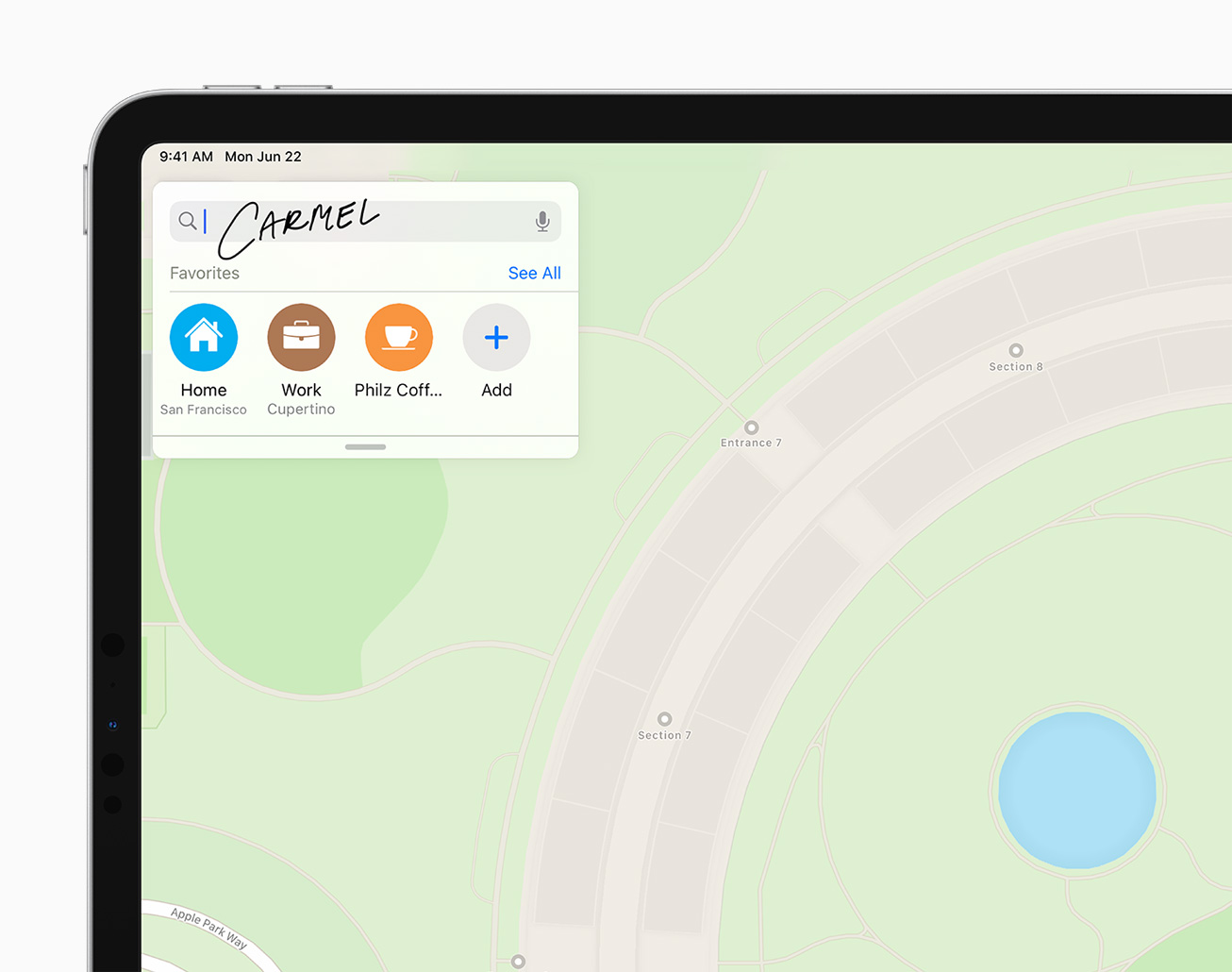
Significant updates will recognizehandwritten text (apparently only in English) in any text fields. In general, a lot of attention is paid to the stylus - it will be possible to copy pieces of handwritten text that will be inserted into other applications already recognized.
</ img>
Each and every iPad Pro, iPad starting from the 5th generation, iPad Air 2 (and later), and iPad mini 4 (including later models) will receive the iPad OS 14 update.
What's New in AirPods and AirPods Pro
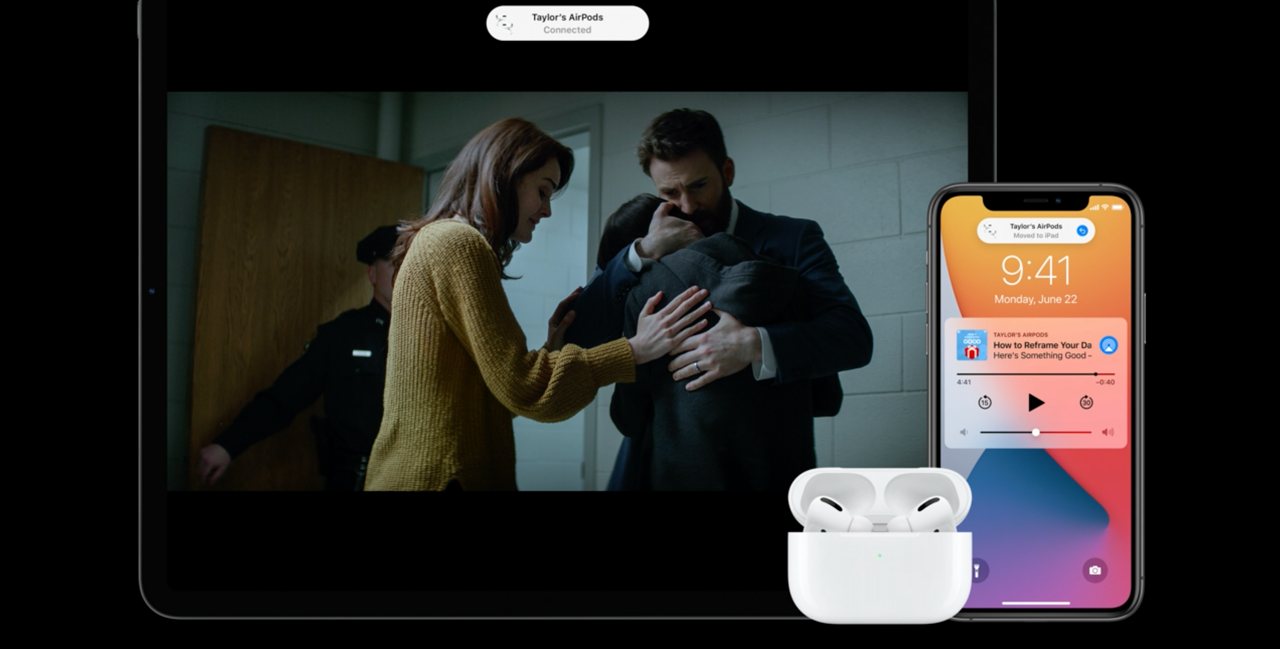
New features will appear in wireless headphonesApple For example, they will be able to seamlessly switch between devices depending on what the user is busy with. For example, if you receive an incoming Skype call on a macbook while watching a movie on the iPad, the headphones will automatically switch to the macbook. If after that an incoming call arrives on the iPhone, they will switch to the phone already.
</ img>

</ img>


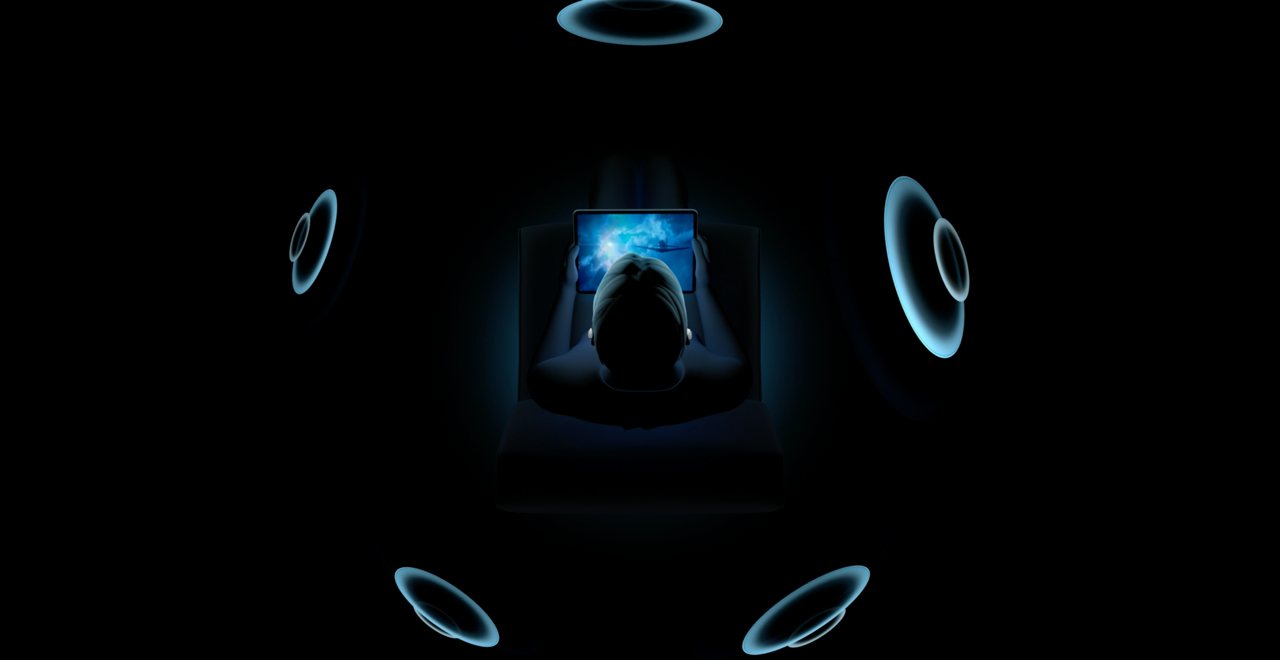
But AirPods Pro will generally receive support5.1 and 7.1 surround sound with Dolby Atmos support. Gyroscopes and accelerometers in the headphones will control the adjustment of the sound algorithms, changing the sound depending on the movement of the user's head. This feature is called Spatial Audio.
</ img>
What's new in watchOS 7
In addition to ryushechek (as without them) in the form of the ability to share different watch dials found by users, Apple watches finally learn how to measure the phases of sleep.

</ img>
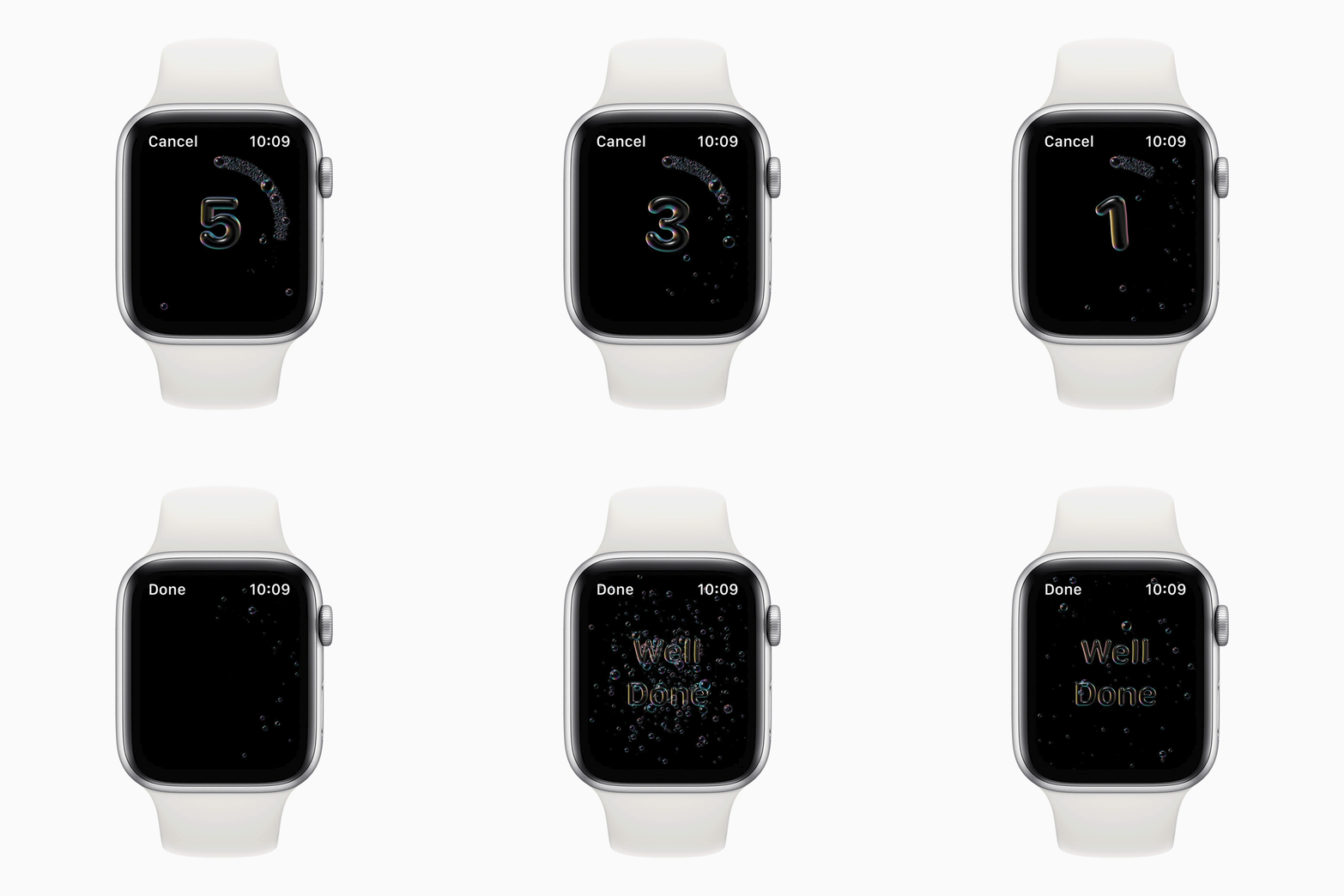
This function, apparently, appeared as an answer to the eraCoronavirus - the watch determines that the user washes his hands and counts down the time so that he thoroughly washed his hands with soap. Simply put, Apple Watch users will no longer need to hum the Verse of Root verse to assess whether he has washed enough time - the watch will do everything for him.
</ img>
Another function from the field of health (onin my opinion, it’s ridiculous in its obsession, but parents of children will probably like it) - automatically lowers the player’s volume if the user listens to music at high volume for too long. I don’t know anyone who has gone deaf from listening to music on headphones - portable players have been around for decades, there should already be statistics.

</ img>
watchOS 7 will be available on Apple watches starting with Series 3.
What's new in tvOS 14
Changes in tvOS 14 are less impressive - addedability to communicate with doorbell cameras connected via HomeKit. This is also a question of the near future rather than today. There is now support for multiplayer games in the Apple Arcade service (which comes with a paid subscription to all games on the service) and gamepads for XBox.

</ img>
But there is interesting news about the Apple TV + service. Apple says it’s already available for a billion devices, including smart TVs. And she showed the trailer for her own series on the Asimov’s cycle “Foundation”, which is due out in 2021:
What's new in macOS Big Sur
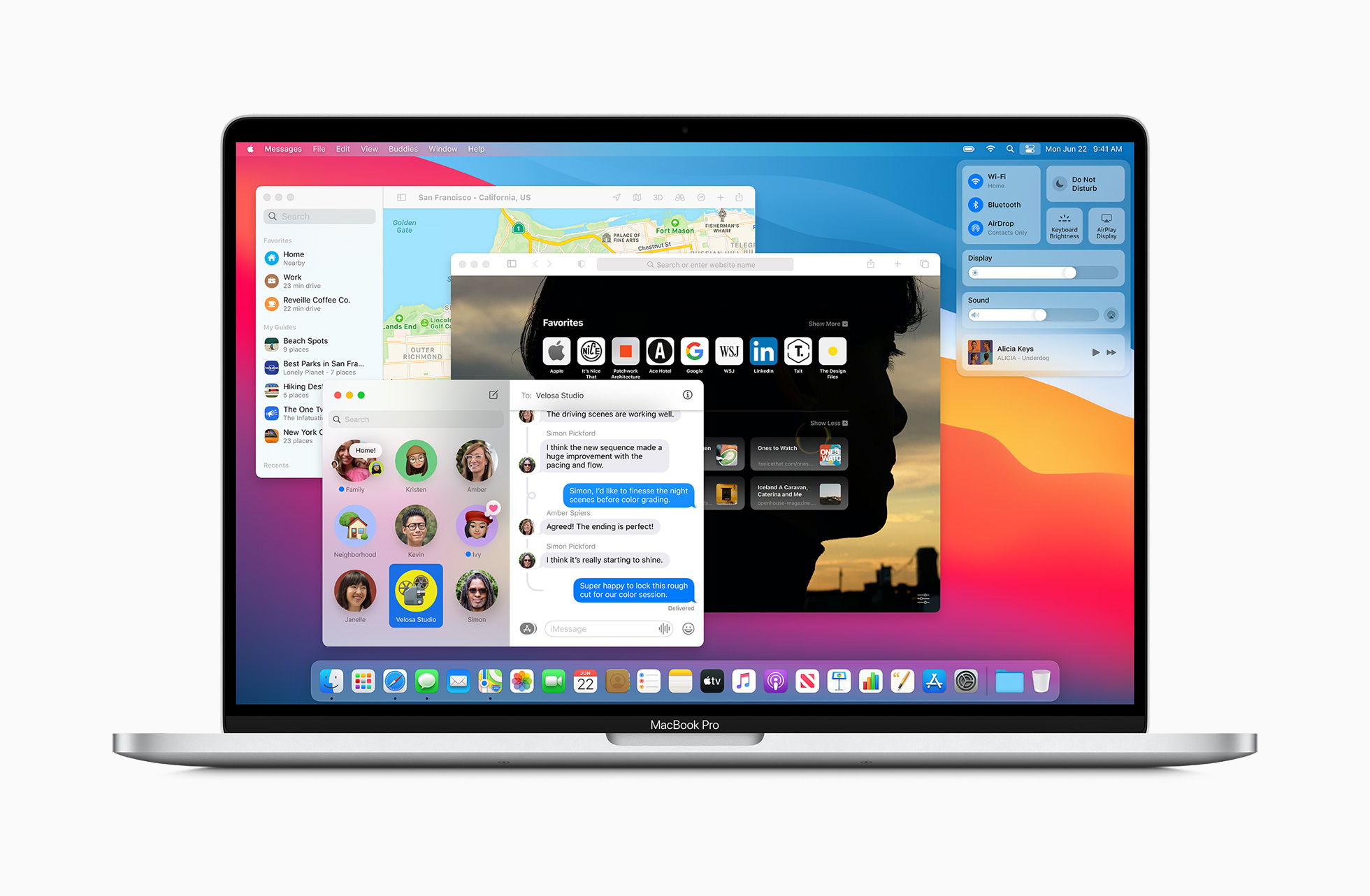
macOS update called Big Sur is consideredthe most significant since the release of OS X, although fundamentally new functions will not appear in it. Once again, application icons will change, but this update seriously brings Apple’s product strategy closer together - firstly, in the desktop operating system, the design of all applications will become unified (Safari, maps, iMessenger), the Photos, Mail applications will be updated, a quick settings menu will appear, like tablets and smartphones (which is rather good and convenient). Secondly (and most importantly), Apple officially announces the transition from Intel processors to its ARM processors called Apple silicon. The first of these will be Apple A12Z processors, similar to those already used in the latest iPad and iPhone. The transition process will take two years and it is important to know a few things. From the user's point of view, everything will be much better and more interesting (although at the start there will be incompatibility problems with older third-party applications). As a result, Apple desktops and laptops will become even more energy efficient and will run faster and longer on a single battery charge. Everything will be similar to the iPhone, which uses the processor – operating system than any Android smartphone (so 2GB of RAM on an iPhone is completely different from 2GB of RAM on an Android smartphone). Computers running Windows will not be able to cope with such a thing, because computers are not produced by Microsoft, and components for them are produced by dozens and hundreds of manufacturers. As a result, a Windows developer never knows what hardware the computer will run on. For Apple, everything will be different; an analogy with manufacturers of game consoles and game developers for them is appropriate here - they always know the capabilities of the device for which the game is being created, which allows them to greatly optimize the software.
</ img>
The second thing you need to know about this transformationThis applies specifically to developers. They will be offered a tool - Xcode 12, which will allow them to quickly adapt their applications to the new operating system with new ARM processors. And in the future, adapting all applications for Apple smartphones, tablets and computers will be much easier than it is today. Once upon a time, Microsoft put forward a similar idea and desperately fought for its universal applications, the common core of Windows for computers, tablets and smartphones, but, as we know today, it ended in nothing. Windows is simply no one in tablets, Windows smartphones were abandoned a long time ago and Microsoft simply lost the battle for mobile computers despite the fact that it was the first to come up with the tablet format (back in the days of Windows XP).
In the dry residue
WWDC 2020 opened a new era in holdingpresentations, this time online, setting new standards for the “new normal.” Apple has revealed the biggest updates to its operating systems, revealing the full strategy for bringing its software products closer together. And for the first time in many years, it made a radical turn, announcing farewell to Intel processors and a complete transition to its own (as many years ago) processors, this time on ARM architecture. Over the years that Apple has been using Intel ARM processors, they have come a long way, their performance has increased to the capabilities of 4K video processing. And now Apple does not see itself and its products beyond ARM processors. At the same time, it takes full control of all components of its computers, including the most important one - the processor, which it has been successfully developing independently for a long time. By themselves, all operating system updates may not look serious, but they set new trends and show our future, what it will be like in a few years. Where we will open the car with an electronic key (and smartphones will kill another market - now car keys), the TV will show us the face of the courier at the front door, and we will share in messages not only photos of cats, but also access to our cars (and, in the future, maybe even homes) and the dials of smart watches.