Face recognition system
Biometric identifiers in the metro - one of the parts of the city project
In November 2019, it was announced thatsimilar devices will appear at another 26 metro stations, they will be equipped with turnstile racks in the lobbies of the stations of the Serpukhovsko-Timiryazevskaya, Kaluzhsko-Rizhskaya, Lyublinsko-Dmitrievskaya and Tagansko-Krasnopresnenskaya lines. According to the portal of the Mayor of the capital, this is the first stage of equipping the metro stations with turnstiles with a video recording system.
Re-equipment of turnstiles takes place within the framework ofDecree of the Government of the Russian Federation, which regulates the requirements for ensuring transport security. The new system will allow you to quickly respond to emergency situations, as well as effectively control passenger flow.
Dmitry Tur, Head of the Development Service of the Directorate of Information Technology Systems and Communication Systems of the Metro
Almost 1.4 billion rubles will be spent from the Moscow budgetfor equipping metro cars with face recognition cameras. The corresponding auction has been published on the public procurement portal. It was announced on July 9 and was due on July 30.
In January 2020, Moscow Mayor Sergei Sobyaninannounced that by September 1 of this year, a full-fledged video surveillance system with face recognition will work in the Moscow metro. “We must work out the possibilities for video analytics, which will allow us to identify places of crime, places of accumulation of migrants, planting drugs and so on,” the mayor said during an expanded meeting of the board of the Main Directorate of the Ministry of Internal Affairs in Moscow. According to the head of the city, this approach will allow to determine the location of wanted citizens in a split second and will greatly simplify the work of the Ministry of Internal Affairs.
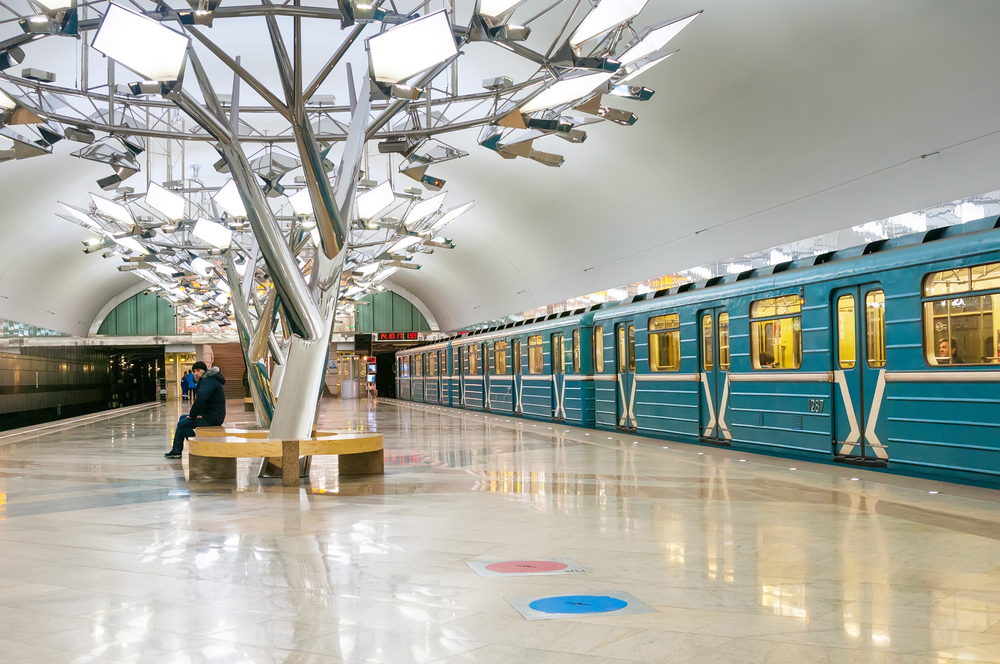
However, today it became known that the workare delayed. Currently, there are about 5 thousand cameras with facial recognition function at subway stations; identifying one face in a stream of passengers “takes a few seconds,” the metro added. The city Department of Information Technology (DIT) said that 105 thousand “streams from cameras” are connected to the city video analytics system (in total there are more than 175 thousand video cameras in the capital), and law enforcement agencies use them to search for offenders.
Payment by biometrics
Moscow began testing fares formetro by face scan. We are talking about the FacePay system, part of the tests of which is planned to be completed by October 1, the department reported. However, when the system can fully work, it is not specified.
The system will be active in the near futuredevelop in terms of services for passengers. In particular, the introduction of the FacePay system, with its help it will be possible to pay for travel using a scan of a face. We are currently checking it together with our banking partners. We plan to complete one of the test stages by October 1, and we will immediately tell you about the interim results.
Press service of the Department of Transport
In addition, the press service notes, the systemvideo surveillance in the subway will help track the congestion of trains. Such information will be sent to city mobile applications so that passengers can choose the freest cars, which is especially important during the coronavirus pandemic.
The department said that smart systemsCCTV is also being tested in other cities around the world, including London and Beijing. So, in London, the system is aimed at face recognition, assessment of train congestion, and also at detecting foreign objects.
Installation of CCTV cameras with newfunctionality in the Moscow metro began last spring. Then such cameras appeared, in particular, at the Oktyabrskoye Pole metro station. According to the metro press service, they were installed as part of a pilot project for video surveillance with a facial recognition system.
GPS for calculating tunnels
When the place for the construction of the metro has already been chosen,engineering surveys have been carried out and a project has been prepared; surveyors undertake the work, who must calculate how the tunnel will pass underground. The use of GPS (Global Positioning System), as well as the use of electronic tacheometers and theodolites (geodetic devices for measuring distances, horizontal and vertical angles) instead of optical ones, greatly simplified the process of calculating points underground for specialists, along which both approach tunnels and project routes pass. , where the subway trains will go.
New technologies have also significantly reducedthe number of employees required to carry out mine surveying work. According to the chief mine surveyor of the St. Petersburg Metrostroy Boris Savkov, in Soviet times the number of mine surveyors was about 350 people, and now the service employs about 150 specialists.
Holographic screens
For the first time the idea of using holograms in the subwaywas voiced by the participants of the hackathon - there young guys proposed their initiatives for the technological development of the subway. The idea was realized thanks to the efforts of our international partners.
At the first stage of the project, the holograms will showbroadcasted information about useful mosmetro services that are now available to people. During the pilot, we learn the opinion of the townspeople about the new format of information visualization. It is planned that the pilot project will last 6 months.
Holographic screens are already installed ininter-station passage "Novoslobodskaya-Mendeleevskaya" at the exit to "Mendeleevskaya", as well as at the station "Michurinsky Prospect". This technology will unobtrusively draw passengers' attention to really important information.
If the experiment is successful, a decision will be made to scale it up and will be considered the ability to use these screens as a modern advertising medium.
Nuclear subway train from Rosatom
 Nuclear subway train from Rosatom
The idea of trains that move thanks tothe compact nuclear reactor operating in them, has its supporters in different parts of the Earth. Many groups of engineers have already developed projects for such vehicles, however, their implementation costs a lot of money and cannot pay for itself even in the most distant future.
However, this does not prevent you from dreaming. Among other things, the domestic structure Rosatom also declares its desire to create a nuclear train in the future. She presented in 2011 at an exhibition in Hanover a model of a similar locomotive, which could be used on the country's railways, as well as in the subway.
Trains without a driver
The machinist's profession is still used inmost subways around the world. However, modern technologies have long made it possible to automate the process of train movement along metro lines and, moreover, to rid it of the human factor, one of the main causes of accidents.
Technologically fully automatedthe movement of trains in the subway is easier than creating auto-pilot cars. However, the risk of error in this process is much higher. Maybe that's why getting rid of drivers in metro systems around the world is not happening as quickly as it could.
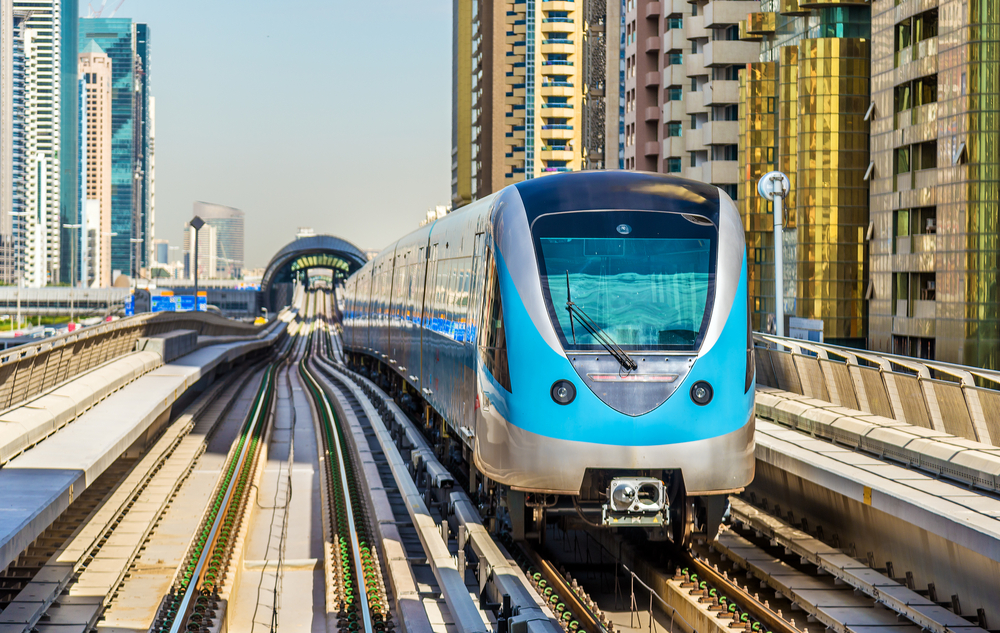
There are already subways where there are no driversleft at all or every year becomes less and less. The most obvious example of this is the Dubai Metro, which opened in 2009. This is the first system in the world where there have never been drivers at all and, most likely, will not be.
The absence of a driver's cabin allows passengersDubai Metro to admire stunningly beautiful views and panoramas of the Arabian metropolis while riding. They see what previously only the person behind the wheel of the train could see. And in Dubai this is especially true - after all, the metro lines in this city run exclusively above the ground, on overpasses. The Paris metro also abandoned drivers. True, not in this entire huge transport system, but only on the youngest, line 14.
Interactive navigation machines
Some metro systems in the world are soare complex and confusing that even local residents often cannot understand how to get from one station to another distant station. Of course, many metro systems have special information machines installed that allow you to partially understand this.
There are interactive machines in the New York subwaywith the title On the Go! Kiosks. These devices can not only help the passenger create the most convenient and fastest route for travel between the desired subway stations, but also tell about their history, prospects, as well as the areas in which they are located. A person learns about good restaurants, museums, and government institutions near the desired station. The passenger can also search for specific establishments and routes to them, which is very useful for both tourists and local residents who are poorly oriented in a huge metropolis.
There is a similar option in the Moscow metro; in the middle of the station you can not only check the subway map, but also contact the dispatcher if you get lost.
Virtual supermarket
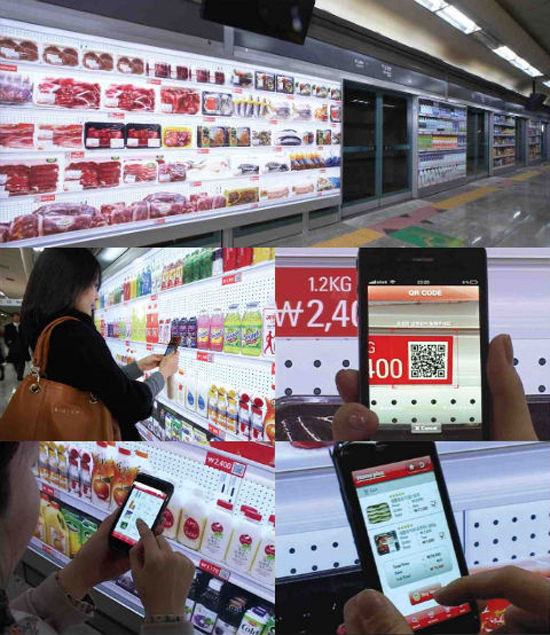
There is an unusual network in the Korean subwaysupermarkets, they are virtual. Some people simply do not have time to shop, so for their convenience, showcases were placed right at the station. We are talking about the Tesco supermarket chain.
Now, to buy food, you only needthe presence of a smartphone and the very minimum of time. The order is formed by photographing QR codes, and the payment is debited from the mobile phone account. Selected products are delivered in the evening by a courier at a time convenient for the buyer.
The idea of virtual underground stores was developed by the Korean advertising agency Cheil Worldwide and for it they have already received the media grand prix at the Cannes Lions 2011 festival.
Read also
The Andromeda halo is approaching our galaxy. We tell you why it is important
Symptoms of coronavirus in children. What you should pay attention to?
It turned out that made the Mayan civilization leave their cities