How did it all start? NSA espionage program and the Edward Snowden case
NSA phone collection program
PRISM is the code name of the program withinwhich the US National Security Agency (NSA) collects Internet communications from various US Internet companies. The program is also known under the code SIGAD US-984XN. PRISM collects stored Internet communications based on the requirement that Internet companies such as Google LLC are required by Section 702 of the FISA Amendments Act of 2008 to turn over any data that matches court-approved search terms.
In other words, this is a set of activitiescarried out with the aim of massive covert collection of information transmitted over telecommunication networks, adopted by the NSA in 2007 as a replacement for the Terrorist Surveillance Program, formally classified as top secret.
The existence of the program became known to the general public on June 6, 2013, when excerpts from a secret PRISM presentation were published in the Washington Post and The Guardian.
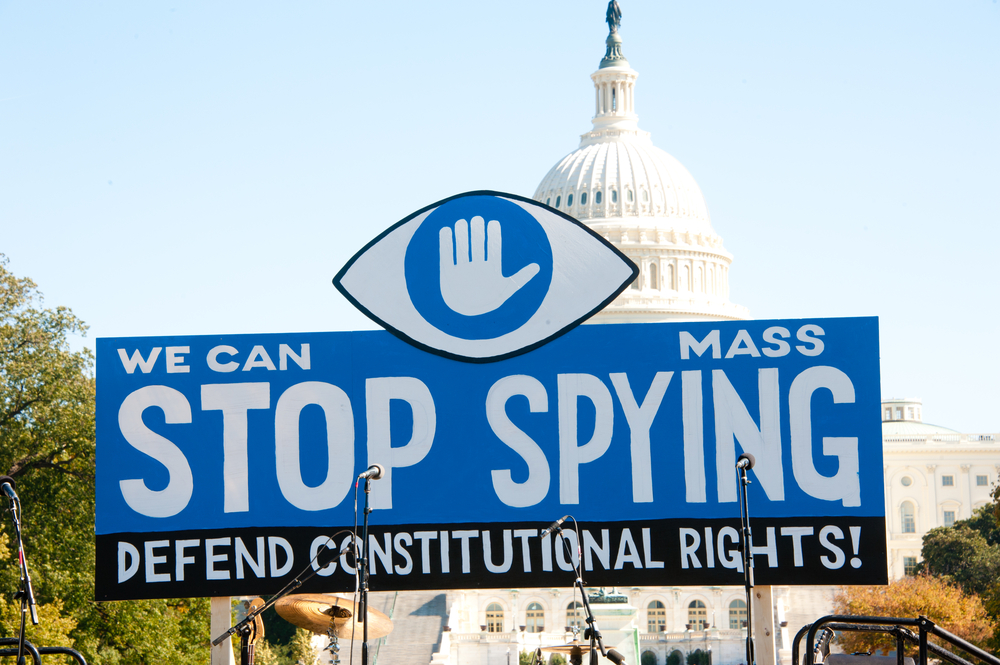
2010 Washington Post estimatesEvery day, NSA intelligence systems (including PRISM) intercepted and recorded about 1.7 billion telephone conversations and emails and about 5 billion records of the location and movement of mobile phone owners around the world.
Amid public outrage following the exposure, the agency defended the program at one time, claiming that it helped prevent terrorist attacks.
How the NSA defended its espionage program
In October 2013 The Agency of NationalSecurity, President Obama and members of Congress have said that NSA spy programs have foiled more than 50 terrorist plots. But there is no evidence that this statement is true.
Then two weeks after the first revelationsEdward Snowden on large-scale government surveillance, President Obama retaliated. “We know of at least 50 threats that were prevented by this information, not only in the United States, but in some cases also threats here in Germany,” Obama said during his June visit to Berlin. "So lives were saved."
Over the past months, representativesintelligence, media, and members of Congress from both sides have repeated the claims that NSA surveillance has stopped more than 50 terrorist attacks. This figure has become a key topic of discussion of spyware.
“54 times this and other programs were stopped andprevented terrorist attacks both here and in Europe, saving real lives,” Rep. Mike Rogers, R-Mich., who chaired the House Intelligence Committee, said at the time. - This is not a game. It's real".
But there is not and there was no evidence that the often quoted figure is accurate.
The NSA data itself was not always consistent with thehow many conspiracies it helped prevent; and what role surveillance programs played. The agency often made covert statements, avoiding any broad statements about the attacks prevented.
For example, in a diagram declassified by the agencyin July, it said the intelligence of the programs in 54 cases “contributed to [the US government's] understanding of terrorist activities and, in many cases, prevented potential terrorist events at home. and abroad ”- a statement that is very different from previous ones that programs are responsible for preventing 54 attacks.
 Source: propublica.org
Most NSA representatives only repeated versions of this wording.
To date, the NSA could only point toone example: the case of Basalai Moalin. On Wednesday, an appeals court ruled that collecting his phone records was not only illegal, but also irrelevant to the verdict.
What decision was made by the court and why?
The broad program of the Office of Nationalsecurity effort to monitor Americans' phone calls was illegal and possibly unconstitutional — and there is no evidence it led to the arrest of any terrorism suspects, a federal appeals court ruled Wednesday.
In its ruling, the 9th Circuit of Appealsthe court said the NSA violated the law by collecting "telephone metadata" or massive records of the history of American phone calls. The court upheld the convictions of four Somali immigrants who were charged with raising funds for terrorists, but concluded that the collection of NSA phone records was ultimately irrelevant to their beliefs.
Details of the Basalai Moalin case that changed everything
Basaalai Moalin, US Citizen Somaliorigin, lived in San Diego. In July 2013, Sean Joyce, then deputy director of the FBI, said in Senate committee testimony that Moalin's phone number had contact with "an East African al-Qaeda member" in Somalia. According to Joyce, the NSA was able to make this connection and notify the FBI thanks to Section 215 of the Patriot Act.
Section 215 of the Patriot Act allowsthe government to collect "books, records, papers, documents and other items" that are "relevant" to the "authorized investigation" was adopted immediately after the September 11, 2001 terrorist attacks on the United States.
 Photo collage source: Wikipedia
In February of the same year, Moalin was recognizedguilty of sending $850 to Shabaab, an extremist Somali militia linked to al-Qaeda. “Moalin and three others were convicted,” Joyce continued. “I go back to what we need to remember, which is what happened on 9/11.” At the same hearing, Sen. Dianne Feinstein of California spoke about “how little information we had” before 9/11. “I support this program,” she said, referring to Section 215.
In the 13 years since 9/11, the NSAused Section 215 of the Patriot Act to collect records of hundreds of billions of domestic phone calls. Congress made it clear why it passed the Patriot Act - despite concerns about the potential implications for civil liberties, it believed the law was necessary to prevent another 9/11 attack. The government did not provide any examples, other than Moalin's case, in which provisions of the metadata law directly led to a terrorism conviction.
In other words, there is no evidence thatthat the NSA's telephone recording program stopped the attack, contrary to public statements by US intelligence officials after Snowden's exposure, Judge Marsha Berzon said in the ruling.
"To the extent that public statements by government officials produced the opposite impression, this impression is incompatible with the content of the secret record," she said.
Now Moalin, a Somali immigrant,at the center of the case will remain in prison, where he will serve an 18-year sentence. Berzon said in her ruling that even if the NSA had not illegally obtained Moalin's phone records, it would not have helped his case.
What does Snowden think and how will the court's decision affect him?
After the publication of the court decision, Snowden said he felt justified in the decision.
He currently lives in Moscow, where he receivedpolitical asylum, but last year expressed a desire to return to the United States, where he was charged with espionage in connection with his decision to release information.
I never thought I'd live to see this momentwhen our courts condemn the activities of the NSA as illegal, and in the same ruling give credit for exposing these activities. And yet this day has come.
Edward Snowden
Top US intelligence officialspublicly insisted that the NSA never knowingly collected data from private telephone conversations until Snowden presented evidence to the contrary in 2013.
After being exposed, officials said thatThe NSA surveillance program has played a critical role in the fight against domestic terrorism, including the conviction of Basaali Said Moalin, Ahmed Nasir Taalil Mohamud, Mohamed Mohamud and Issa Dora of San Diego for helping Shabab fighters in Somalia.
But on Wednesday, the Court of Appeal said thatthe claims “do not match the content of the classified records” and the program violated the Foreign Intelligence Surveillance Act. Still, the court's decision in the Basalay Moalin case will not affect the 2013 verdict.
“Today's decision is the victory of our rights toprivacy, the American Civil Liberties Union said in a statement. "It makes it clear that the massive collection of American phone records by the NSA violates the Constitution."
Judge Berzon's ruling, which repeatedly referred to Snowden's role in exposing NSA practices, emphasizes that the NSA broke the law by monitoring millions of Americans.
The NSA collected Moalin's telephone metadata (andmillions of other Americans) on a consistent, daily basis for many years. Collecting millions of other people's telephony metadata, as well as the ability to aggregate and analyze them, makes Moalin's own metadata collection much more revealing.
Marsha Berzon
Instead of totals
The NSA's bulk metadata collection program wasdiscontinued in 2015. Congress passed the USA Freedom Act of 2015, which overhauled the 2001 Patriot Act and limited the phone surveillance program. It said voluminous phone records would continue to be kept by private phone companies, but investigators could only obtain them with a judge's permission. The NSA had reportedly stopped collecting phone metadata entirely by 2018, but in 209 the NSA was reported to have collected US call data again without permission. This came months after the agency deleted millions of call records.
Read also
The Andromeda halo is approaching our galaxy. We tell you why it is important
Symptoms of coronavirus in children. What you should pay attention to?
Unique molecule developed to store solar energy