Organ Lack Problem
Organ transplantation has been one of the phenomenal success stories of medicine

Unfortunately, the transplant community does notwas able to meet the demand for donor organs. There has certainly been an increase in the availability of donor organs over the past decade. But this is due to an increase in the number of "living" donors (primarily kidneys, and to some extent - liver and lungs) and the increasingly frequent use of donor organs from the dead, which many years ago were considered unusable.
The gap between the need for organs and the availability of organs continues to widen despite extensive public education on organ donation.
Deaths on the waiting list are 10patients per day, and patient wait times for all major organs continue to increase. This leads scientists to look for new sources of donor organs. For example, from animals. Is it successful?
Experiments with animal organ transplants
Organ transplant from person to personhas only been around since the 1950s, and scientists have been working on organ transplants from animals to humans - xenotransplantation - for nearly as long. In the 60s, Keith Reemtsma experimented with transplanting chimpanzee kidneys to humans. Most of the experiments failed within a few weeks, but one woman lived for nine months. Most other attempts at xenotransplantation, especially the heart and lungs, have had similar success. In 1984, in one of the most famous inter-species transplants, Leonard Bailey transplanted the heart of a baboon into a baby, Baby Fay. The heart failed after 20 days, but a year later it became the gateway to the first pediatric human-to-human heart transplant. In 2015, using genetic engineering, scientists, in addition to a pig's heart, preserved a living and functioning baboon kidney for 136 days.
Until now, interspecies transplants could not be sustained indefinitely. The fact is that the human immune system is built in such a way as to reject foreign bodies, in this case, organs.
Problems arise in laboratory testswhen human blood is pumped through a pig's organs. According to experiments with pig organ transplantation by Revivicor, which, incidentally, created the cloned sheep Dolly and is now actively working in the slowly developing field of xenotransplantation, the immune response is triggered by natural antibodies directed against the epitope of galactose, or the part of the pig's cells that determines whether antibodies to attach themselves or not. So the company is working to change this epitope by adding human thrombomodulin, a protein that covers these epitopes, to the pig genome. This makes them appear more human-like and therefore less likely for the body to reject them.
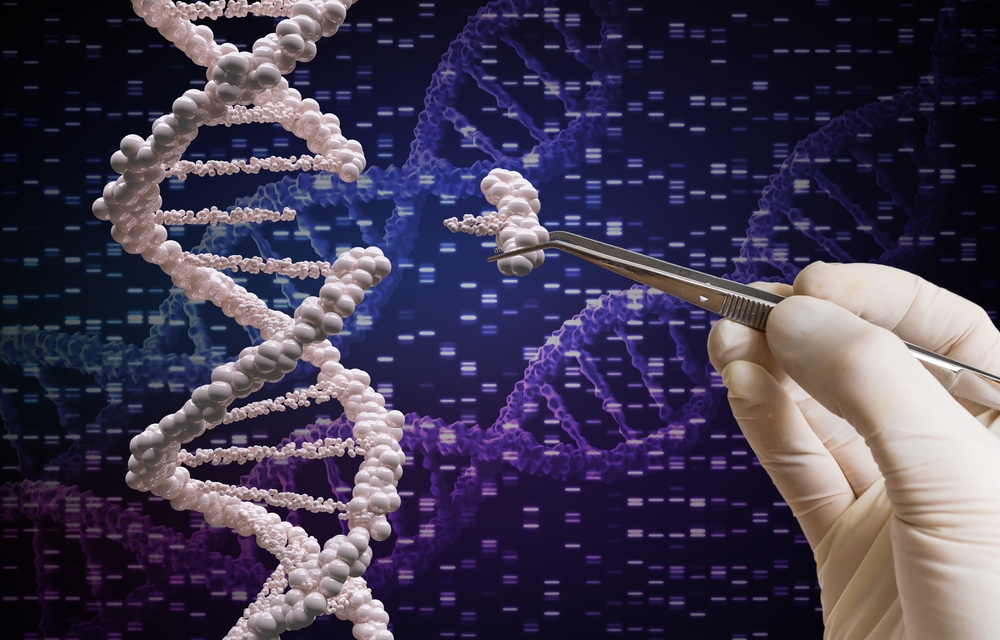
The challenge is to target genesthat are rejected by the human body, and then find ways to edit them. The baboon who survived the heart transplant was on a heavy course of immunosuppressive drugs and died when it was stopped. But scientists do not stop trying.
Why pigs?
Pigs are genetically far from humans, but their organsare the same size and easy to breed, which is why they have become a target for xenotransplantation or transplantation of non-human organs or cells into the human body. Porcine valves have already been used successfully in heart transplants.
Pig organ transplant problem
Pig organs are not naturally compatible withhuman bodies. To make them more appropriate, scientists, for example, a Chinese biotech startup founded by Harvard genetics pioneer George Church, Ph.D., used CRISPR (clustered regularly interspaced short palindromic repeats) to make 42 simultaneous modifications in 13 pig genes. Qihan Biotech has been experimenting with various genome editors since its founding in 2017. This latest version, which she calls Pig 3.0, is the most widely edited.
The changes are designed to prevent immune rejection, blood clotting, bleeding, and infection in transplant recipients.
So that a pork kidney, heart or lung canto save a person's life, it is necessary to trick the person's immune system so that it does not recognize that it belongs to a different species. This is where Crispr gene editing technology comes in, allowing researchers to make targeted changes to a complete set of genes in multiple locations simultaneously. CRISPR technology was used by eGenesis to remove a group of viruses from the pig's genome that some fear may enter the human body after transplantation. They are now also working to remove markers that identify cells as foreign so that the person's immune system doesn't reject them.
The company reported its findings in Natural Biomedical Engineering on September 21.

“This is a show of force,” said theinterview Future Human Jay Fishman, MD, associate director of the transplant program at Massachusetts General Hospital, who was not involved in the study. “We don't have enough organs for transplantation. We now have tools that allow us to manipulate animal organs to try to make those organs work.”
Given the size of organs and functions similar tohuman, pigs have long been viewed as a promising source for human organ transplants. But there are two main obstacles to introducing pig organs into humans: rapid immune rejection and the possibility of infection.
There are molecules on the surface of pig cellscalled antigens that appear foreign to the human immune system. As a result, any pig organ transplanted into a human will elicit a severe immune response, leading to rapid rejection. Pig heart valves have usually been transplanted into humans for decades, but pig tissue is “fixed” with chemicals so that the cells are no longer alive.
Last year, doctors overcame this problem withimmunity when they first transplanted genetically modified pig skin into a burn victim. The pigs were specially raised to prevent skin rejection. While pig skin grafts must be temporary and eventually replaced with skin from a person's own body, they are seen as a key step towards clinical trials in humans that use whole pig organs.
Another potential obstacle toorgan transplantation from pigs to humans is the fact that pigs contain in their DNA a family of congenital viruses known as porcine endogenous retroviruses, or PERVs. These viruses can be transmitted to humans during transplantation, but their risk to humans is still unclear.
In 2017, Church and others, including Luhan Young,Church's Ph.D. reported the first prototype pig with CRISPR: a pig without PERV. The second version, Pig 2.0, had changes to the immune system. Pig 3.0 (Pig 3.0) combines all these edits.
"They're pretty healthy," said the generalDirector of Qihan Biotech. "So far, they look normal in terms of their physiology, fertility and fertility." According to blood tests, the liver, heart and kidneys of the edited pigs are functioning normally.
The Hangzhou-based company has produced about 2,000 head of 3.0 pigs in China. Some were allowed to mate, and the resulting offspring also carry the same genetic modifications as their parents.
Now the question is, is it reallythese modifications make pig organs more suitable for human transplantation. “The leap of faith we have to take is that they will now produce organs that function in humans,” says Fishman. "But we don't know that yet."

In general, while a clear picture of whether it is possiblescientists do not have it. However, Revivicor's commitment to pig organs is personal, Smithsonian Magazine notes. Martina Rothblatt, founder of the current parent company Revivicor United Therapeutics, has a daughter with pulmonary arterial hypertension, a commonly fatal lung disease. The only way to cure this is with a transplant, so she spent time and money on organ transplants and tissue engineering. Revivicor focuses on the heart and liver rather than the lungs because the lungs are more affected by the immune system. They said they want the first complete pig-to-human organ transplant in a decade.
Rothblatt's dream is for Revivicor to becomean “assembly line” for new organs, so that “they will always be in abundance,” is just a dream. Although significant progress has been made in how organs maintain their integrity, direct pig-to-human transplantation is still a long way off.
"Immunological and pathophysiological problems,associated with xenotransplantation of pigs … are significant and likely reflect the fact that 80 million years have passed since pigs and humans diverged along the evolutionary scale,” wrote David K.S. Cooper, a surgeon at the Thomas E. Starzl Transplant Institute at the University of Pittsburgh Medical Center, in a 2012 article on xenotransplantation. "So, in the words of [German scientist] Klaus Hammer, we are trying to 'outsmart evolution.'"
In addition to the listed immunity problemshuman and interspecies infections, scientists also need to cross a difficult moral line. Bailey's heart transplant is still controversial, and there are concerns about both informed consent on the part of the patient and the welfare of the animals. Animal rights groups, as you might expect, oppose the farming of animals for the purpose of harvesting their organs. According to MIT Technology Review, “The last time a doctor transplanted a pig heart into a human was in India, he was arrested for murder in 1996.” .
Organ testing from animals
Before the edited pig organs canwill be used on humans, they must first be tested on monkeys, close human relatives. According to Yang, Qihan Biotech has performed "dozens" of organ transplants from pig to monkey. The company pays special attention to the kidneys, as the need for them is very high, but also performs multiple organ transplants to study how other pig organs live in monkeys. The recent changes have resulted in less severe immune responses in monkeys than in previous pig prototypes, Young said. She declined to say how long the transplanted monkeys survived.
In 2016, researchers at the US National Institutes of Health announced that they had managed to keep a pig's heart alive in a baboon for over two years, breaking all previous records.

Ian and Church are also co-founders of eGenesis.partner company Qihan Biotech in Boston, which has produced over 100 edited pigs, according to MIT Technology Review. But research in monkeys is expensive and controversial in the United States, and Chinese regulations are more conducive to research in non-human primates.
Fishman says that the fact that pigs seemhealthy and fertile and having normal sized litters is a good sign that the genetic manipulation has not harmed the pigs. But CRISPR isn't perfect: one of its well-known side effects is that it can make so-called "off-target" changes — unintended changes elsewhere in the genome. Some of these small DNA changes are likely harmless, but others may have health consequences.
Risks and consequences
When Yang and her team used sequencinggenome looking for off-target effects in edited pigs, they found several unintentional insertions and deletions. These unintended changes have occurred in the “non-coding” genes of those that do not contain instructions for making the proteins the body needs. Scientists once considered this part of the genome "junk DNA", but now they understand that these areas may have important functions.
Muhammad Mohiuddin, MD, directora cardiac xenotransplant program at the University of Maryland School of Medicine, which was not involved in the work, warns that extensive gene modifications can lead to abnormalities in animal organs.
He also says that for different organs candifferent genetic modifications are required. "We have to be careful not to change more genes than are absolutely necessary to avoid unknown risks."
Read also
The annual mission in the Arctic has ended and the data are disappointing. What awaits humanity?
Scientists have found out why children are the most dangerous carriers of COVID-19
Nest of Asian killer hornets found and destroyed in the USA