Hubble didn't look directly at Earth, but instead used the moon as a mirror for reflection

Exoplanets: How Many Have They Been Found and Where to Look for Life?
Although previously carried out numerous groundobservations of this kind, this is the first time that a total lunar eclipse has been recorded in the ultraviolet wavelength range and using a space telescope. Hubble has found a strong spectral fingerprint of ozone that absorbs some of the sunlight. Ozone is important for life because it acts as a "protective shield" in the Earth's atmosphere.
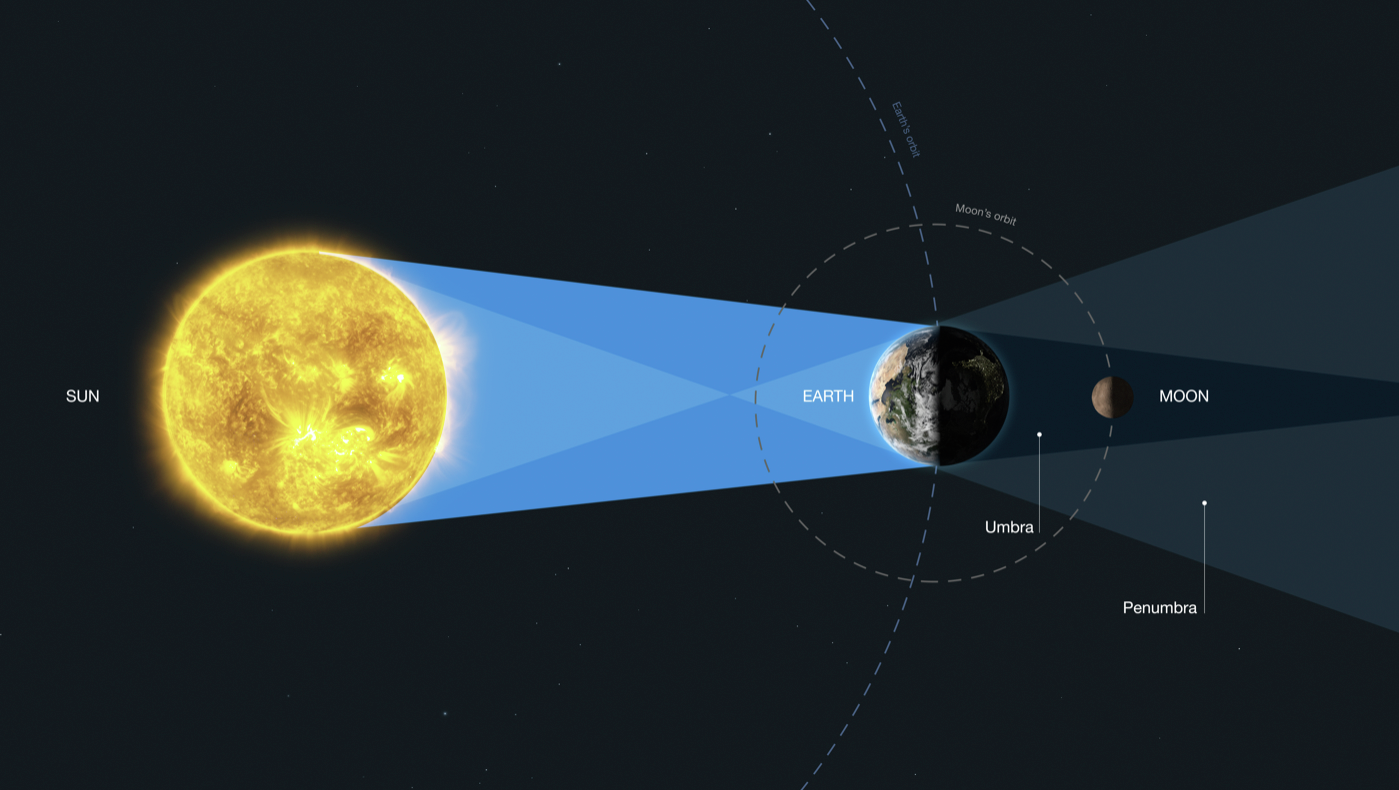 This diagram (not to scale) explains the geometrylunar eclipse. When the Moon is completely in the shadow of the Earth (known as a total lunar eclipse or dark eclipse), all sunlight that reaches the Moon's surface is refracted or scattered through the Earth's atmosphere. When the moon is in the Earth's penumbra (known as a penumbral eclipse), lighting comes from both direct sunlight and sunlight refracted and scattered in the planet's atmosphere. This process is similar to observing the transit of exoplanets.
Sources: M. Kornmesser (ESA / Hubble), NASA and ESA In this terrestrial telescopic view of the Moonhighlights a common area in which astronomers have used NASA's Hubble Space Telescope to measure the amount of ozone in the Earth's atmosphere. This method serves as an indicator of how they will observe terrestrial planets around other stars in search of life.
Sources: M. Kornmesser (ESA / Hubble), NASA and ESA
Photosynthesis on Earth for billions of yearsis the reason for the high levels of oxygen on our planet and the thick ozone layer. This is one of the reasons why scientists believe that ozone or oxygen can be signs of life on another planet, and they call them biosignatures.
Detecting ozone is important because it is a photochemical byproduct of molecular oxygen, which itself is a byproduct of life, the scientists emphasize.
NASA Goddard Space Flight Center
Although ozone was detected in the Earth's atmosphere duringDuring previous ground-based observations during lunar eclipses, the Hubble study represents the most important molecular detection to date. Ozone, measured from space without interfering with other chemicals in the Earth's atmosphere, absorbs ultraviolet light particularly strongly.
Hubble detects ozone absorbing part ofultraviolet radiation from the Sun, which passed over the edge of the Earth's atmosphere during the lunar eclipse, which occurred from 20 to 21 January 2019. Several other ground-based telescopes have also made spectroscopic observations at other wavelengths during the eclipse, looking for more of the Earth's atmospheric components such as oxygen and methane.
One of NASA's primary goals is to identify the planetson which life could exist. But how would we recognize an inhabited or uninhabited planet if we saw it? What would they look like with the methods astronomers have at their disposal for characterizing exoplanet atmospheres? This is why it is so important to develop models of the Earth's spectrum as a template for categorizing atmospheres on extrasolar planets.
Allison Youngblood of the Atmospheric and Space Physics Laboratory in Boulder, CaliforniaColorado, Hubble's Principal Observer
Read also
Scientists may have come close to understanding how our planet became habitable
See what Hubble's successor can see in space. Webb telescope overview
Researchers find out how parasites learned to live without oxygen