The Eocene Epoch occurred between 56 and 34 million years ago - the last greenhouse period in the history of the Earth,
Until now it was unclear how the changes are relatedclimate and CO2 during this period. Recent studies of climate models have shown that warm climates are more sensitive to changes in carbon dioxide than cold climates. This could be especially important for our future as the amount of CO2 only increases and the Earth continues to warm.
Based on surface water acidity (pH) andIn assessing the state of ocean saturation with calcite, the authors calculated how atmospheric CO2 was released during the Eocene. The data used were obtained in the study of the boron isotopic composition of fossil shells of ancient marine plankton deposited on the seabed in the Eocene. It was collected on expeditions to the International Ocean Science Program.
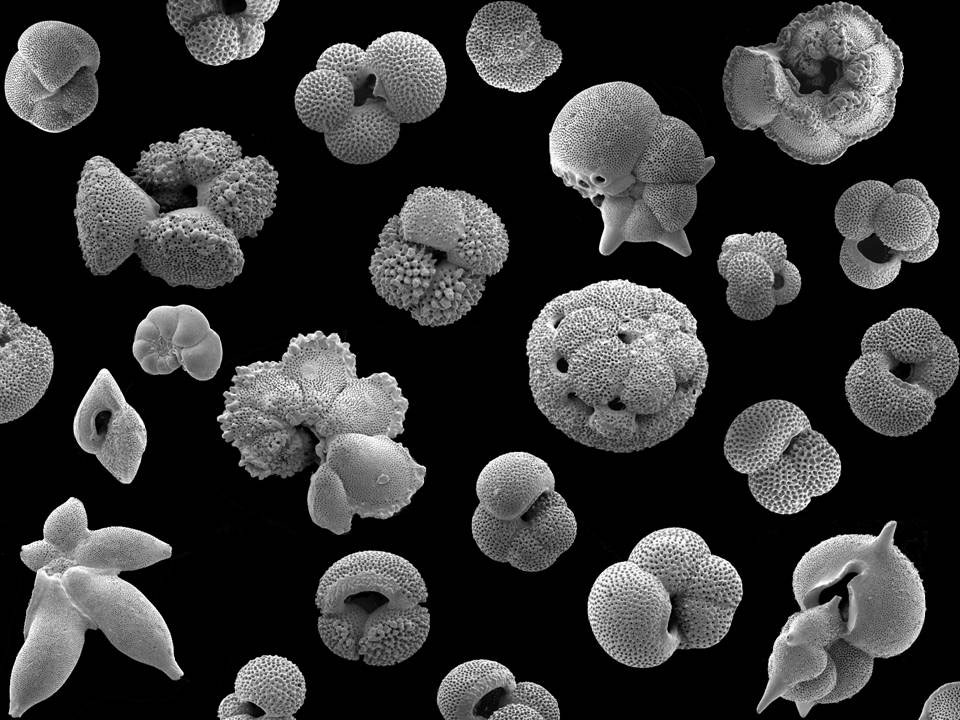 Researchers have calculated how CO2 formed in the atmosphere by studying fossilized shells from ancient marine plankton. Credit: University of Southampton.
New CO 2 data provides new and comprehensive insightinsights into climate evolution during the Eocene and provide strong evidence of a link between CO 2 levels and warm climates. It shows how volcanism, rock weathering and burial of organic material affect natural CO 2 concentrations and therefore climate.
Now that we have demonstrated that the climatemore sensitive when warm, as it was during the Eocene, the next step is to figure out why this is so and to make sure that such a relationship is represented in the climate models that are used to predict future climate.
Dr Tali Babila, research fellow at the University of Southampton and co-author of the study
Read also
Look at the 3D map of the Universe: it was compiled for 20 years and it has already surprised scientists
Scientists have found out why children are the most dangerous carriers of COVID-19
It turned out that made the Mayan civilization leave their cities