The environmental impact of the construction industry is a growing concern. Some
researchers turned to additivemanufacturing or building structures layer by layer, often done with a 3D printer. This progress has begun to transform the construction sector in terms of waste reduction, but the materials used in the process must also be environmentally friendly.Sarbajit Banerjee, Ph.D., Principal Investigator of the Project
For example construction projects usingconcrete have demonstrated the potential for additive manufacturing of building structures quickly and cheaply. However, according to the International Energy Agency, concrete production accounts for approximately 7% of carbon dioxide emissions.
Historically, people built from local materials,such as adobe, but the transition to concrete has caused many environmental problems. The main idea of the scientists was to turn back the clock and find a way to adapt materials "from our yards" as a potential replacement for concrete, the researchers explain.
The advantage of using local soil inconstruction is that materials do not need to be produced and transported to the construction site, which reduces both costs and environmental damage. It is also said that soil-based additive manufacturing could one day be used outside of Earth to create settlements on the Moon or even Mars.
Soil is usually classified by layersmaterials that it includes, from the top organic layer, where plants grow, to the hard base of the earth's crust. Beneath the original organic layer is clay, which gives the soil the plastic character that the researchers used in their project.
The researchers began by collecting soil samples frombackyard of his colleague and processing the material with a new environmentally friendly additive so that it bonds together and can be easily extruded through a 3D printer. Because soils vary greatly by location, their goal was to have a chemical “toolbox” that could transform any type of soil into a printable building material.
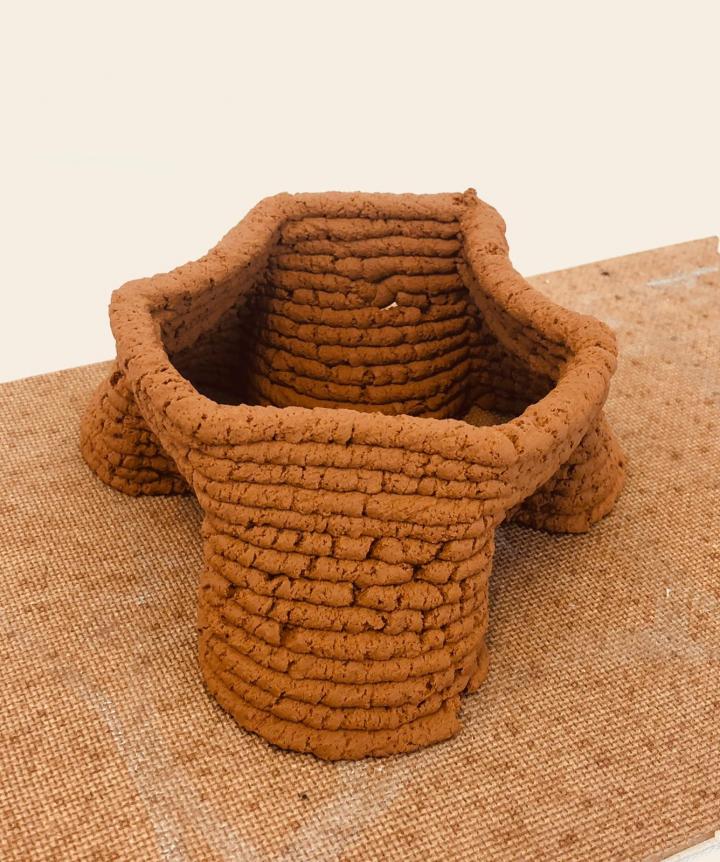 Scientists have developed a method for 3D printing structures from local soil
The next step was to make sure that the mixturewithstands stress, which means it will support the weight of the layers, as well as other materials used in construction such as reinforcement and insulation. To help with this, the researchers strengthened the clay mixture by zipping up microscopic layers on its surface to prevent water absorption and expansion that could compromise the printed structure. Using this method, researchers have shown that the material can hold twice as much weight as unmodified clay mixture.
Then the team of scientists plans to improve the carrierthe ability of the soil to expand its test structures and get as close as possible to replacing concrete. In addition, they are collecting data to understand if these 3D printed designs are as environmentally friendly as they think, especially in terms of carbon footprint and recyclability potential. Once they have a better understanding of the chemical composition, functionality and construction possibilities using local soils, they plan to continue exploring the use of this technology outside of our planet.
Read also
Russian physicists have studied the conditions under which Newton's third law does not work
After the introduction of the Russian vaccine, 144 side effects were found in volunteers
Scientists have learned the composition of an asteroid of unknown origin Oumuamua