Currently, there are no specific recommendations on what material is best to use to
Research from the College of Engineering andin computer science from Florida Atlantic University was made based on cough imaging. With its help, the authors studied how well three types of masks keep our breath and tiny saliva particles from spreading.
Scientists made synthetic fog as wellvisualized droplets escaping from the mannequin's mouth, so they imitated coughing and sneezing. For the study, not narrow-profile medical masks were specially taken, but ordinary easily accessible masks, here fell: a single-layer coating in the style of a scarf or bandanas, a home-made cotton mask, as well as a non-sterile conical mask, which can be purchased at a pharmacy. Scientists put these three masks on a mannequin and looked at the trajectory of drops that involuntarily fly out of their mouth.
The bandana let through 75 cm of droplets when breathing. However, during sneezing, this figure increased: 107 cm with a recommended distance of one and a half meters.
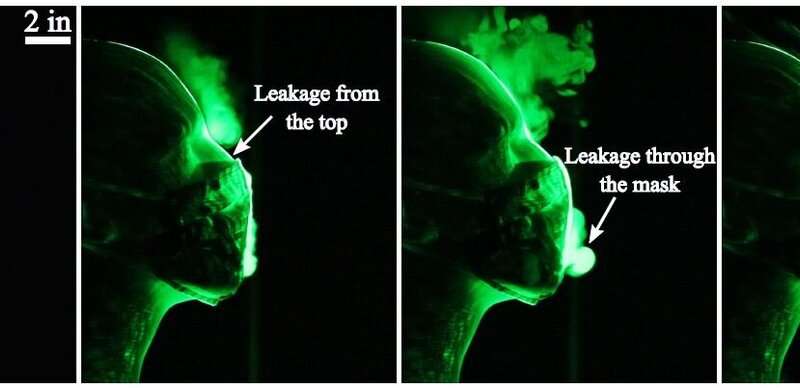 The photo shows a mannequin wearing a bandana. Source: Florida Atlantic University, College of Engineering and Computer Science
Two-layer cotton mask: with normal breathing, they pass only 17 cm.
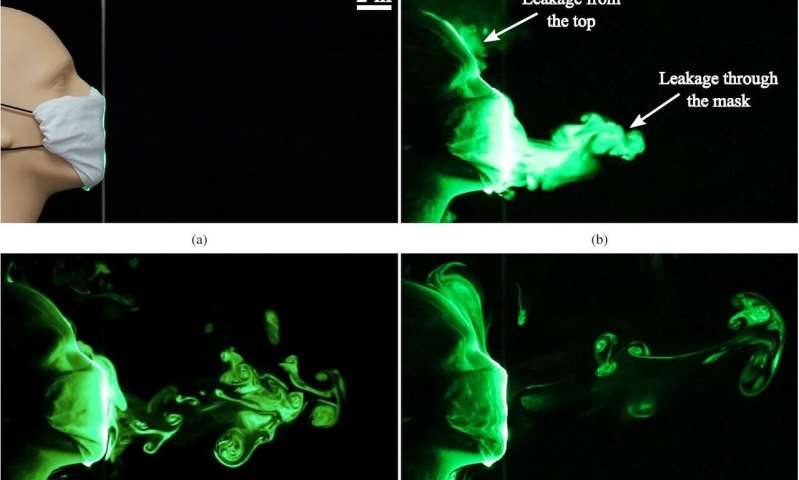 The photo shows a mannequin wearing a cotton mask. Source: Florida Atlantic University, College of Engineering and Computer Science.
And the cone-shaped mask allows droplets to pass through 40 cm when breathing.
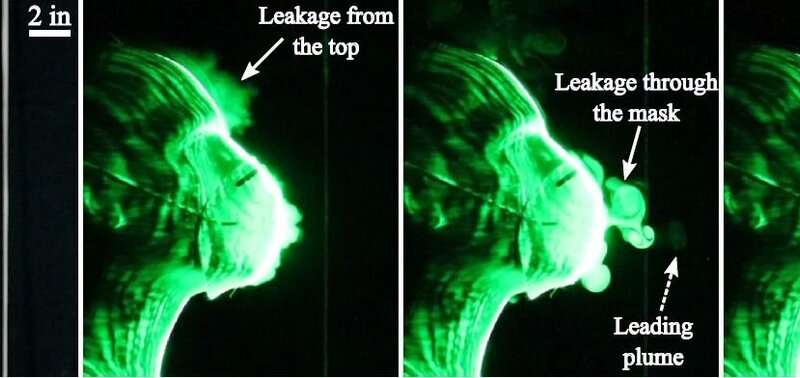 The photo shows a mannequin wearing a cone-shaped mask. Source: Florida Atlantic University, College of Engineering and Computer Science
According to the researchers, it was important for them to understandwhat type of protection is most effective against the spread of COVID-19. After all, the pathogen responsible for COVID-19 is found mainly in the respiratory drops that are released by infected people during coughing, sneezing, or even talking.
Read also
Planet Parade 2020: where to look, when will happen and what science says about it
It turned out that made the Mayan civilization leave their cities
Look at Crew Dragon from an unexpected angle: this shot was taken by an astronaut