A new image from NASA's Hubble Space Telescope shows the elliptical galaxy NGC 547.
NGC 547 is a bright radio galaxy, which meansthat it has gigantic regions of radio emission that extend far beyond its visible structure. The radio emission lobes are powered by jets from the active galactic nucleus, or AGN, at its center.
Active galactic nuclei are nuclei in whichthere are processes accompanied by the release of a large amount of energy, which are not explained by the activity of individual stars and gas-dust complexes located in them. The observed signs of nuclear activity and the forms of energy release can be different.
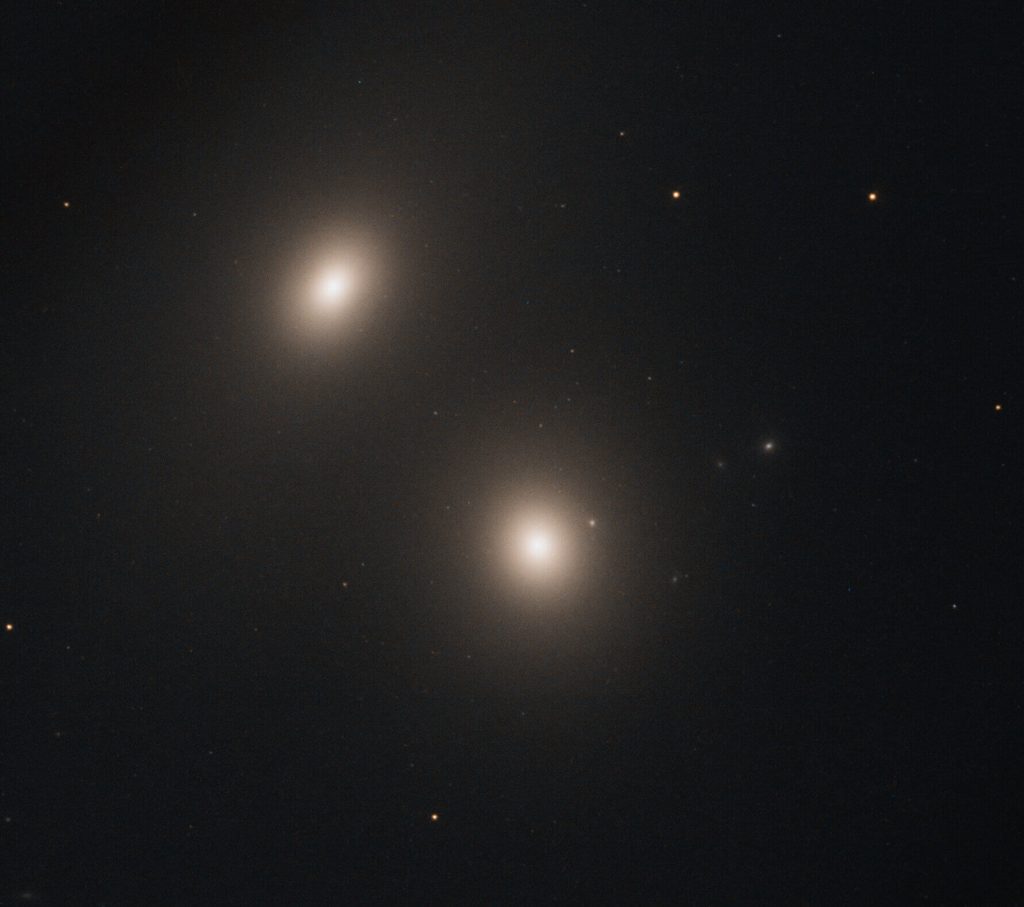 Credit: NASA, ESA, J. Blakeslee (NOIRLab - (AZ)) and V. Sparks (SETI Institute);
Processing: Gladys Kober (NASA/Catholic University of America).
Galaxies with active galactic nucleihave an extremely bright region in their cores where a supermassive black hole exists. When dust and gas fall into a black hole, it emits light across the entire electromagnetic spectrum.
Radio galaxies are among the most energeticastrophysical phenomena. Hubble observed this galaxy as part of a data set study designed to help continue testing scientific theories about AGN.
Read more:
Scientists first saw how a star devours the planet: this, in the end, is waiting for the Earth
Two super-Earths found on the edge of the habitable zone: one of them has a comfortable temperature
Modern humans migrated to Europe differently than previously thought