Deltamethrin has been one of the main tools for malaria control.In recent years, however, his
Its efficacy remained questionable due to the insects becoming accustomed to it.The simple method of making a new crystalline form of this substance, as well as its increased stability and efficiency, speak to theIn favor of the fact that it will soon become the basis for the fight against malaria and other diseases that carry the disease.Mosquitoes.Michael Ward, Developer and Professor, New York University
Malaria is a serious problempublic health. More than 200 million cases and 400,000 deaths are recorded worldwide every year. Insecticides such as deltamethrin can prevent the spread of mosquito-borne diseases and are often sprayed indoors and on bed nets. However, mosquitoes are becoming more resistant to insecticides, forcing researchers and health officials to look for alternatives with new ways of acting.
In recent years, biologists have discovered in the bodymosquitoes have several new defense systems that block the action of deltamethrin and other substances from the number of pyrethroids - neurotoxic poisons that are applied to bed nets. All attempts to neutralize their work have failed.
Researchers at New York Universitycreated a new crystalline form of deltamethrin (right), resulting in an insecticide that is 12 times more effective against mosquitoes than the existing form (left). Credit: Jingxiang Yang, New York University.
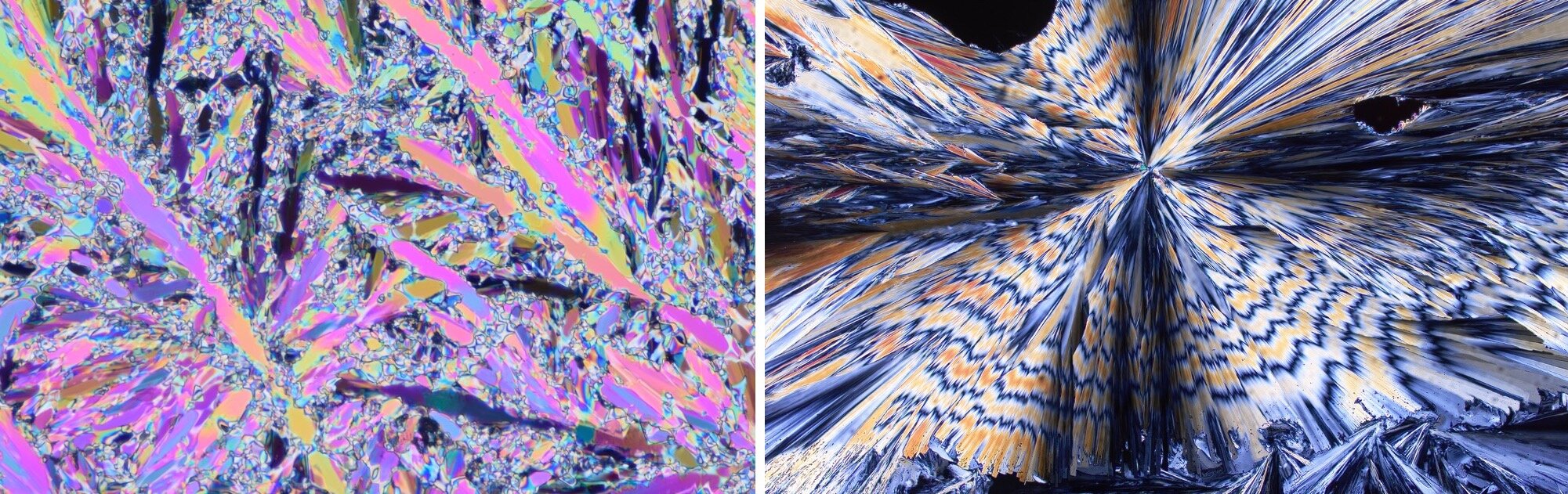
Ward and his colleagues found a way to dodeltamethrin effective. They studied how crystals of this substance are formed when it dries and during the manufacture of bed nets. To do this, scientists dried a solution of this substance and evaporated it, and then analyzed how crystals form when the steam is cooled.
Researchers heated the substance to 110 ° C infor several minutes and allowed it to cool to room temperature. This resulted in a new crystallized form of deltamethrin made up of long tiny fibers emanating from a single point.
Experiments on two species of these insects, Anophelesquadrimaculatus and Aedes aegypti, have shown that it is about 12 times more effective than existing counterparts used to make nets. Additionally, the scientists found that these crystals remained stable and did not lose their effectiveness even three months after they were made.
Read also:
There may be universes in black holes. We tell you about the new discovery
On day 3 of illness, most COVID-19 patients lose their sense of smell and often suffer from a runny nose
Research: 15 million tons of microplastics found on the ocean floor