Scientists presented the results of an initial organic analysis of a sample from the surface of the Ryugu asteroid.
In the first analysis of the organic composition of an asteroidResearchers have identified hundreds of thousands of ion signals using a mass spectrometer. They were able to be correlated with approximately 20 thousand elemental compounds consisting of carbon, hydrogen, nitrogen, oxygen or sulfur.
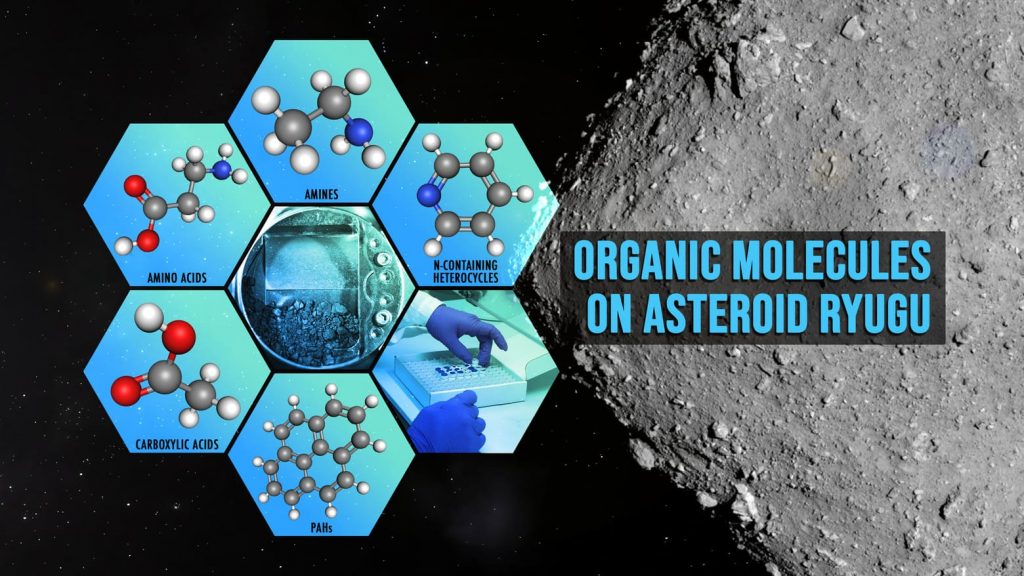 Artistic illustration of organic matter in Ryugu samples. Image: NASA/JAXA/Dan Gallagher
Among the complex substances - 15 amino acids, includingglycine, alanine and α-aminobutyric acid. All of them were present as racemic mixtures consisting of an equal number of "left" and "right" modifications. Recall that organic life on Earth consists of "left" amino acids and "right" sugars. An equal amount of both modifications of amino acids indirectly confirms the abiotic formation of such molecules - synthesis outside living organisms.
In addition, researchers have identifieda sample of various organic compounds formed in the presence of liquid water. Among them are aliphatic amines (methylamine and others), carboxylic acids (for example, acetic acid), polycyclic aromatic hydrocarbons, and nitrogen-containing heterocyclic compounds.
Prebiotic molecules are preserved onthe surface of the asteroid, despite the harsh conditions of space, the researchers note. This suggests that the topmost surface Ryugu grains may protect the organics from heat, ultraviolet radiation, and cosmic rays.
These molecules can be transported throughout the solarsystem, potentially dispersing as interplanetary dust particles after they were ejected from the uppermost layer of the asteroid as a result of impacts or for other reasons.
Hiroshi Naraoka, study co-author at Kyushu University
The new study is one of the first analyzes of samples collected from the asteroid Ryugu. Scientists will continue to study the samples. Earlier, Hi-Tech spoke in detail about the mission of the Hayabusa-2 spacecraft.
Read more:
Found "impossible" planet. She defies modern science
Physicists have shown what happens when two black holes collide
Biologists explain why no life has yet been found on Mars