German archaeologists examined the site of the Heidelberg people (Homo heidelbergensis) of the Early Paleolithic period (about
 Artistic illustration of Homo heidelbergensis wearing bearskins. Image: Benoit
Clarys, University of Tübingen
Archaeologists have studied the remains of the bones of bears,discovered at an ancient human site. Among them were the metatarsal bones and phalanges of the fingers. On these bones, the researchers found characteristic cuts. Scientists note that ancient people could use the meat of bears for food, but cuts on the bones of the paws and legs indicate attempts to skin them.
Cut marks on bones are often interpreted asarcheology as an indication of the use of meat. But it is hardly possible to recover meat from the bones of the arms and legs. In this case, we can attribute such thin and precise cuts to careful skinning.
Ivo Verheijen, co-author of the study from the University of Tübingen
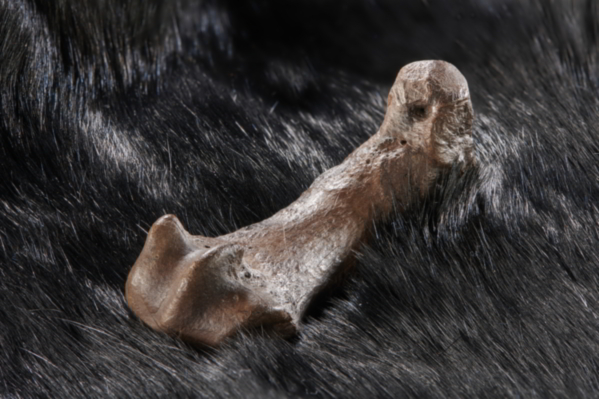
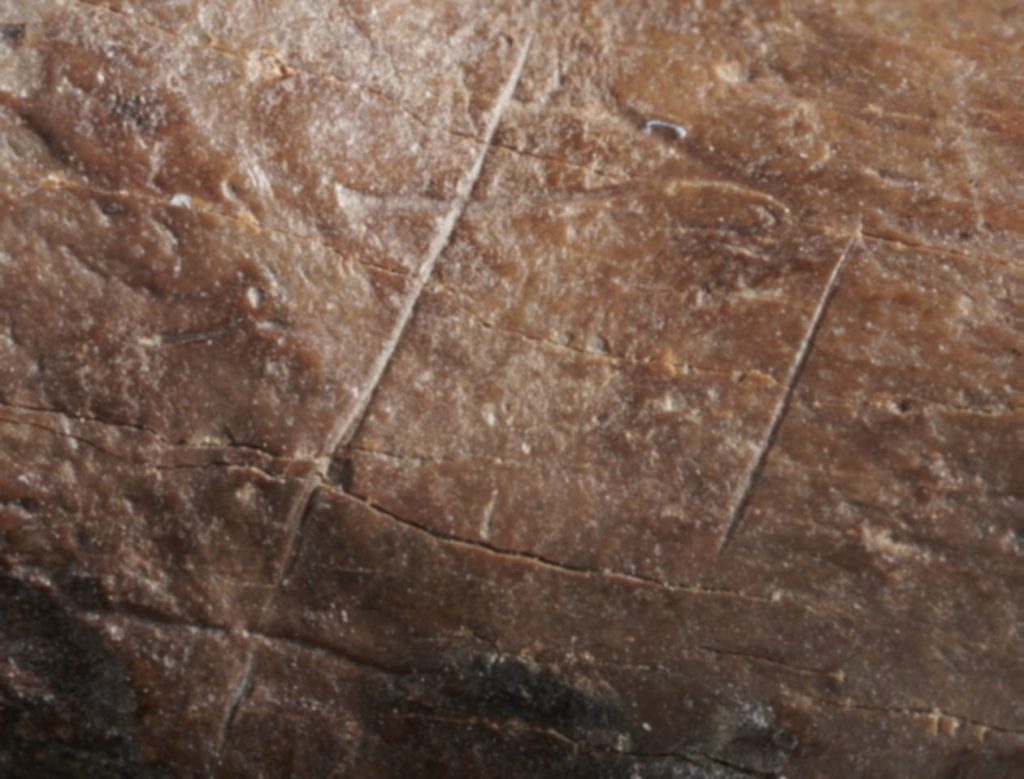
Traces of cuts on the small bones of the bear. Images: Volker Minkus, University of Tübingen
The bear's winter fur consists of both long outerhair, forming an air protective layer, and from short thick hairs, providing particularly good thermal insulation, the scientists note. Bears, including the extinct cave bear, need wool to hibernate to provide protection from the cold.
Researchers note that in addition to bonesAnimals at the ancient site were found a large number of copies, including the oldest known in the world. In addition, the fact that all the bones at the excavation site belong to adults indicates a developed hunting among ancient people.
Archaeologists believe that the spread of hunting and the use of bearskins to protect against the cold were the main elements of the adaptation of ancient people to the northern climate.
Read more:
17-year-old engineer came up with a magnetless motor: it can be used in electric vehicles
Published test video of the world's first propeller with 11 blades
It turned out how old the water we drink today