Researchers from Columbia University studied the functioning of the membrane protein LRP2, found in cells
Typically, LRP2 is on the surfacecell membrane, waiting for an opportunity to catch a passing molecule. After a protein binds to a molecule, the cell absorbs the portion of its surface containing the protein, forming an internal vesicle called an endosome. LRP2 then releases the molecule inside the cell, and the endosome brings the protein back to the surface.
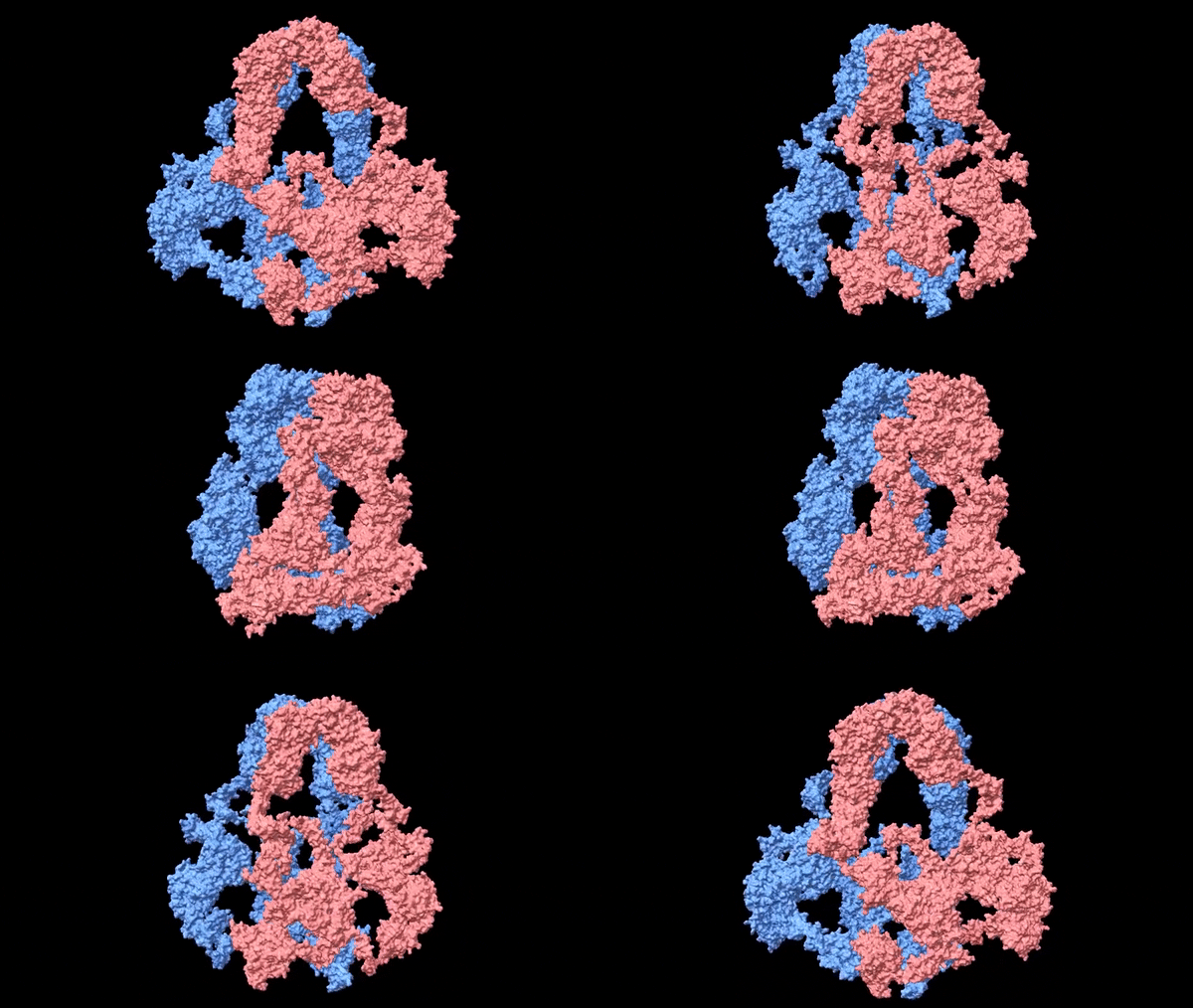
To understand how this "ferry" works,The researchers collected samples of the LRP2 protein from 500 mouse kidneys. They placed part of the protein in a solution with a pH of 7.5, which corresponds to the extracellular space, and part in a solution that mimics endosomes, with a pH of 5.2. Using a cryoelectron microscope, they took pictures of the proteins and then connected them together on a computer, creating three-dimensional maps of the protein in both open and closed formations.
The 3D model shows that the proteintransforms from a more open structure at an almost neutral pH outside the cell to a clumped form at an acidic pH inside the cell. These shape changes allow LRP2 to capture molecules from outside the cell and release them inside it. The researchers suggest that the charged calcium atoms keep the protein open at extracellular pH. But when the pH drops due to the influx of hydrogen ions into the endosome, the latter displace calcium, causing the protein to contract.
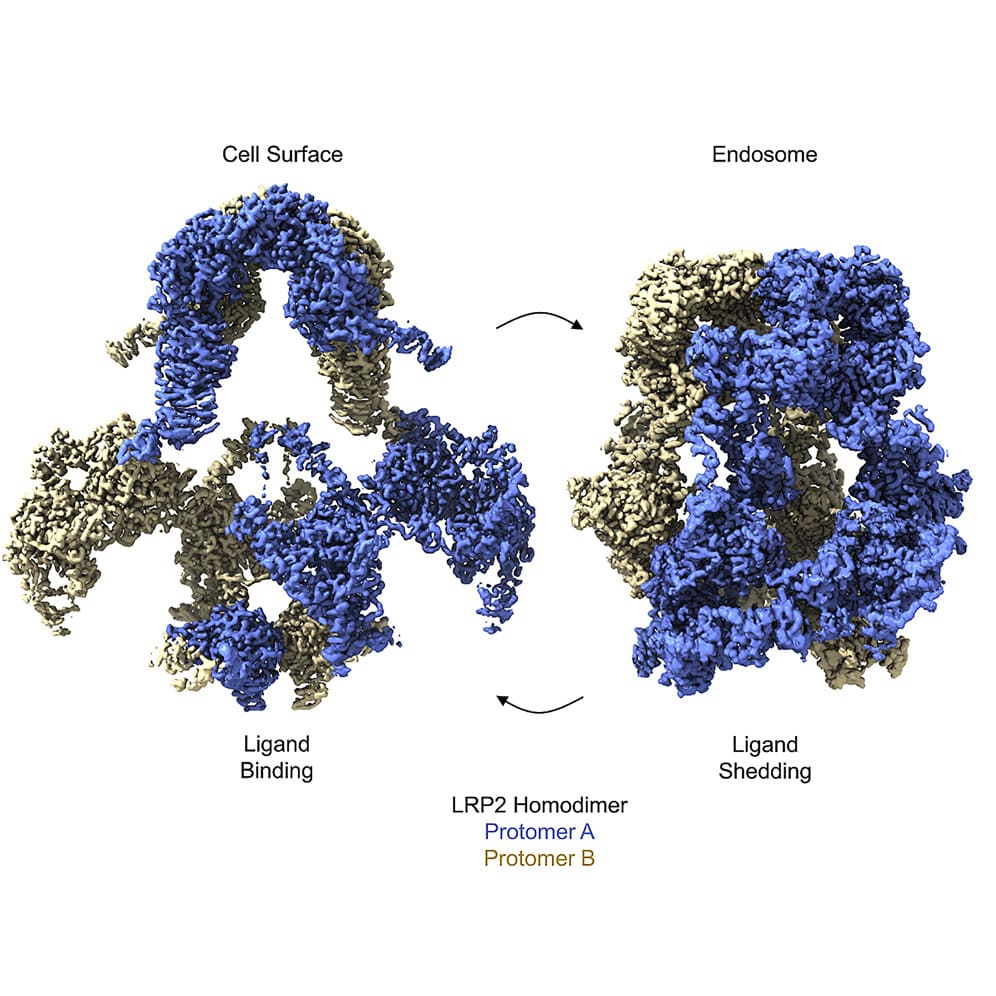 Open and closed state of the LRP2 protein. Image: Andrew Beenken et al., Cell
When LRP2 proteins do not contain mutations, they succeedmaintain molecular balance, for example, in blood and brain tissue, the study authors note. But when there are even tiny changes in the huge molecular anatomy of the LRP, these proteins contribute to the development of diseases.
Protein malfunction in the kidneys can causechronic kidney disease, Donne-Barrow syndrome and a number of fatal nephrological conditions in newborns. Disorders in the brain contribute to the development of Alzheimer's disease. Understanding how this complex molecular mechanism works will help in the treatment of various diseases, scientists say.
Read more:
A powerful flare erupted on the Sun: it has already affected the Earth
Medieval fortress accidentally discovered in the forest: the find surprised scientists
Scientists have found a new genetic disease in children: how it manifests itself
On the cover: two states of the LRP2 protein. Image: A. Fitzpatrick, A Beenken, L. Shapiro, Columbia's Zuckerman Institute