The history of hemp in modern Russia
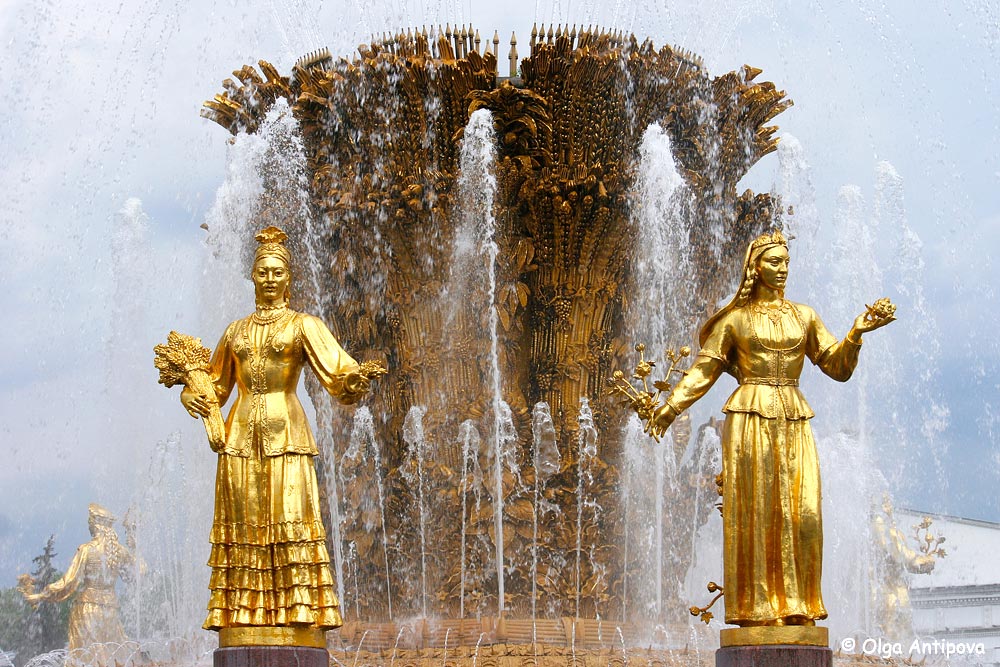
The main element in the “Friendship of Peoples” fountain at VDNKh, which was
Now in Russia there are only 8 thousand hectares of hemp crops. In modern Russia, it is allowed to grow only for industrial use, and that is with great restrictions, while the most popular hemp variety in the world with a high content of the psychoactive substance tetrahydrocannabinol - cannabis, which is colloquially called marijuana, is prohibited.
At the same time, cannabis is gradually emergingfrom bans - in Germany, France, Italy, Argentina, England, Australia and in some other countries it is allowed to use it for medical purposes, and in Georgia, Spain, Mexico and South Africa even the use of cannabis for personal purposes is derived from criminal law. Now, in fact, there are three countries where its use is fully legalized - Canada, Uruguay and partly the Netherlands. In the United States there is no federal law authorizing the use of marijuana, so each state independently decides on a possible legalization.
How cannabis is used in industry
In addition to textile production and medicalindustry, hemp, or rather, seeds that do not contain psychotropic elements, can be eaten, cake of them is used as animal feed, and they also make oil. From cannabis stalks, cellulose can be made from which paper and especially durable composites are made for the aircraft industry and the automotive industry.
At the same time, from 1 hectare hemp can producethe same pulp, how much of almost 5 hectares of forest. In addition, a packaging film is created from it, which is almost completely identical to plastic, but completely biodegradable in three months.
Medical marijuana
Cannabis was used in one form or another onfor millennia, but only in 1964, a team led by Israeli researcher Rafael Meshulam brought THC as a molecule that attracted the attention of users. By that time, the ban on cannabis was widespread for over 25 years, creating huge bureaucratic obstacles for researchers who wanted to work with the plant. But Meshulam continued to do this, isolating another cannabinoid, cannabigerol (CBG), and mapping the structure of cannabidiol (CBD). It turned out that all these chemicals play a role in the body's response to cannabis. In 1998, Meshulam coined the term “environmental effect” to describe the complex interaction between cannabinoids and the body’s own neurotransmitters in determining the effects of the drug.
The use of medical cannabis since the 90sdiscussed by the medical community as an alternative treatment for diseases that are almost impossible to cure. However, in the United States, the FDA has not yet approved a single drug that is completely medical marijuana - only certain drugs that use derivatives of tetrahydrocannabinol (THC), the main cannabinoid and cannabidiol (CBD), a marijuana enzyme that does not have a psychoactive property, however occupies up to 40% of the volume in the entire extract.
THC and CBD work with endocannabinoids -substances similar in structure and action to the active components of marijuana, they are only produced by brain neurons. Endocannabinoids are present in many body tissues, immune cells and the nervous system, and their normal functioning affects hunger, sleep, memory and relaxation. The use of THC and CBD for medical purposes can stabilize the functioning of endocannabinoids in the body.
Medical cannabis helps alleviate the following pathological conditions:
- Pain.Cannabis is not so much an anesthetic as a relaxant, which helps the patient cope with pain and also relieve inflammation.
- Muscle tension.Cannabis is used for muscle relaxation inpatients suffering from bronchial diseases. In addition, it helps relieve tension in the muscles of the bladder in patients with incontinence.
- Poor blood circulation.Medical cannabis improves blood circulation and heat retention in the body.
- Cramps.Medical cannabis relieves cramps, which, withfor its part, ensures good quality sleep. We are talking about muscle spasms that occur when the patient is lying in bed - and this prevents him from sleeping.
- Chemotherapy.Medical cannabis often helps patientsovercome nausea after chemotherapy. After the nausea stops, the patient eats better and even takes medications more easily. Cannabis tends to stimulate appetite.
- Hormonal disorders.Cannabis helps with disorders associated with the menstrual cycle, such as premenstrual syndrome.
- Sexual disorders.Cannabis has aphrodisiac properties, helps with premature ejaculation and helps improve erections.
- Psychological state.Cannabis has a relaxing effect andhelps the patient forget about his illness. Thus, the patient becomes more cheerful, which, in turn, contributes to more meaningful communication with other people.
In Russia, hemp research for furtherMedical use began only at the end of last year. They are mainly aimed at "searching for cannabinoids, which, if used for medical purposes, would not cause severe psychoses and other side effects," said Evgeny Bryun, chief freelance specialist at the Ministry of Health psychiatrist and narcologist.
We don’t know how these studies will end, so we don’t have to say that we use hemp for medical purposes either.
Evgeniy Brun
When smoking marijuana, psychoses occur in 1-3%cases, Brun noted. They are "severe schizophrenia-like, poorly treated, essentially disabling a person." Because of this - at least officially - legalization of marijuana in Russia is not planned yet.