An ancient necropolis with 40 tombs, including cylindrical ones, was discovered on the French island of Corsica
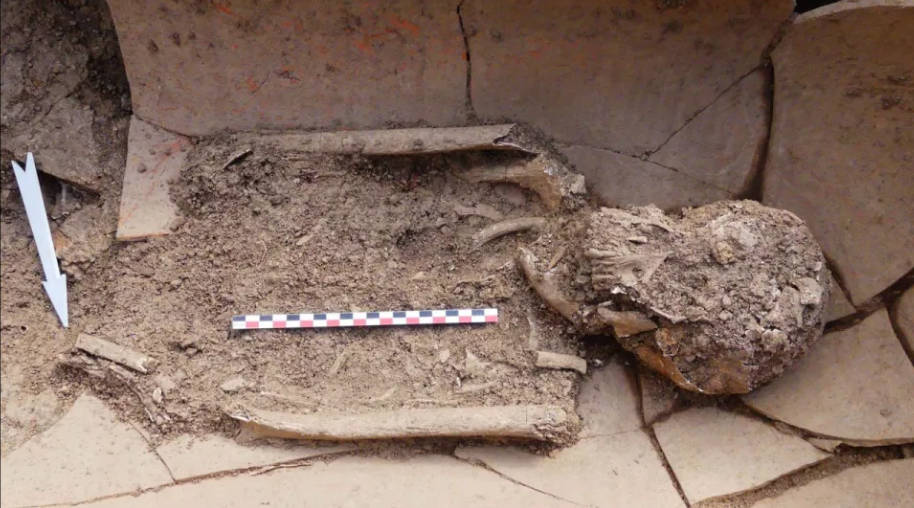 This image shows the head of one of the people buried in an amphora pot in the necropolis. Photo courtesy of Jean-Jacques Grisot, director of the Il-Rousse excavation
According to archaeologists, at the cemeteryBoth infants and adults were buried. The necropolis, located in the city of Ile-Rousse on the northern coast of the island, appears to have been in use between the third and fifth centuries AD. At this time, the Roman Empire gradually fell into decline. Notably, several remains were found buried inside amphorae, large vessels typically used to transport goods such as olive oil, wine or pickles. The design of the amphorae suggests they are from North Africa, and some may have been produced in Carthage.
 Image credit: Photo courtesy of Jean-Jacques Grisot, director of the Il-Rousse excavation
Despite this, the bodies are buriedin the necropolis, including in the amphorae, they probably lived not far from the necropolis in Corsica, scientists emphasize. At that time, a lot of trade was carried out across the Mediterranean Sea. This explains the presence of amphorae from Africa.
Over the next few months, archaeologists will conduct laboratory work to determine the gender of the people, their exact age, and any illness or injury they may have.
Read more
Scientists have come up with a way to charge electric vehicles on the go
Scientists have shown how a black hole tears apart a star
Evolutionary error: which organs in the human body work illogically