</ img>
When a year and a half ago I wrote who needs smartphones with bendable screens and why their price should not
Reason one: wow effect
Once upon a time, in a past life, in a timepush-button telephones (for modern schoolchildren this is about the same as the times of payphones) there was such a thing as an “image” telephone. If you take out the clogged stamps of those times from a dusty chest, they served to “emphasize status”, “stand out from the crowd” and in every possible way emphasize some feature of the owner of such a phone (as if a thing can say something good about a person when in fact, everything is exactly the opposite - proven by Silicon Valley billionaires in worn-out jeans and turtlenecks). Moreover, in addition to traditional phones in all possible form factors (among the fashion ones there were all-in-one PCs, clamshells, sliders, and rotators), there were also Vertu phones for the price of a car (so that it didn’t seem too much) and all sorts of gypsies with gold cases and other bad taste for Arab sheikhs. Then the era of iPhones came and in one fell swoop the iPhone of strictly the latest model in the maximum configuration became the most desirable among influencers, smoothies and other Instagram gurus. Apple contributed to this in every possible way, either releasing an updated golden-colored model, or installing (strictly according to the precepts of Jeffrey Frost from Motorola, who came up with the three-meter rule) a screen with a cutout, or changing the location of the dual camera to vertical, or even making a slab out of the camera module three burners. All so that from a distance of three meters everyone can understand that in front of them is the owner of not just an iPhone, but the latest model iPhone.
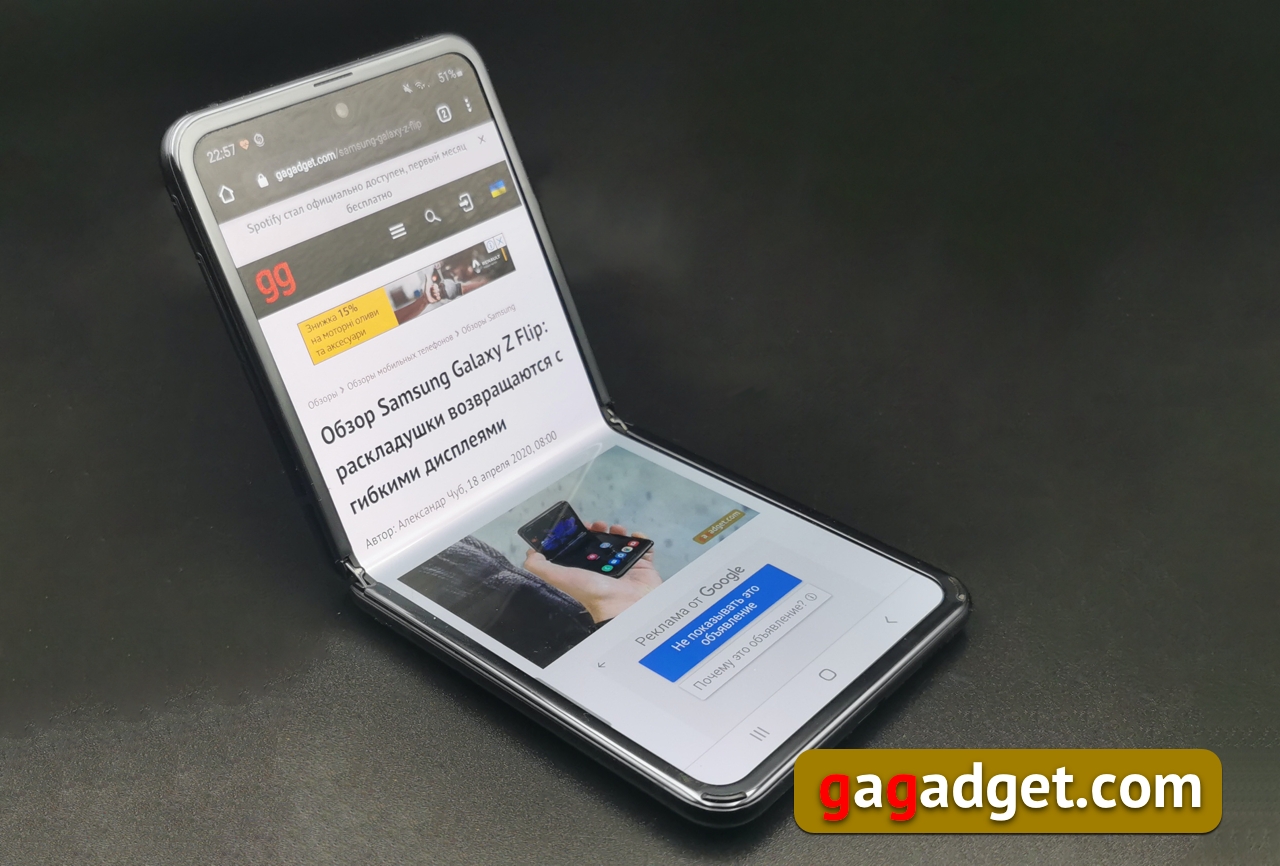
So, thanks to its folding in halfbody, the Galaxy Z Flip attracts attention no less. And the high price in this case is not a disadvantage, but an advantage, working to make the owner “chosen.” But if we put all these thoughts aside, I haven’t seen such interest in smartphones in people’s eyes for a long time - they have become so utilitarian and ordinary in our lives. Commoditization in action. And here is just something fresh and unusual (believe me, unlike you, not every person knows about the existence of such a technological possibility as bending a phone screen without damaging it).
Reason two: the screen is hard to break
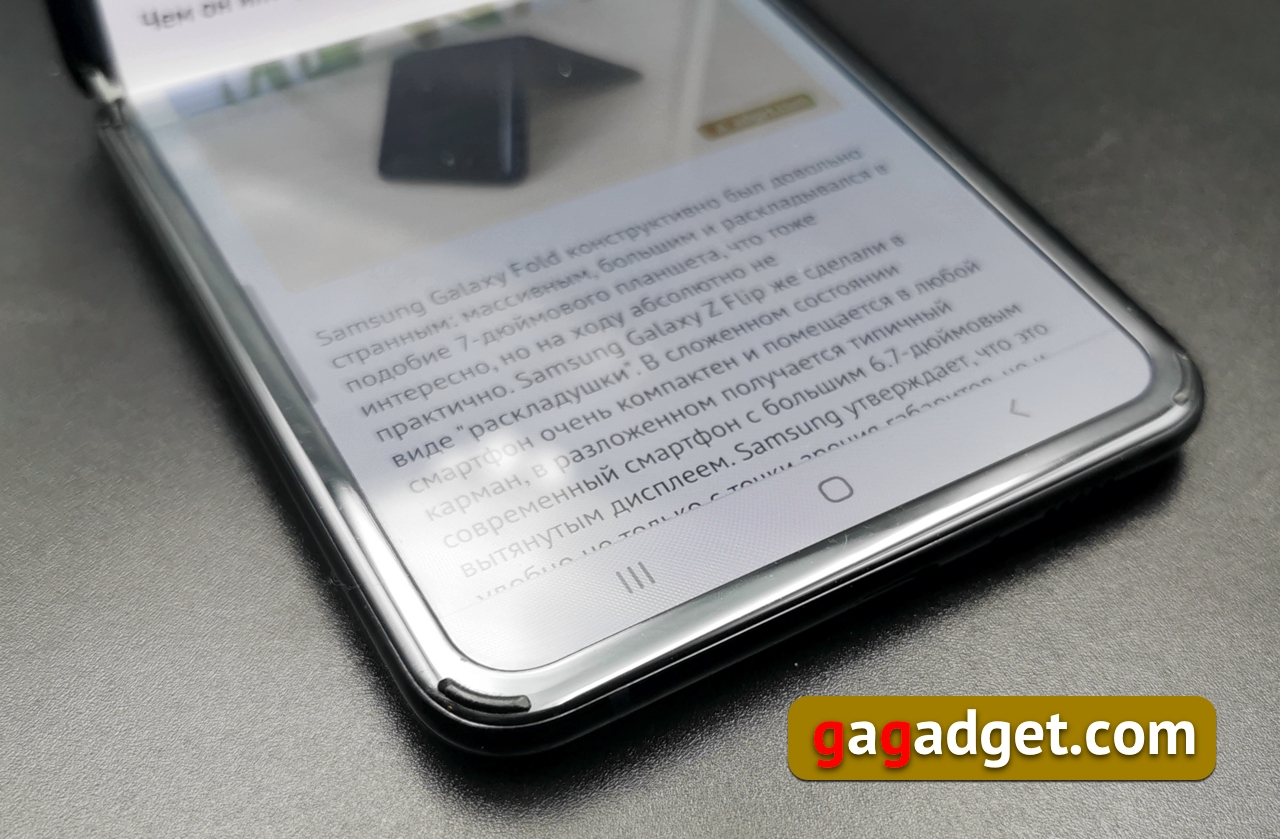
We all know very well how easy it is to break hugedisplays of modern smartphones by simply dropping them on the floor. The corners of the screens are especially sensitive (especially with this fashion for contoured edges of displays, which are usually called 2.5D for short). But if the screen folds in half, then it is not afraid of such falls. Yes, given the beautiful polished (and moderately soiled) body of the Z Flip, all this polishing may suffer, but the display itself will remain intact. Of course, you can drop the phone even if it’s open, but in a month and a half I dropped it three times, and all three times it was (fortunately) closed. In addition, special protective edges are installed on the corners of the inner part of the case (in the picture). They are only at the bottom of the smartphone and also serve a protective purpose in one way or another (for example, absorbing the shock of a click when closing the phone).
</ img>
Reason three: you can answer the call again by simply opening the phone
I remember one of the reasons why we are sothey loved push-button clamshell phones, it was that they allowed you to answer a call immediately after opening the phone. And end the call by closing it. With the return of foldable phones in smartphones with foldable screens, it seems that this feature is once again becoming in demand. True, for this you need to get into the settings (Additional functions - Motions and gestures and turn on Quick call there), because by default this option is disabled. In general, by the way, Z Flip evokes an amazing mixture of nostalgic feelings from half-forgotten gestures and awareness of how much technology has jumped since the days of “those” clamshells. When you close the phone after the end of a conversation (or, for example, after contactless payment with a smartphone in a store) and put it in your pocket - this is exactly what it is: the feeling of a completed result and a half-forgotten gesture of closing the phone with one hand (but the pens remember, motor memory you can't fool). By the way, during this time I got so used to bending the phone before putting it in my pocket that I will inevitably “retrain” and wean from it when I return to the “regular” smartphone. You quickly get used to good things.
Reason four: a tripod that is always with you
The reason is not obvious, although it was mentioned immediately induring the world premiere of this smartphone, focusing on the fact that when folded like an L, the Z Flip can be placed on any flat surface and taken a photo with the self-timer shutter. By the way, if you choose the “Instagram” photo format with square 1:1 proportions, then the frame size fits perfectly into the raised half of the smartphone. A small but nice detail: the miniature external screen not only serves to display notifications when closed, but can also be used (there is a separate button for this in the camera interface) as a second viewfinder. As a result, the person you are filming can see their image in the frame.
Reason five: you can look at it forever
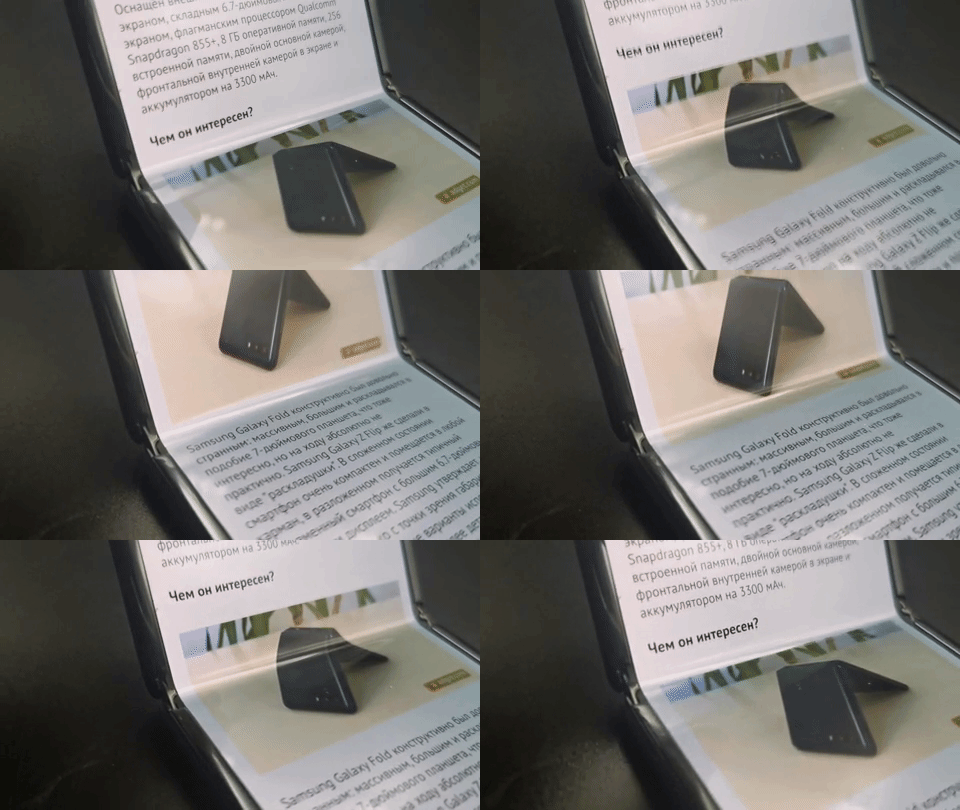
There is some kind of bewitching magic inthis picture, which flows from one plane to another, vertically located. It is a bit like the footage of a documentary chronicle with the printing of newspapers, when inside huge printing machines rolls of paper rotate at insane speed and printed sheets roll out from under the rollers. And if this reason seems far-fetched to you, then you will definitely remember it when you first hold in your hands, if not this, then a similar smartphone in the same form factor (the fact that there will still be a lot of them in the future, I personally do not have not a shadow of doubt). I promise you that.
</ img>
In the dry residue
Of all three smartphone form factors withWith foldable screens that we saw on the market this year (Galaxy Fold, Huawei Mate Xs and Galaxy Z Flip), the Z Flip looks the most viable. There are several reasons for this: firstly, it is trite, it is the cheapest to produce - it does not have such a huge display as that of the “smartphone that transforms into a tablet” form factor. Secondly, this is a very understandable format: imagine an ordinary smartphone that can simply be folded in half. If anyone seriously thinks that a smartphone folded in half is too thick and won’t fit in a jeans pocket, I’ll disappoint you: when folded, the Z Flip is 17 millimeters thick. Whereas, the thickness of a push-button telephone, for example, the most popular and dearly loved by me, Sony Ericsson K750, was 20 millimeters. And no one thought that it wouldn’t fit in a pocket. Once again I will repeat my forecast, based not on insider information, but on experience and intuition: in the very near future we will see a flagship Samsung smartphone in this clamshell form factor with a price tag of $1000. The only question is whether this will happen in 2021 or 2022. Oddly enough, the only obstacles here are in production technology: when will Samsung be able to ensure truly mass production of such displays, which is inherent in flagships (that is, in a couple of tens of millions of pieces). In practice, no new technology can be brought into production at an explosive pace; it takes years. But what is at stake now is the issue of leadership, including technological leadership (where the winner gets everything), so the process can be accelerated by all possible (and impossible too) methods.