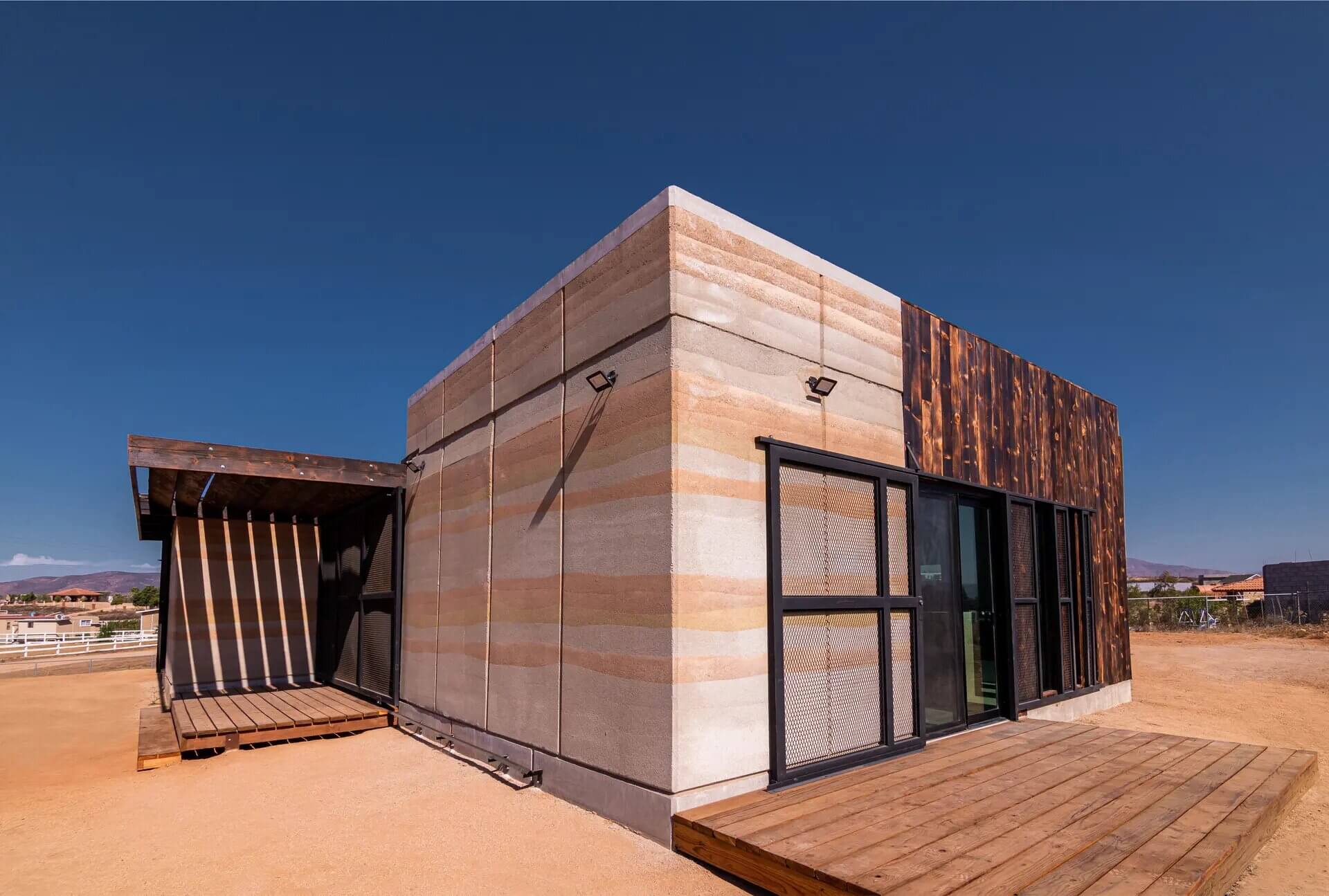
Architectural studio Parma Arquitectura has created a desert-sheltered tiny house called Santerra House.
The developers note that such an architecture waschosen for several reasons. Firstly, the region is quite arid, and the proposed technique requires the use of a minimum amount of water. In addition, the earth protects against high external temperatures, and also fights moisture.
Santerra House. Photo: Parma Arquitectura
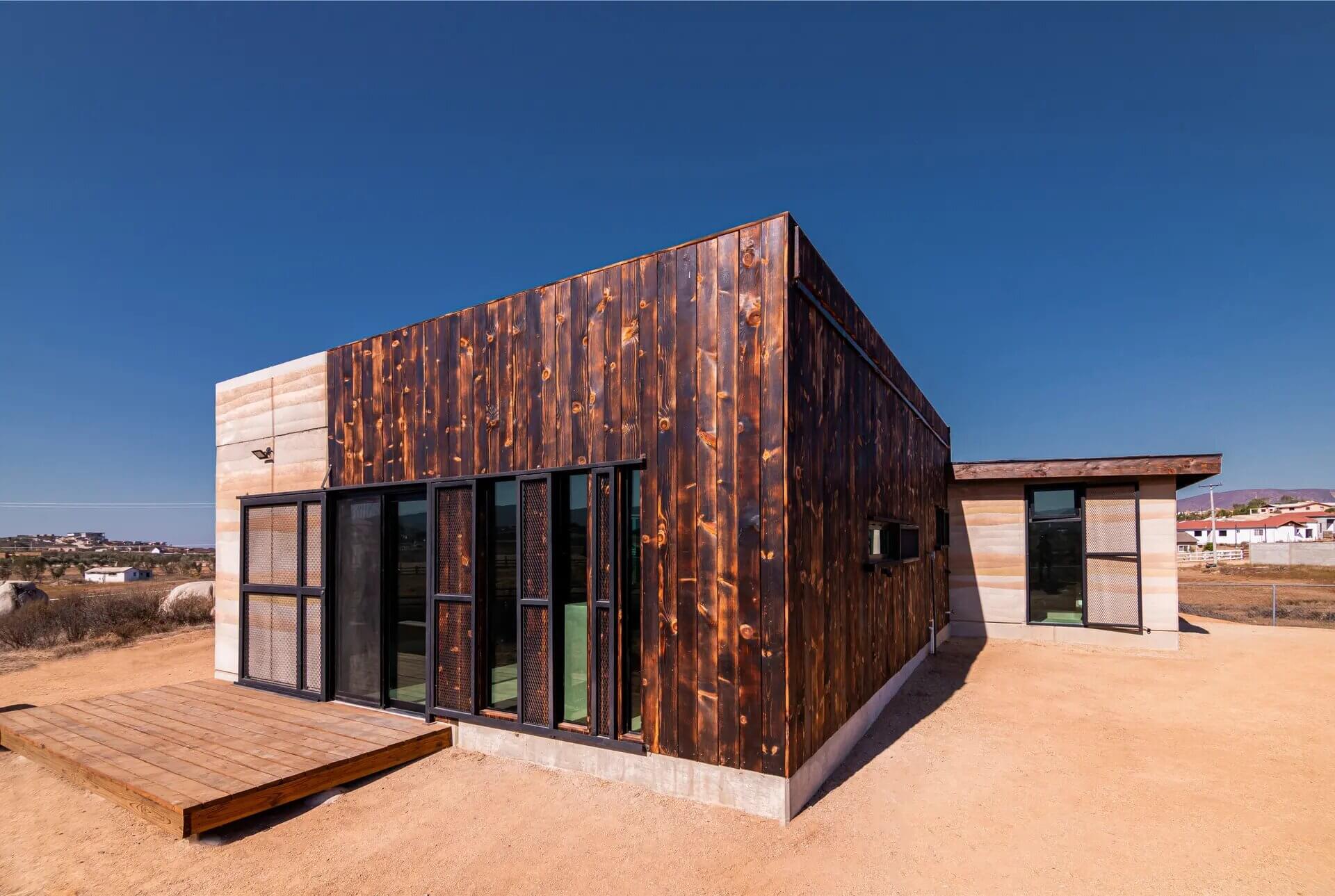
It took a team of five builders aboutyears to complete the work. At the same time, most of the land was mined directly at the construction site. The basis of the walls is compacted earth slabs with a thickness of about 40 cm. They must provide a comfortable temperature inside the house both day and night all year round.
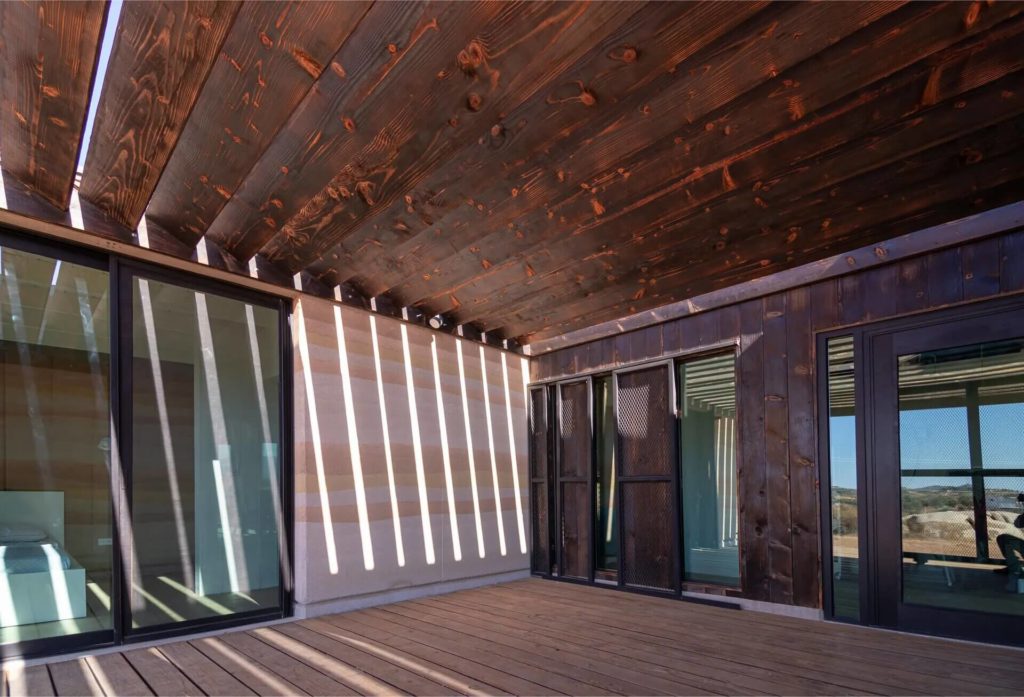
Concrete structures were used only forcreating a foundation and foundation for the floor, the developers say. The idea of the project is completed by wooden flooring, shading and windows with reinforced glazing in a metal frame. For the exterior, the engineers used charred wood that was torched by hand using the traditional Japanese Shou Sugi Ban technique. As conceived by the authors, such a background should be in harmony with the surrounding nature.
Santerra House. Photo: Parma Arquitectura

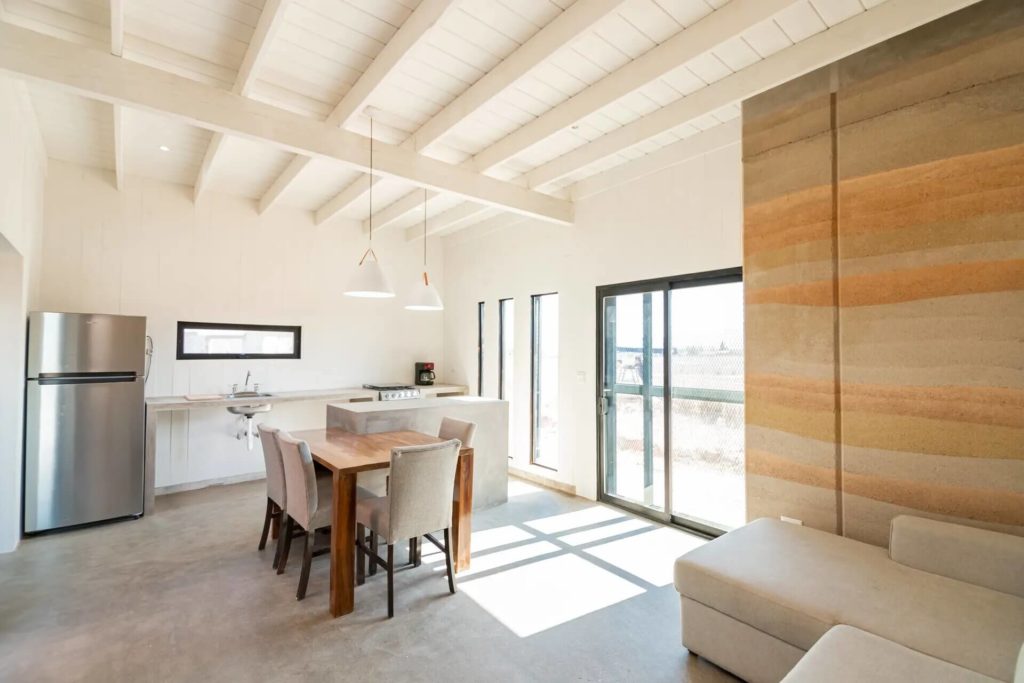
Santerra House was built as a holiday homeand can accommodate a family of four, with three bedrooms and two bathrooms. Entering inside, you can see a comfortable common living and dining room, which adjoins a minimalist kitchen through a central concrete bar. The house has a large outdoor terrace that serves as an extension of the interior living areas and is also directly connected to the master bedroom. The entire construction cost only $75,000 (4.7 million rubles).
Read more:
NASA revealed the origin of Haumea - the most mysterious planet in the solar system
Living organisms have made Mars uninhabitable
The liver can work for more than 100 years: scientists told how this is possible