The lens of the James Webb telescope captured distant light, distorted by the galaxy's gravity to almost perfection.
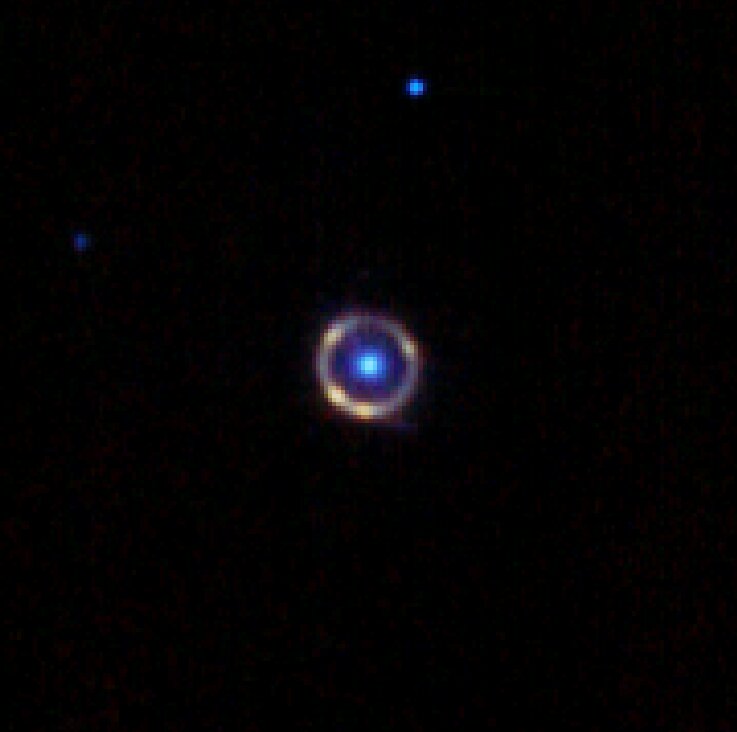 Galaxy SPT-S J041839-4751.8 in the form of an Einstein ring. Image: Spaceguy44, Reddit
The image shows the galaxy SPT-S J041839-4751.8, located at a distance of 12 billion light years from Earth. As the researcher notes, if it were not for the effect of gravitational lensing, we would not be able to get an image of such a distant object.
Einstein's ring is a round imagedistant object, formed under the action of gravitational forces of closer massive structures located between it and the observer. This effect is called gravitational lensing and was first predicted by Albert Einstein. To observe it, it is necessary that the distant object, the “lens” and the telescope line up in one straight line.
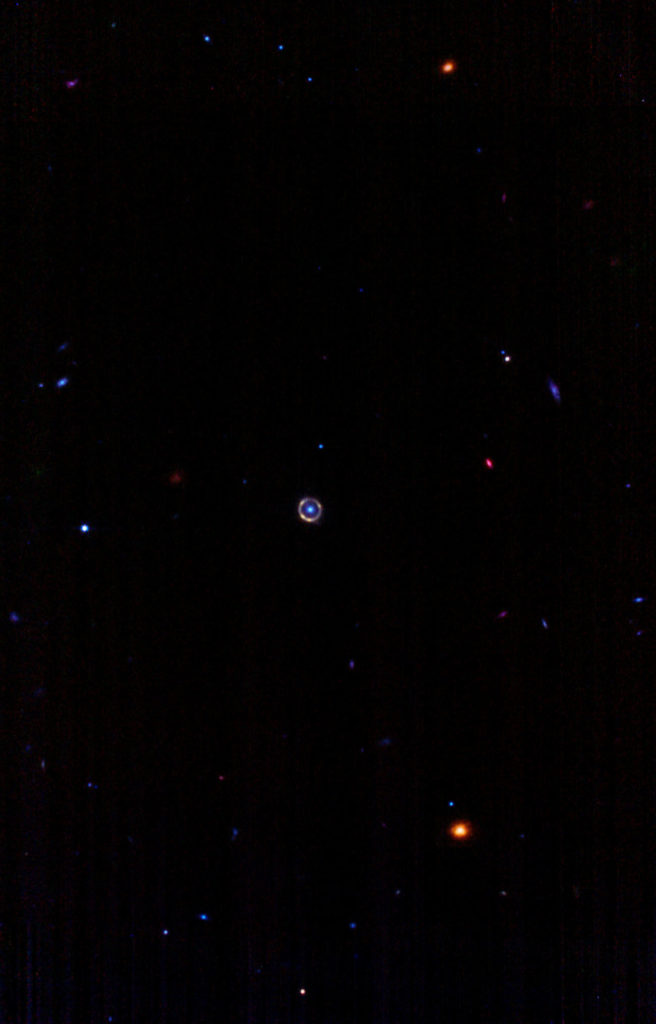 Galaxy SPT-S J041839-4751.8 in the form of an Einstein ring. Image: Spaceguy44, Reddit
First image of the distant galaxy SPT-SJ041839-4751.8 in the form of an Einstein ring was obtained in early August using the near-infrared camera of the James Webb Space Telescope (NIRCam). But that picture was not so clear. The scientists used mid-infrared (MIRI) observational data to create the new image.
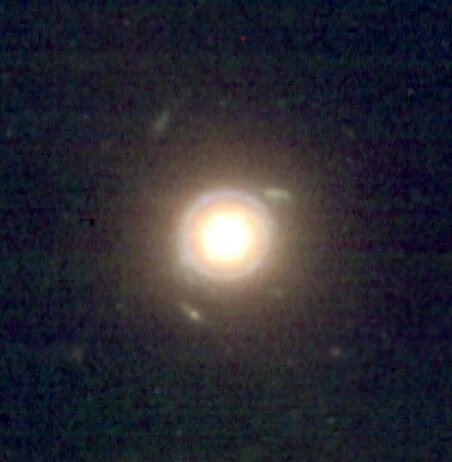 The Einstein Ring Galaxy SPT-S J041839-4751.8, taken with the NIRCam camera. Image: Spaceguy44, Reddit
To create the image, scientists useddata from three different MIRI filters. Red - The F1000W filter captures light waves with a wavelength of 10 microns. The green filter F770W is needed for 7.7 µm and the blue F560W for 5.6 µm. The complex data were processed by a PhD student in the Department of Astronomy at the University of California.
Read more:
Earth-sized sunspot grows 10 times in 2 days: it is directed at us
Scientists have found the remains of an ancient man with two X chromosomes
From the body to the mouth: scientists have understood where the teeth came from