Researchers from the Massachusetts Institute of Technology have found a solution to vaccinate residents
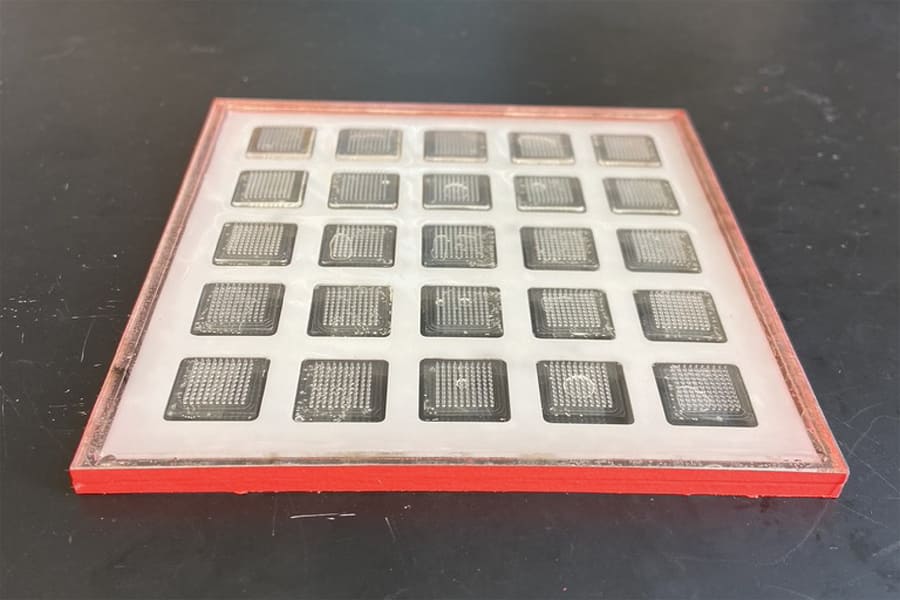
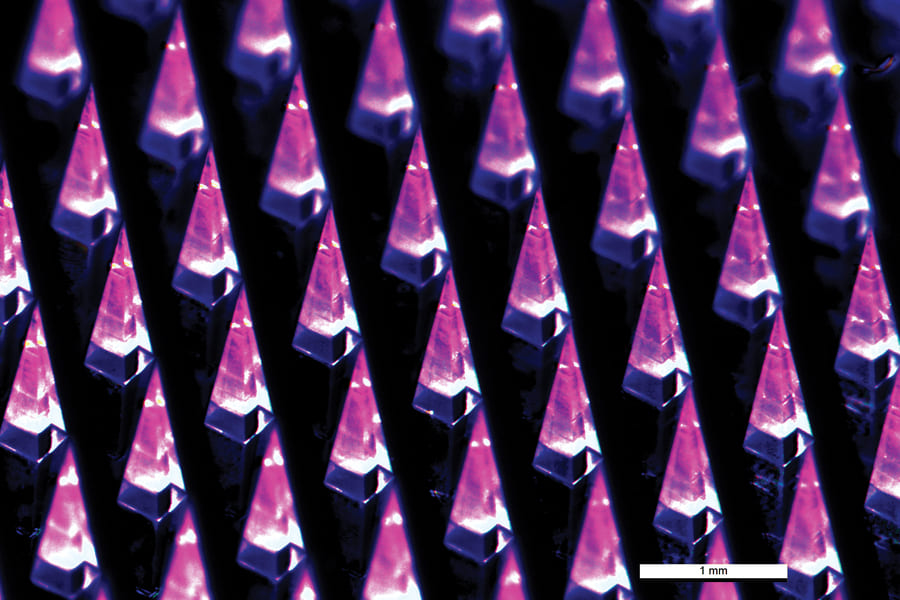
A form with printed vaccination patches and an enlarged image of microneedles on their surface. Images: MIT
Instead of producing traditional injectableThe vaccine researchers printed patches the size of a thumbnail containing hundreds of microneedles. When the patch is applied to the skin, the tips of the needles dissolve under the skin, releasing the drug. For printing, the researchers use "ink", which includes vaccine RNA molecules encapsulated in lipid nanoparticles.
The "ink" also contains polymers that caneasy to shape. They tested different options and showed that an equal ratio of polyvinylpyrrolidone and polyvinyl alcohol provided the best combination of stiffness and stability. Polymers and nanoparticles retain their properties for weeks and months, even when stored at or above room temperature.
 An illustration of the principle of operation of the printer and the printing of patches. Image: Aurelien vander Straeten et al., Nature Biotechnology
Ready-made ink is used in smallportable installation. Inside the printer, a robotic arm injects them into molds with microneedles, and a vacuum chamber distributes the composition within the polymers so that the vaccine reaches the tips of the needles. Once the molds are filled, they take a day or two to dry.
Most vaccines, including mRNA vaccines,which are used to protect against coronavirus infection must be stored in the refrigerator at low temperatures. This makes it difficult to store or ship them to regions and countries where the necessary infrastructure does not exist. Additionally, administering the vaccine requires syringes, needles, and trained health care workers.
The current printer prototype can produce up to100 batches of vaccines in 48 hours. Although the technology has been tested for mRNA coronavirus vaccines, it will also work with other types of vaccines for various diseases.
Read more:
There was a photo inside the second deepest underwater sinkhole in the world
See what happened to Mercury when it got as close as possible to the Sun
Scientists have figured out the nature of the mysterious ancient "monster"
On the cover: Artistic illustration of a printer printing a vaccine patch. Image: MIT