Researchers at the Massachusetts Institute of Technology (MIT) have unveiled a robotic arm that
The system's algorithm, FuseBot, determines the probablethe location and orientation of the objects under the heap. It then finds the most efficient way to remove interfering objects and retrieve the item it is looking for. This technique allowed FuseBot to find more hidden objects twice as fast as the most advanced robotic system.
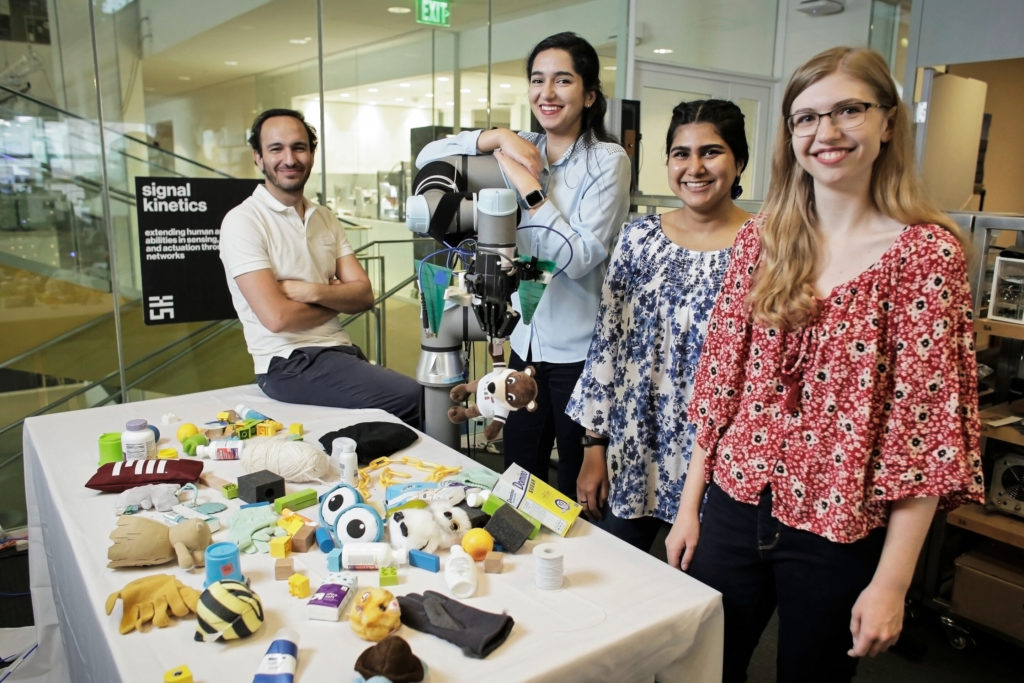 Robot searches for items using probabilistic reasoning
This device can be used not only forsearch for lost things, but also, for example, in the warehouse of marketplaces and large stores. A robot that can be tasked with processing returns can easily learn to find items in an unsorted heap.
In the FuseBot system, the robotic armuses a video camera and RF antenna to retrieve an unmarked item from a mixed pile. The system scans the pile with a camera to create a 3D model of the environment. These radio waves can pass through most hard surfaces, so the robot "sees" what's going on inside the pile or underground.
Algorithms combine information to update3D model of the environment and highlight the potential locations of the target item; the robot knows the approximate size and shape. The system then uses information about the objects in the heap and the location of the tags to determine which item to remove in order to find the target item with the fewest moves.
The robot does not know how objects are oriented underpile, or how they can deform from the pressure of heavier objects on it. He solves this problem through probabilistic reasoning, using what he knows about the size and shape of the object and the location of the mark, to model three-dimensional space.
Read more:
The space probe flew 200 km from Mercury. Look what he saw
Scientists uncover how vitamins affect the incidence of cancer
Chinese mind-reading helmet sounds the alarm when a person sees porn content