Modern Russian medical technology
The first off-the-shelf solutions in the field of medtech are just beginning to penetrate the
The first direction where they began to implementAI technology has become radiology. Since studies in this area are visual in nature - computed and magnetic resonance imaging, x-rays and fluorography - the use of digital services is especially effective here. A neural network based on machine vision is able to recognize a wide variety of pathologies - even their smallest manifestations that a radiologist may not notice.
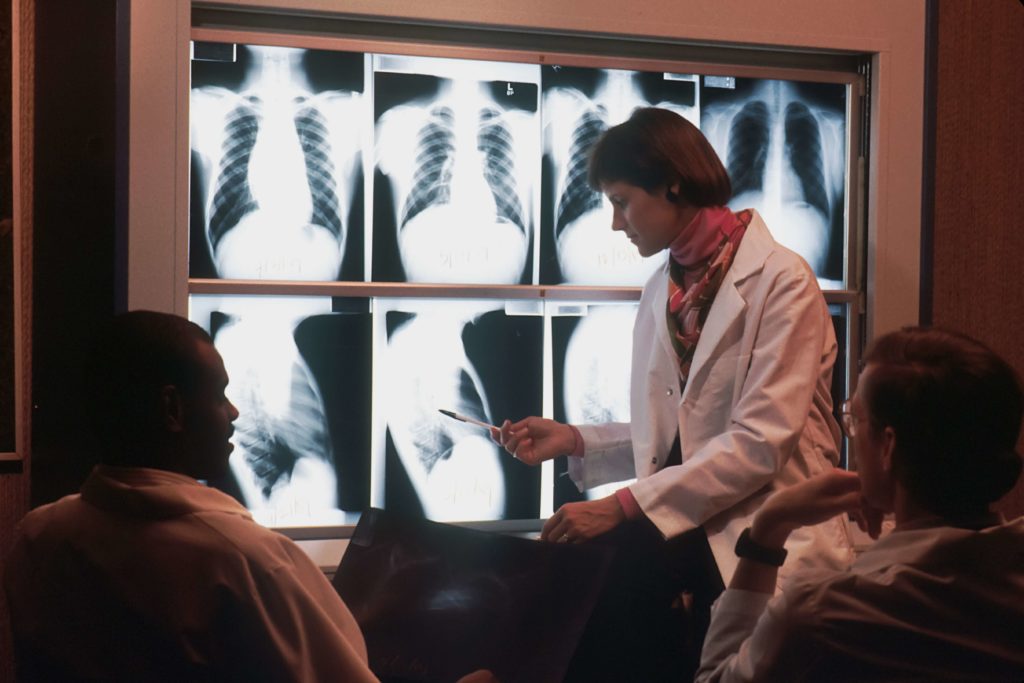 “The area where AI technologies began to be introduced was radiology”
“Algorithms indicate the places wherefocus, or, conversely, obviously healthy areas that are not worth wasting time on. Such diagnostic methods are widely used to control oncological diseases,” says Sergey Voinov, Acceleration Director for Digital Medicine at the Skolkovo Foundation’s Biological and Medical Technologies Cluster.
The final decision is made by a person, the computer only helps at the “pre-moderation” stage. This is where machine vision technologies come to the fore.
All-seeing AI
Today in Russian medical technology there are severalsuccessful projects dealing with artificial intelligence in radiology. Among them, it is worth noting the work of residents of the Skolkovo Foundation - Botkin.AI, Care Mentor, Celsus and Third Opinion. The radiology field is very broad, with companies focusing on specific sectors and creating highly specialized products.
For example, there are many non-standardsolutions, such as recognizing the early manifestations of Alzheimer's disease by brain MRI. In addition to radiology, artificial intelligence is actively used in the field of semantic analysis, that is, the use of machine learning for text analysis. So artificial intelligence reveals certain patterns in textual information.
This is necessary, for example, to organizedata contained in electronic medical records and identify certain signs that may not be very close and understandable to a doctor. The patient's medical record is filled out by several doctors at once: a cardiologist, a neurologist, a therapist, and so on. The idea is to instruct the AI to collect and analyze the information entered by different specialists and put it together.
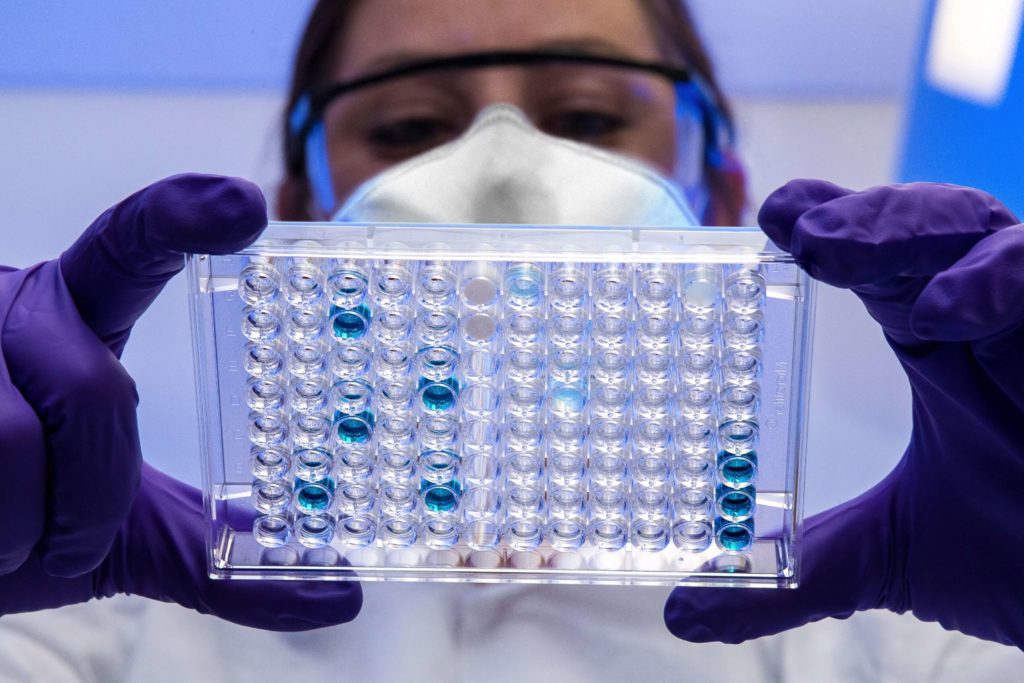 “A lot of non-standard solutions are emerging, such as recognizing the early manifestations of Alzheimer’s disease by MRI of the brain”
“So doctors will be able to see a complete picture of the patient’s condition, identify certain patterns that are found in different examination protocols,” Sergey Voinov emphasizes.
Resident of Skolkovo, a platform for medicalinstitutions "Third Opinion" helps to recognize pathologies in medical images and improves the quality of monitoring. The solution combines services for clinical laboratory diagnostics, radiological, dental, ophthalmological examinations and patient safety monitoring. The platform’s computer vision helped, in particular, in the fight against COVID-19 — AI simplified test analyzes and further patient care, increased the safety of doctors and patients in the department. The company cooperates with large medical institutions, including the network of private clinics Medsi.
Bionics in action
However, machines can not only observe, but alsoact to help the person recover. Robotics has organically intertwined with modern medicine and formed, in particular, a large area of medical technology - bionic prostheses. The demand of this market in Russia today reaches 150 thousand pieces per year. There are two types of prostheses: cosmetic (they simply mask the absence of a limb) and functional (partially or completely compensate for the functions of the missing limb).
If we talk about the second group of devices, then the mosta simple and affordable option are mechanical prostheses. They can bend and unbend under the action of muscular force or any mechanisms. But there are better models. Here it is worth noting the resident of the Skolkovo Foundation - the Salyut Orto company. She developed the Steplife P5 pneumatic knee module, which allows a person not only to walk, but also to play sports - run or ride a bike.
The company also has developments withrobotic knee module. Due to the microcontroller, which calculates the movement parameters, and the built-in drives, a very high level of walking comfort is achieved. With such a prosthesis, the patient can restore his usual gait, perform actions that require complex coordination of movements, such as dancing.
Modern technologies allow customizationprostheses in a very wide range, which will allow you to choose the right device for people with amputations of various severity. For example, if the stump is long and the knee module must be very compact, or vice versa - it is short and more complex fastenings are needed. For such devices, even the absence of muscles will not be a problem, because the device works due to drives, and not muscle strength.
The company works with the upper limbs"Motorics". It also produces solutions at the intersection of medicine and robotics - traction and bionic hand prostheses. Thanks to an integrated approach, patients do not just receive a device, but undergo rehabilitation and learn how to use a new hand. The company produces seven types of traction and bionic hand, forearm and shoulder prostheses.
Each device is unique and manufactured underspecific type of user injury. At the same time, just as in the previous case, prosthetists work with complex cases, both with congenital features and with amputations. And on all versions of prostheses, patented sensory fingertips are installed. They can significantly improve the quality of life and facilitate the performance of familiar daily activities, such as the use of smartphones, tablets and other touch-surfaces.
At the same time, Motorika continues to improvetechnology - at the WEF presented a prosthetic hand with feedback. It allows the patient to feel the size of objects, their softness and temperature, the device also helps to fight phantom pains. The company is also developing Attilan, a virtual reality (AR/VR) digital rehabilitation platform that aims to involve the user in the recovery process before and after prosthetics. Speaking of rehabilitation, it is also worth noting the development of the resident of the Skolkovo Foundation - the Exoskeleton company.
“This is one of the successful examples - medicala robot exoskeleton that helps people recover from various injuries. Technology teaches them to walk again. The solution even has algorithms that learn from the patient's feedback - this helps to give the correct muscle load, ”said Sergey Voinov.
Not only devices
But high technology is not limited to this -"number" is able to help even at the cellular level. Speaking about domestic developments at the intersection of IT and medicine, it is worth noting another important area - vaccines and drugs. Thanks to collaboration with high-tech companies, the pharmaceutical industry is able to respond to modern challenges even in the most complex areas. For example, in oncology. So, Alfanil is working on a drug for the treatment of melanoma. The focus is on immunotherapy with lower drug toxicity. This is especially true, since existing therapy based on interleukin-2 (IL-2) cannot always be applied the required number of times - precisely because of the high toxicity of the drug.
And another resident of the Skolkovo Foundation is the companyBetuvax, which is part of the Human Stem Cell Institute group, is creating a platform for the development of recombinant protein vaccines based on betulin corpuscular adjuvant (virus-like particles). A flu vaccine has already been created on this platform.
Currently under developmentcombined influenza and coronavirus vaccine "Betuvax-Kov-2". It was tested in three clinical centers in St. Petersburg and Perm with the participation of 116 volunteers. All clinical trials have shown the safety of the drug. Moreover, three weeks after the second vaccination, the level of antibodies in volunteers reached the level at which it is able to provide protection, including against the omicron strain. The company's specialists are also working on a vaccine against the human papillomavirus.
In general, despite the fact that MedTech isa relatively young healthcare sector, a large number of not just prototypes, but working commercial solutions have already been created here. The discoveries made in this area in recent years have already made it possible to significantly improve the quality of life of many patients. Investments in this sector over the past two years amounted to almost $100 million. And the main drivers of growth in the near future will be telemedicine, programs to help doctors make decisions, robotics and AI services.
Read more:
It became known which tea destroys protein in the brain
7,000-year-old structure found that is older than the Egyptian pyramids and Stonehenge
Look at the first photos of Mars that Webb took: they are literally dazzling