Neuroscientists from the University of Rochester in the USA and the University of Copenhagen in Denmark described earlier
Researchers have previously identified three types of brainmembranes (hard, arachnoid and soft) that cover the brain and spinal cord, create a barrier between them and the rest of the body and keep the cerebrospinal fluid inside. In a new work, neuroscientists have described a membrane located between the pia mater and the arachnoid. It separates and controls the flow of cerebrospinal fluid and contains immune cells in the brain.
The researchers named the new shell SLYM (fromEnglish "subarachnoid lymphatic-like membrane"). The scientists only studied the new structure in the brains of mice, but the article also reports that a similar structure has been identified in humans as well.
 The structure of the meninges. SLYM (green area in the enlarged image) is located between the soft (pia mater) and arachnoid (arachnoid mater) shells. Image: University of Rochester
Immune cells of the central nervous systemuse SLYM as a platform close to the surface of the brain to monitor cerebrospinal fluid for signs of infection and inflammation, the scientists note. In addition, this membrane is important for protecting the brain. The CNS maintains its own natural population of immune cells, and the integrity of the membrane prevents entry of outside immune cells.
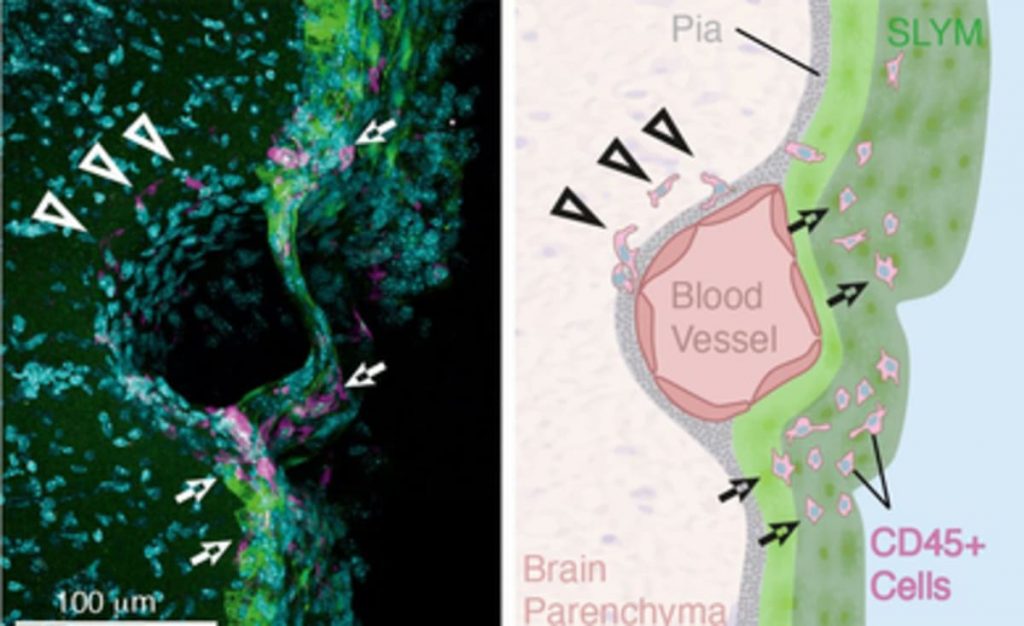 Immune cells (CD45+) use SLYM to control the flow of cerebrospinal fluid. Image: University of Rochester
The researchers note that the violation of the integrityor the work of SLYM may be associated with the development of a number of diseases of the nervous system. For example, multiple sclerosis, brain infections, and Alzheimer's disease can be caused or exacerbated by impaired SLYM function. In addition, during inflammation and aging, larger and more diverse concentrations of immune cells accumulate on the membrane.
The authors of the work believe that the discovery of a newmembranes will allow a better understanding of how the flow of cerebrospinal fluid protects the brain from infections and how nutrients are transferred within the brain. This will help develop new treatments for diseases of the central nervous system and improve the drug delivery system.
Read more:
See the most powerful volcanic eruption on Jupiter's moon
Named foods that cause cancer. They are served on the New Year's table
Chinese rover discovers traces of never-before-seen basalt on the moon