The baby of surf and ski
</ p>The first projectile, which can be considered the ancestor of the snowboard, was born on
The ancient Hawaiian proto-snowboard was calledHe’ehölua, had a length of almost 4 m with a width of only 15 cm. This “board” weighed from 14 to 30 kg and reached speeds of up to 80 km/h. In the 19th century, English travelers saw with their own eyes the downhill competition on Heöhölua for the first time and were deeply impressed. But, despite its ancient roots, snowboarding became an Olympic sport quite recently - in 1998.
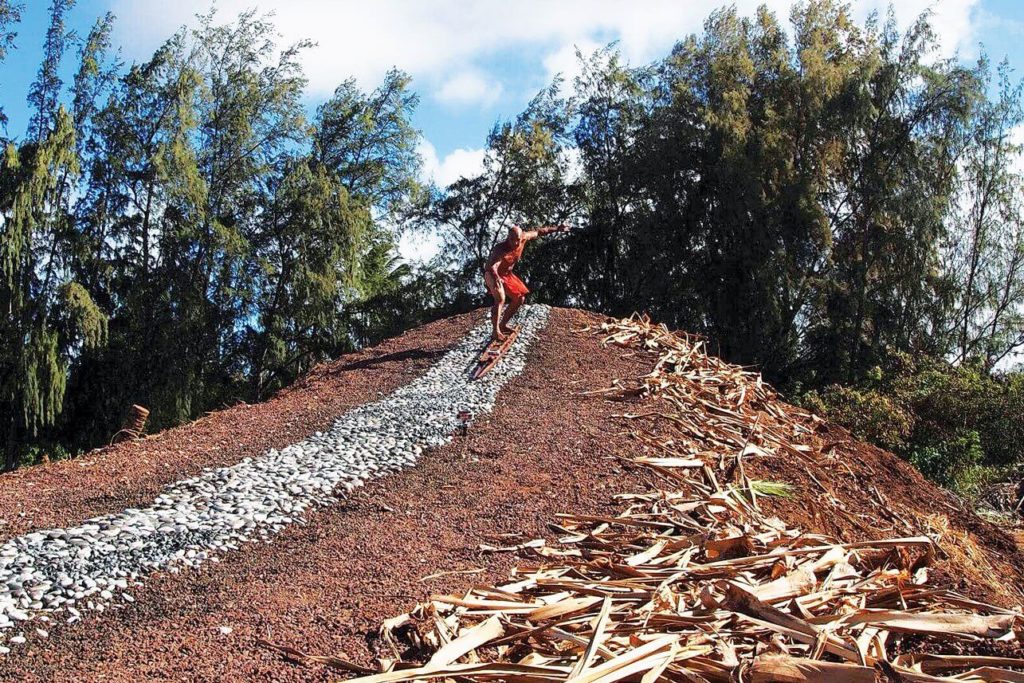 Descent to He’ehölua. Source: hawaiimagazine.com
The first modern snowboard prototypes appearedin the 1930s. The official birth date of snowboarding is 1964. Surfer Sherman Poppen patented a sports equipment called "snurf" (from the English - snow and serf), which he created to make it more fun for his daughters to ride down the hill. This projectile consisted of two alpine skis connected to each other with a rope in the front and did not have mounts for boots. In 1965, the snurf was mass-produced and became a popular pastime for children and young people.
Ten years later, the snerf craze began to fade, and it was then that legendary figures burst into the industry: Dimitri Milovich, Tom Sims and Jake Burton.
Milovich founded the company Winterstick,experimented with materials for the board itself and the shape, received a patent for the dovetail shape, and then for the "skating board for snow with metal edges." He also entered the history of snowboarding as the first to define the waist for this projectile.
Tom Sims was a pioneer in skateboarding and one whobrought a new equipment - a snowboard - to ski resorts and contributed to its popularization. He made his first snowboard in 1976: the projectile was called Sims Snowboard.
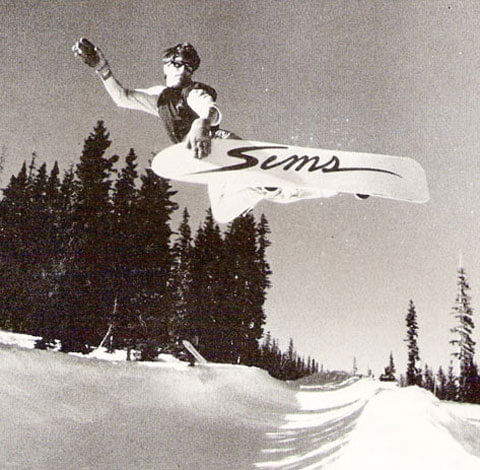 Tim Sims
But the main “godfather” of snowboarding in the world is the indomitable Jake Burton. In 1977, this young man, obsessed with the idea of improving the surf, founded his own company in Vermont.
Burton's first snowboard was a flexiblewooden board with water ski mounts. The name “snerf” had already been patented by Sherman Poppen, so Burton gave his equipment a new name, which went down in history as a snowboard. Today Burton is a leading company in the industry.
Plastic as a basis
</ p>In 1980, both Burton and Winterstick, workingin parallel with the improvement of the snowboard, almost simultaneously developed a new synthetic material for the sliding surface (base) of the snowboard - P-Tex, graphite-based polyethylene.
Now the best material for the base is ultra-high molecular weight polyethylene. Due to its density, it glides perfectly, bends well, is resistant to damage, and absorbs paraffin well.
But suitable for the production of sports equipmentfar from any UHMWPE. This material is quite widely used in industry, but for the production of sports equipment, a special modification of UHMWPE is needed, which will have two important properties: it must form a very thin, but ultra-strong layer 1-2 mm thick and be susceptible to adhesion (gluing).
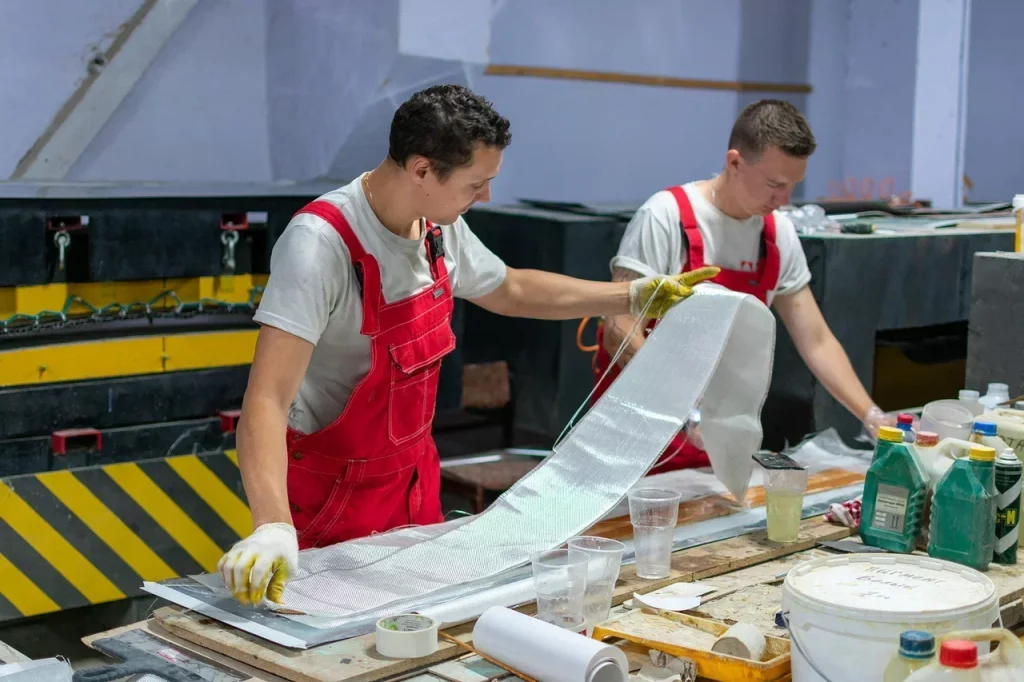 Workers apply a layer of composite material to alpine skis at the TRB Group plant in Orel
Most modifications of UHMWPE stick very poorly.And only special additives, as well as special methods of physical processing of the material, make it possible to ensure a strong grip between the "slipper" and the core (the inner part of snowboards or skis).
The only serial manufacturer in Russiasnowboards - the TRB Group company - has developed its own techniques using fire, sandblasting and electrical discharges (the so-called corona treatment).
In fact, the plastic is burned and hit with a lot of lightning - all in order to break the endless molecular bonds in its upper layer and make it able to combine with glue molecules.
UHMWPE is currently being produced for extreme sportsonly three factories in the world. All of them are located in Europe and the USA, and Russian production has to buy raw materials through intermediaries, at a high price. Due to the geopolitical situation, acquiring the necessary components has become even more difficult.
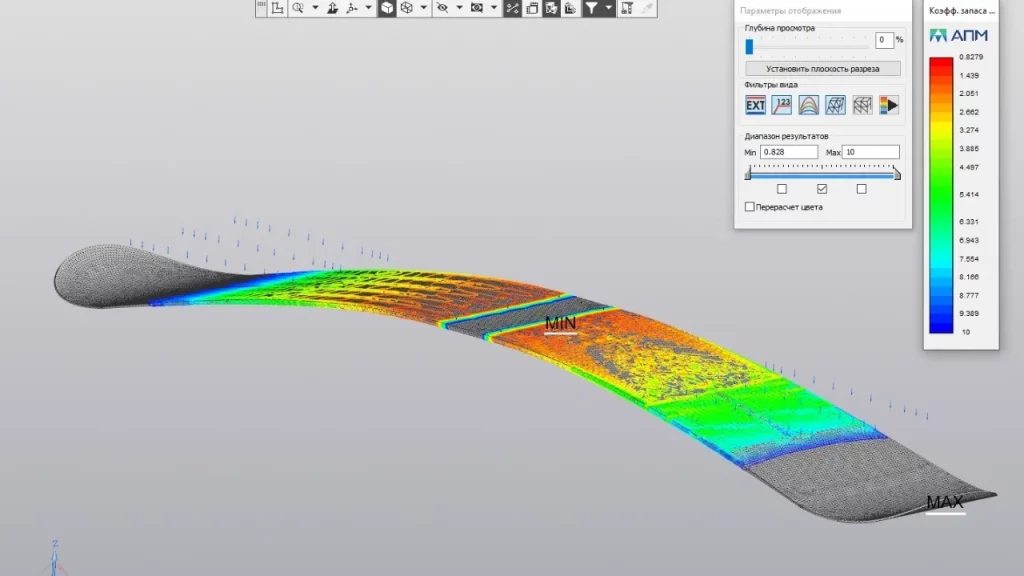 Math modeling
“Our research center “Load”“He has been conducting research in the field of creating new UHMWPE formulas for a long time,” says Nikita Ryabin, head of the TRB Group, director of the Load Research Center, and president of the Federation of Sports Equipment Manufacturers of the Russian Federation. — Over two years of work, our own Russian UHMWPE formula was created and tested, which is ideal for the production of sports equipment. In 2022, TRB Group plans to launch its own UHMWPE extrusion line, which will be the only one in the Russian Federation. This project will play an important role in import substitution and will help produce high-quality alpine skis and snowboards in the country at attractive prices. Moreover, UHMWPE has a high export potential - sports equipment factories in China are ready to buy it, because with a more favorable price and low transport costs, UHMWPE from the Russian Federation will have high quality, comparable to its European counterparts.
Аэрокосмические материалы
</ p>Today Russian skis and snowboards are producedusing “sandwich” technology, where composite materials are placed on both sides of the wooden core, and layers of special plastics are applied on top (on the top-sheet) and below (on the “slider”).
Snowboard manufacturers often usefiberglass, but in the last decade, innovative technologies have appeared on the sports equipment market, which are used in the aircraft industry, rocket science and the defense industry.
So, "TRB Group" uses Kevlar, carbon and carbon-aramid mix (a combination of carbon and Kevlar threads in one fabric) - these materials are made at defense plants.
The thickness and shape of the composite layers can be different.The material can be applied not to the entire surface of the projectile, but to separate parts (on the nose, tail base, or, for example, in the area of boot mounts) - due to this, various characteristics of the finished product can be achieved.
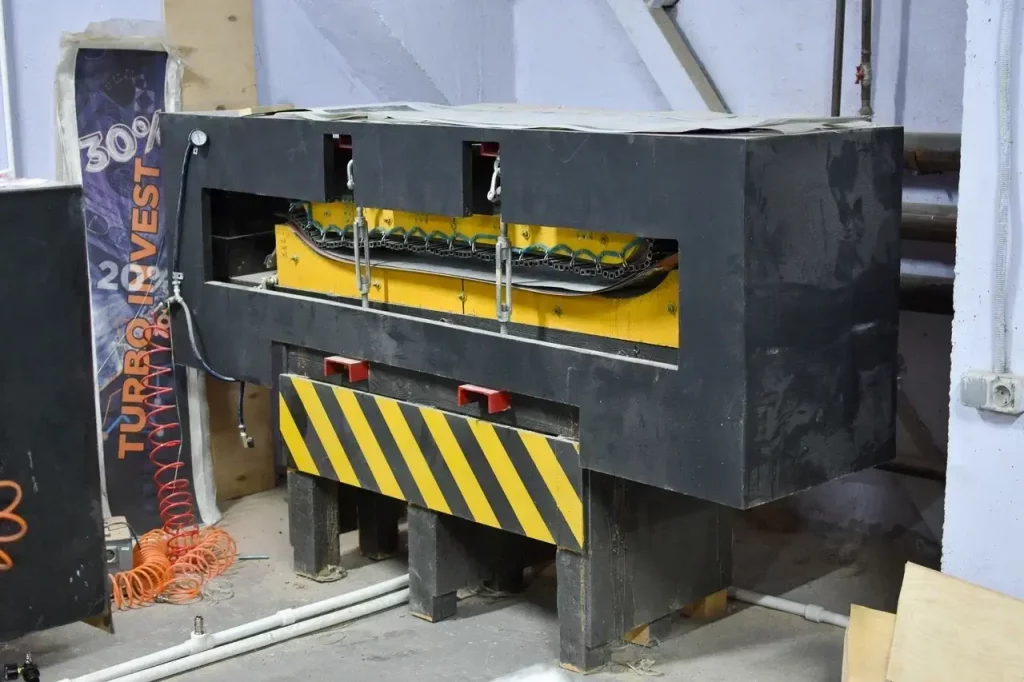 Snowboard Ply Press
Presence of high-tech composites in the compositionsports equipment allows you to solve different problems: it provides greater rigidity, dampens vibration, gives higher torsional rigidity (torsion resistance) and a faster return of snowboards to their original shape after performing a trick or a turn. These characteristics become increasingly important as the rider's skill increases, but even an amateur will feel the difference when riding.
What is it all based on
</ p>In the production of snowboards, it is important which layers are glued together, but no less requirements are placed on the method of connection. If you break the technology, the layers will simply disintegrate from the loads.
For the production of ski equipment mustuse professional formulations. Until recently, they were produced only in Europe and the USA. Glue was one of the most expensive ingredients in snowboarding, measured per kilogram.
“Back in 2016, TRB Group began developingown formula of epoxy compounds,” says the founder of the company, Nikit Ryabin. - The first Russian samples, created based on the results of research, were put into production in 2017. Now we have several types of compositions in our line, which are made according to our own formulas. High-quality Russian glue is almost 10 times cheaper than foreign analogues.”
Good old tree
</ p>Despite the importance of high-techcomponents, the core of quality snowboards is still made from the most traditional material - durable wood. This is the main layer, the “heart of the snowboard”. It is from him that the feeling of riding largely depends.
Some manufacturers make cores frompoplar, spruce or pine. These are practical and inexpensive materials, but they are inferior to other types of wood in terms of rigidity, vibration resistance and the speed at which the projectile returns to its original shape under load.
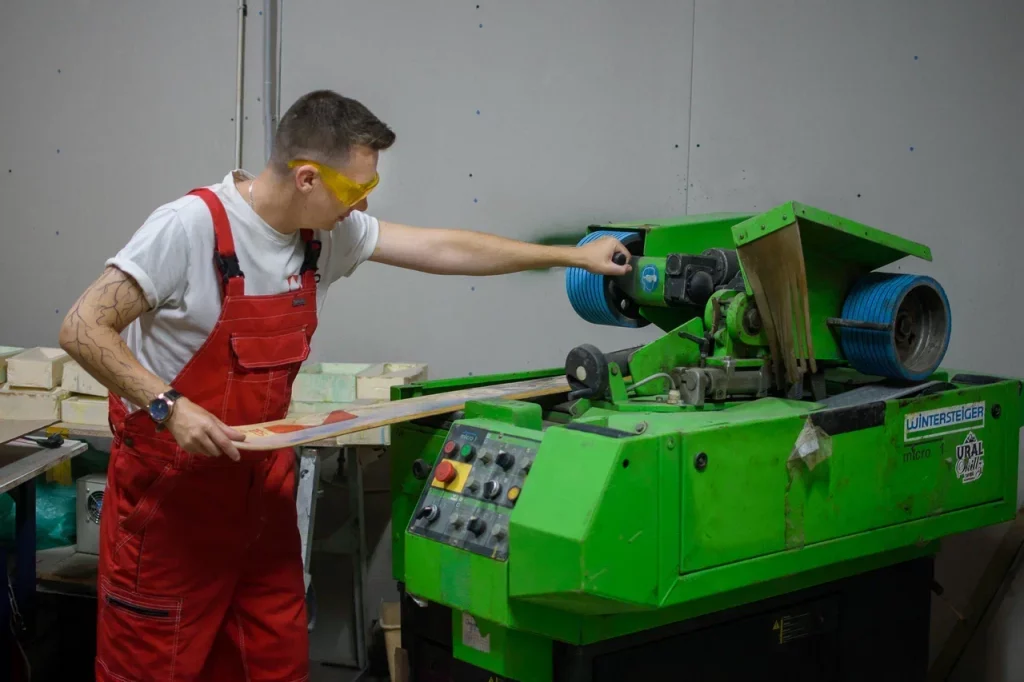 Final grinding of the sliding surface of alpine skis at the TRB Group plant in Orel. The same machine also sharpens metal edging with an accuracy of tenths of a degree.
The TRB Group company uses to createcores are a combination of beech, ash and maple. These wood species are highly valued for their strength and elasticity. This combination gives the core the advantages of each variety.
The thin side edge of a snowboard is calledsidewall, and this is another part of the snowboard where wood can be used. The sidewall has a significant load, because it takes on shocks, contacts with water, steam, ice. Various technologies are used to strengthen it. Durable and flexible polyurethane is popular. In addition to it, the company "TRB Group" uses larch wood to strengthen the sidewall.
"Larch is our Russian trump card, -explains Nikita Ryabin. — This wood is highly valued by world manufacturers of sports equipment because of its strength, lightness and almost zero hygroscopicity. We use this elite material even in models intended for the mass market. Unfortunately, at the moment Russia is not technologically ready for the production of ski equipment for professional sports. But this is one of the important tasks set by Russian science and industry, including the company "TRB Group". I sincerely believe that in 10 years the Russian Olympic team will be able to conquer the slopes on sports equipment created in their native country.”
Read more:
"James Webb" sent a photo of the collision of two huge galaxies
"Useless" bacteria on Earth will provide life to the colonists of Mars
On the pyramid in China found a portrait of the "king of ancestors". He ruled over 4,000 years ago