Scientists examined a special edition of the coin known as the Class IV coin of Constantine IX Monomakh. In this
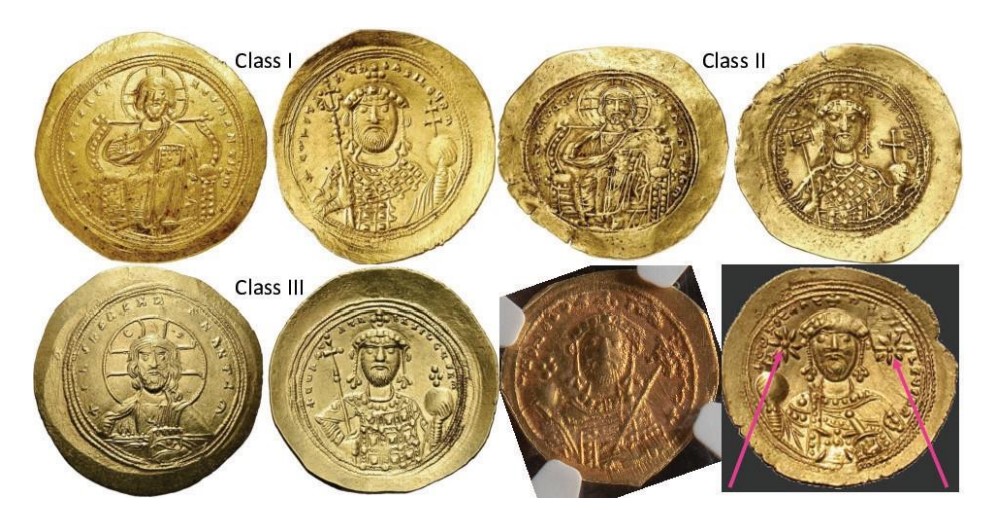 Series of coins of Constantine IX. Source: Filipovic et al, arXiv
The explosion of SN 1054 is one of several brightastronomical events that could be observed with the naked eye. Now the supernova remnants have formed the Crab Nebula. But immediately after the flash, it was a super-bright star that could be seen even during the day. Mentions of SN 1054 have survived in Chinese, Japanese and Arabic sources, but are absent from Christian chronicles.
On the coins of Constantine IX, traditionallydepicted one "star". Researchers believe that the head of the emperor symbolized the Sun and was accompanied by Venus, the morning star, which does not disappear in the sky with the advent of the day. The second object that hit the coins of the special series could be a supernova, scientists say.
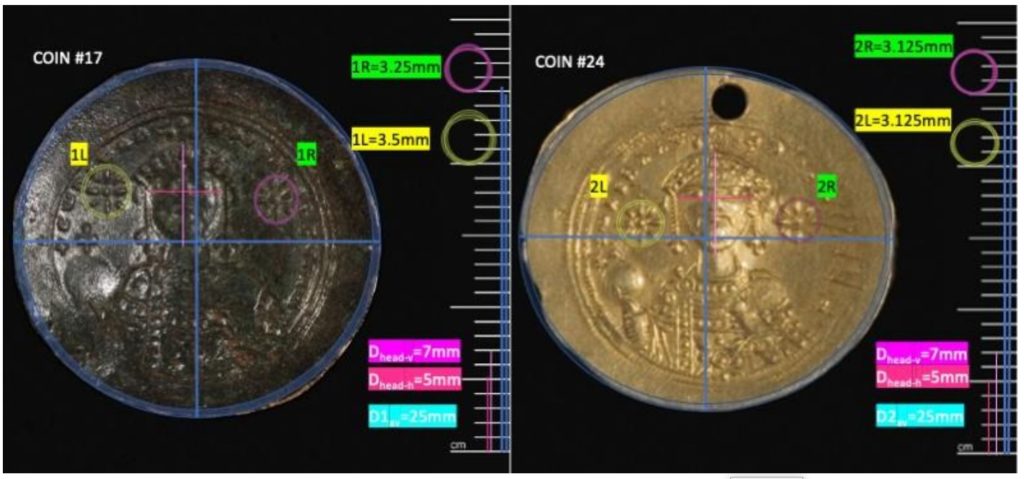 Comparison of the size of a star on two coins. Source: Filipovic et al, arXiv
This hypothesis is confirmed by the fact that the size of this new object differed on different coins of the series, which may indicate a gradual decrease in the brightness of the supernova.
Researchers believe that the lack of referencesabout SN 1054 in European sources is associated with the influence of the church. Theological doctrine considered the sky as an unshakable object, which means it was dangerous to draw attention to such large-scale changes. The authors of the work believe that the unknown master or scientist who was responsible for issuing coins independently decided to show a supernova there.
Read more:
Scientists uncover how vitamins affect the incidence of cancer
The space probe flew 200 km from Mercury. Look what he saw
The satellite of Jupiter was looked at in a new light: what scientists saw there