Five years ago, scientists created a single-celled synthetic organism. With only 473 genes, it became a protozoan
Finally, scientists have identified seven genes thatcan be added to tame the recalcitrant nature of the cells, forcing them to neatly divide into homogeneous spheres. Experts from the J. Craig Venter Institute (JCVI), the National Institute of Standards and Technology (NIST) and the Massachusetts Institute of Technology (MIT) Bits and Atoms Center worked on the study.
Identifying these genes is an important stepto creation of synthetic cells. They, in turn, can act as small factories for the production of medicines, food and fuel. In addition, they are able to diagnose disease and create medicines to treat it while living inside the body. Essentially, they function like tiny computers.
The problem is that in order to design and build a cell that does exactly what it needs to do, it's important to have a list of the main parts of it and how they fit together.
JCVI scientists designed the first cell withsynthetic genome in 2010. They didn't build it entirely from scratch. Instead, the researchers started with cells of a very simple type of bacteria called mycoplasmas. They destroyed their DNA and replaced it with an artificial one, designed on a computer and synthesized in a laboratory. It was the first organism in the history of life on Earth to have a fully synthetic genome - JCVI-syn1.0.
Since then, scientists have been working to reduce thisorganism to a minimum of genetic components. The ultra-simple cell they created five years ago, called JCVI-syn3.0, was even too minimalistic.
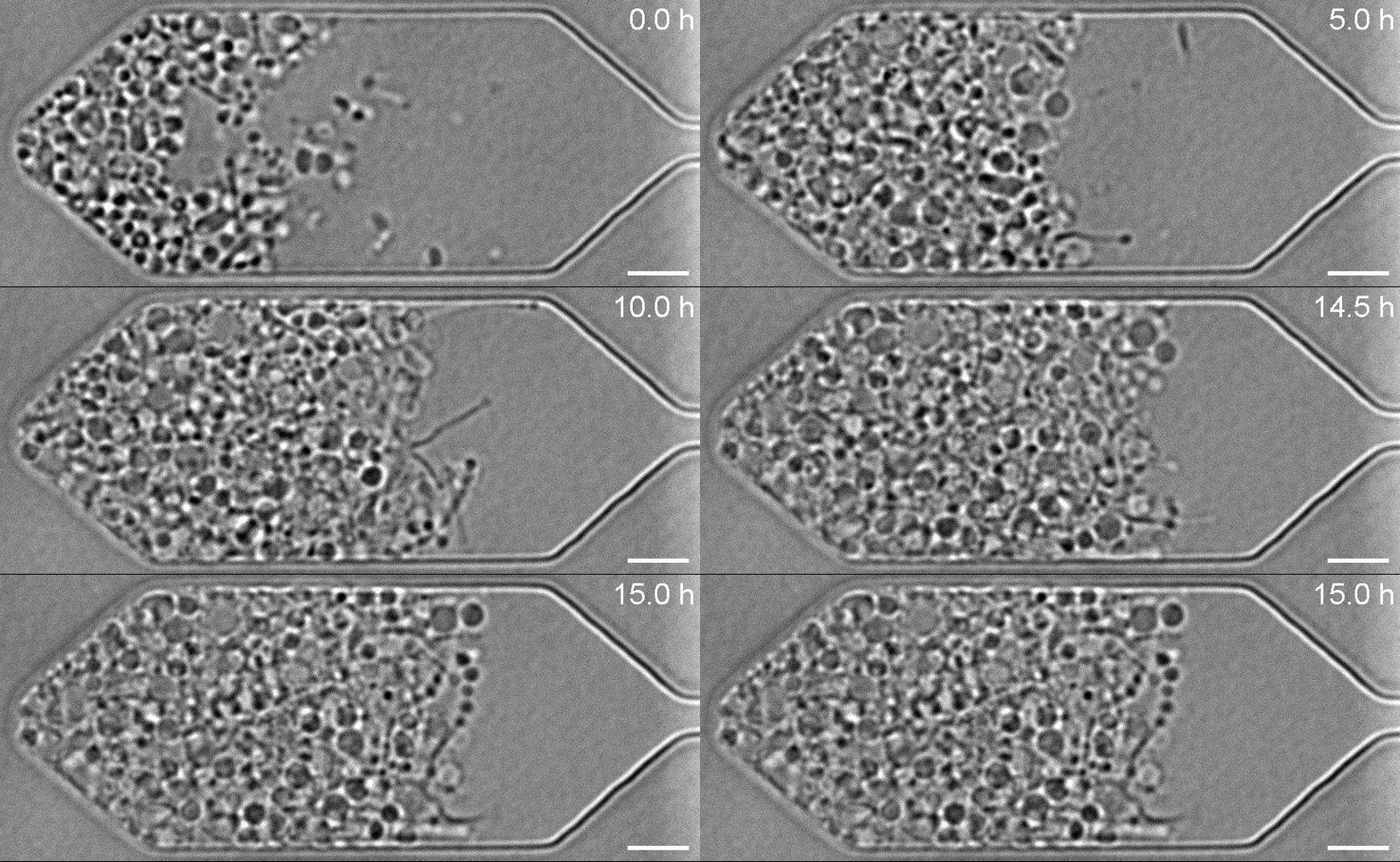 Time-lapse video, in which, under the lightThe microscope shows cells of the synthetic organism JCVIsyn3.0 growing and dividing, obtained as a result of a collaboration between the J. Craig Venter Institute, the National Institute of Standards and Technology and the MIT Center of Technology. Atoms. The scale bar represents 50 micrometers. Credit: NIST / MIT.
The researchers have now added 19 to this cell.genes, among them seven are necessary for normal cell division. This is how a new variant appeared - JCVI-syn3A. This variant has less than 500 genes. For comparison, the bacteria of E. coli, which live in the intestine, have about 4,000 genes. There are about 30,000 of them in a human cell.
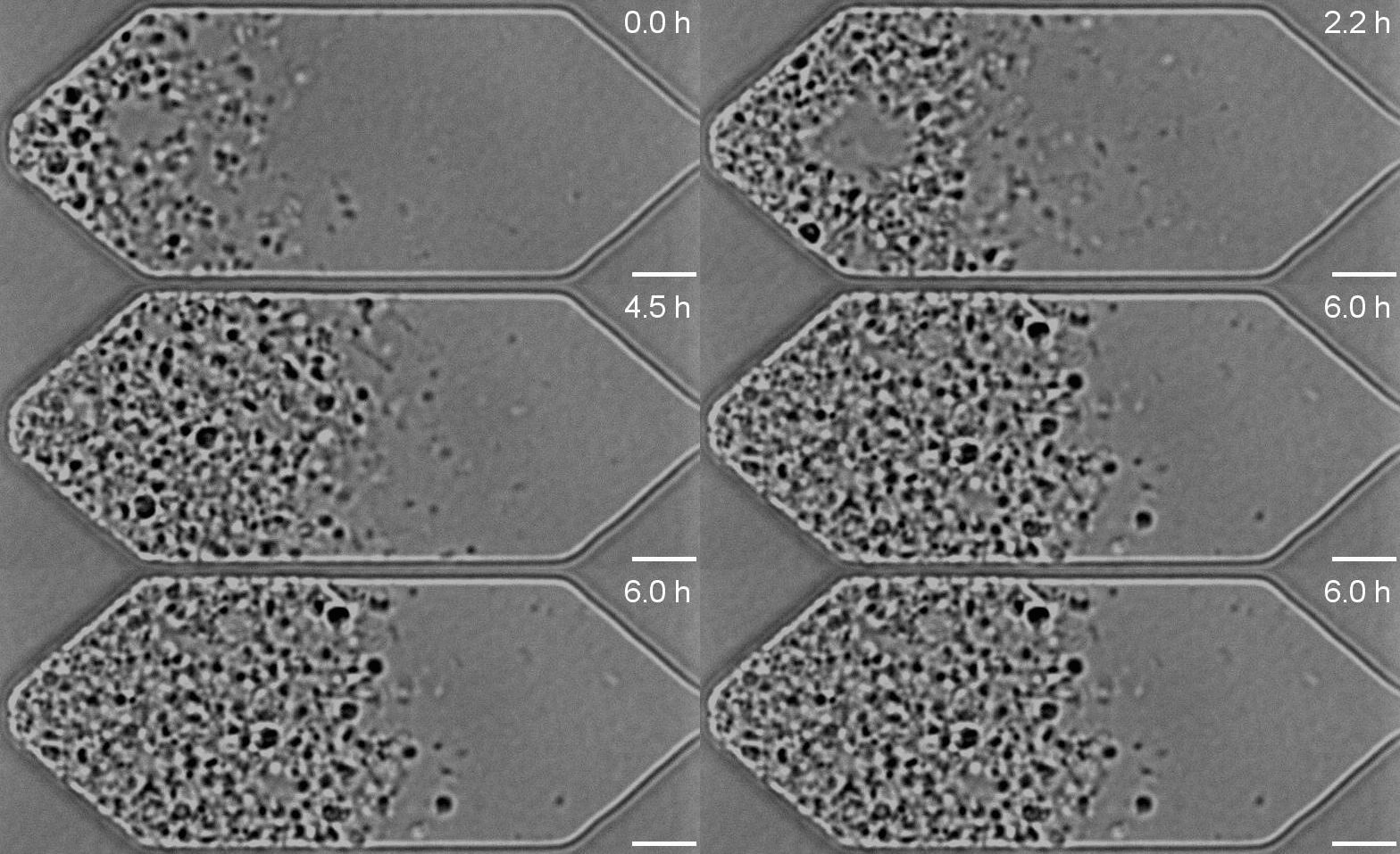 Time-lapse video recording, in which, under the lightThe microscope shows cells of the synthetic organism JCVI-syn3A, growing and dividing, obtained as a result of a collaboration between the J. Craig Venter Institute, the National Institute of Standards and Technology and the Massachusetts Institute of Technology Center of Bits and Technology. Atoms. The scale bar represents 50 micrometers. Credit: NIST / MIT.
Identifying These Seven Complementary Genestook years of painstaking efforts by the JCVI synthetic biology group led by co-author John Glass. JCVI co-author and scientist Ligi Sun has engineered dozens of variant strains by systematically adding and removing genes. She and other researchers then observed how these genetic changes affect cell growth and division.
Read more
The most stormy place on Earth: why Drake Passage is the most dangerous route to Antarctica
New uranium compound breaks record for anomalous conductivity
Mars Express helped find out where and how the water disappeared from the Red Planet