According to the study, the scenario of losing a third of food would definitely happen if carbon emissions
"Our research shows that fast,Unchecked growth in greenhouse gas emissions could lead to more than a third of current global food production becoming unproductive by the end of the century. The good news is that only a fraction of food production will face unprecedented conditions if we collectively cut emissions and warming is limited to 1.5-2°C.”
Matti Kummu, Professor of Global Water and Nutrition at Aalto University.
Changes in rainfall and aridity, andAlso, climate warming is especially threatening food production in South and Southeast Asia, as well as in the Sahel region of Africa. These are areas where the ability to adapt to changing conditions is lacking.
Food production developed inconditions of a fairly stable climate, during the period of slow warming that followed the last ice age. Continuous growth in greenhouse gas emissions could create new conditions, and food and livestock production simply will not have enough time to adapt.
The study used two futurea climate change scenario: one in which carbon dioxide emissions are drastically reduced, limiting global warming to 1.5–2 ° C, and another in which emissions continue to rise steadily.
Researchers assessed how climate changewill affect 27 of the most important food crops and seven different types of livestock, given the different ability of society to adapt to change. The results show that threats affect countries and continents in different ways. In 52 of the 177 countries studied, all food production in the future will remain in a safe climate space. These include Finland and most other European countries.
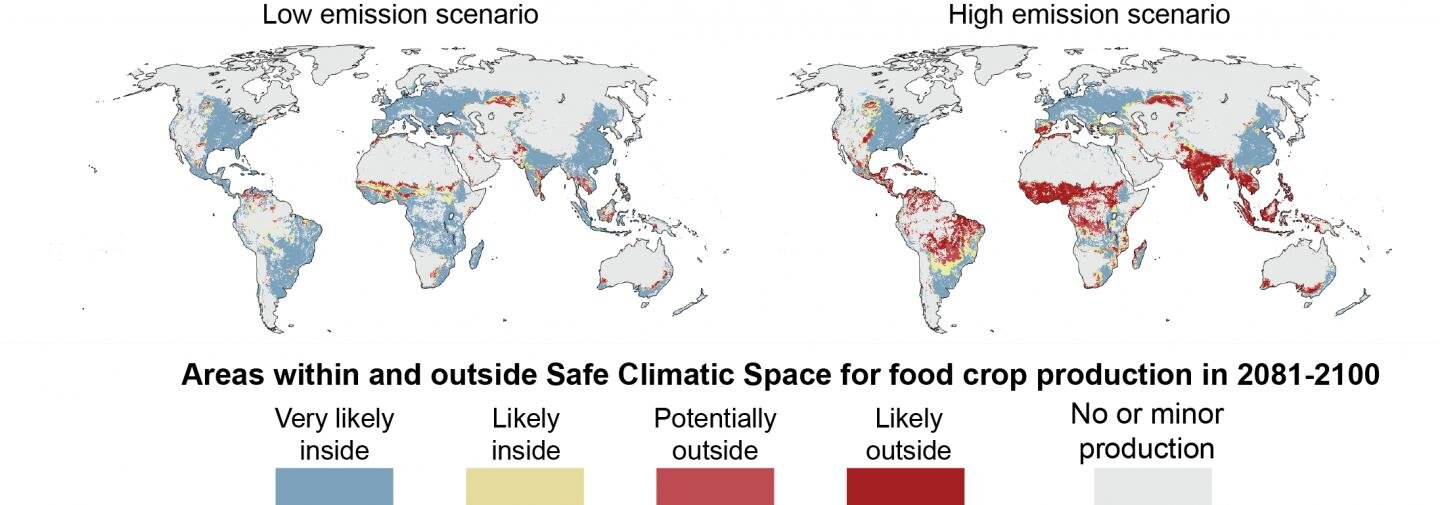
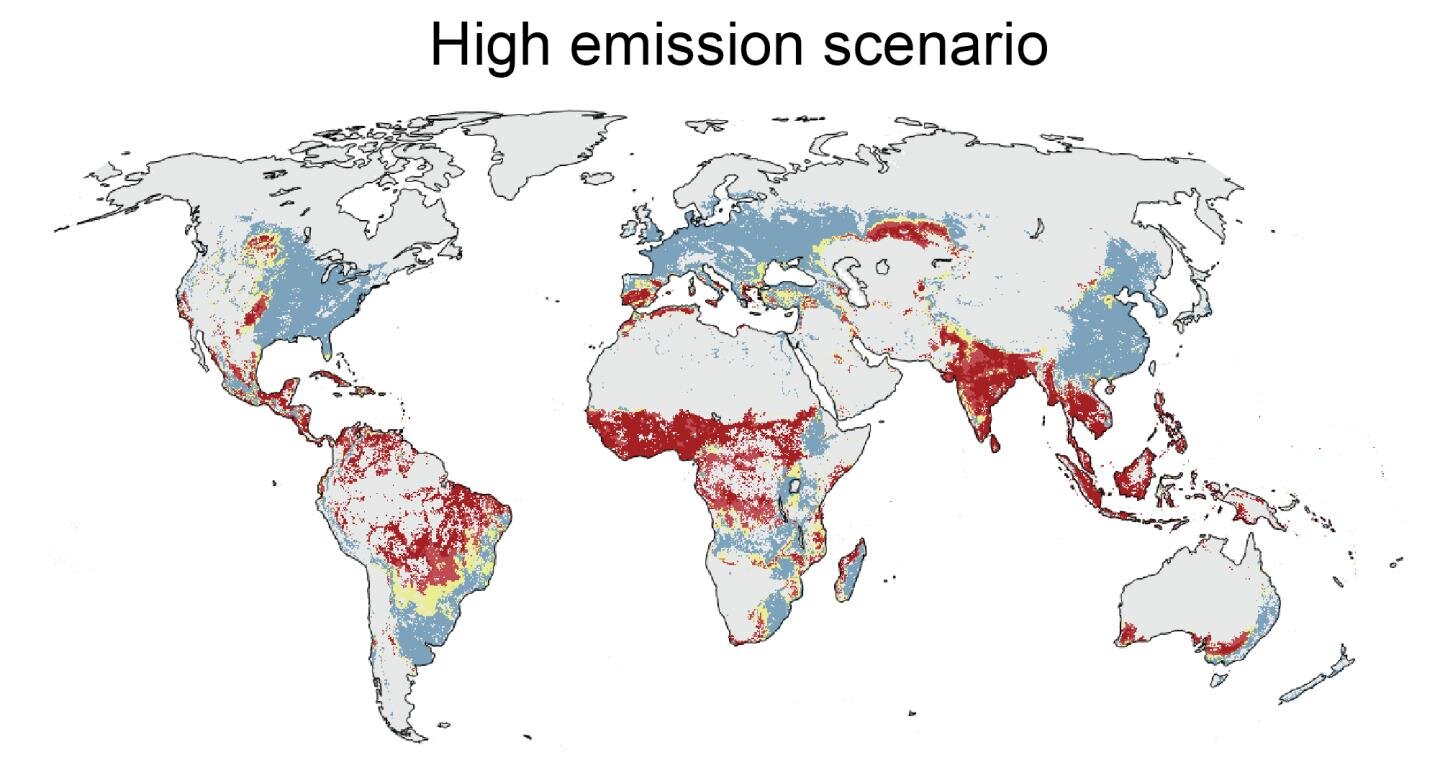

Already vulnerable countries like BeninCambodia, Ghana, Guinea-Bissau, Guyana and Suriname will be hit hard if changes are not made; up to 95% of current food production falls outside the safe climate space. These countries also have significantly less capacity to adapt to the changes caused by climate change than wealthy Western countries. Overall, 20% of global crop production and 18% of livestock production are at risk, in countries with low resilience to adapt to change.
Researchers estimate that if emissionscarbon dioxide gain under control, the largest climate zone in the world today - the boreal forest that stretches across northern North America, Russia and Europe - will shrink from its current 18.0 million km² to 14.8 million km² by 2100. If emissions are not reduced, only about 8 million km² of vast forest remains. In North America, the changes will be even more dramatic: in 2000, the area covered about 6.7 million km², and by 2090 it may be reduced to one third.
In the arctic tundra it will be even worse:it is estimated that it will disappear completely if climate change is not curbed. At the same time, it is estimated that areas of tropical dry forests and tropical deserts will grow. By the end of this century, we will see over 4 million km² of new desert around the world.
Although this study is the first comprehensiveLooking at the climatic conditions in which food is grown today and how climate change will affect these areas in the coming decades, its basic message is by no means unique: the world needs urgent action.
Read also:
The first accurate map of the world was created. What's wrong with everyone else?
Nuclear reactions intensified in the reactor of the Chernobyl nuclear power plant.
Physicists have created an analogue of a black hole and confirmed Hawking's theory. Where it leads?