How was the frozen mammoth found?
Travis Mudry, a miner working in the Klondike gold mines on Canada's
While working, Mudri suddenly fell off the walla large piece of frozen ground. Along with the dirt, there were also the remains of a dark animal with short legs. Suspecting that he had found a mummified buffalo cub, Mudri began to inspect the creature, describing its skin, fur, and the tip of its tail.
Mudri called Brian McCohen, generalmanager and chief operating officer of the family-owned gold mining company Treadstone Equipment. McCohen immediately gave the order to stop all work. He took several photographs of the find and turned to the experts.
Half an hour later, Grant Zazula, paleontologistgovernment of the Yukon, received a picture of a frozen woolly mammoth in the mail. He stated that it was the best-preserved specimen found in North America.
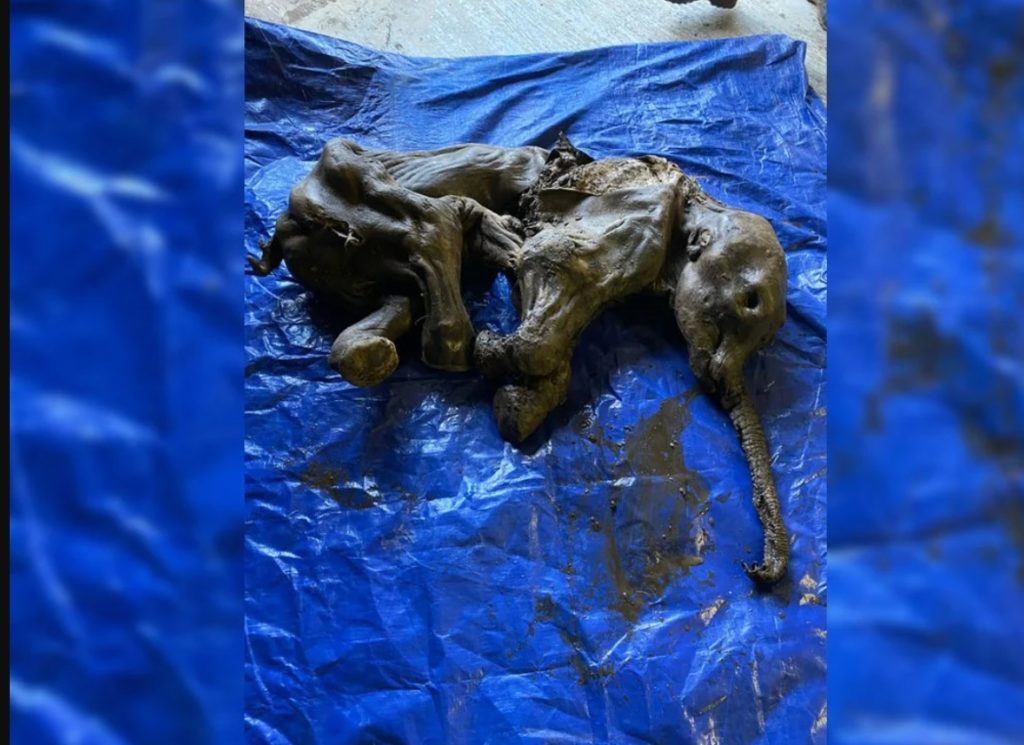 Photo: Government of Yukon
To transport the mammoth, Zazula turnedto two experts from the Yukon Geological Survey and the University of Calgary. They searched the site and recovered the remains. Then the mammoth was wrapped in a tarpaulin to make it easier to transport.
Zazula suggests that the mammoth is a female,who was probably about a month old when she died. This happened more than 30 thousand years ago. The geology of the site where the female mammoth was found indicates that she was likely grazing in treeless grasslands when she became separated from her mother and became stuck in the mud.
Scientists believe that the mammoth was so well preserved due to several circumstances: its unique location and early death.
Why is the find unique?
In most parts of the world onlyfossilized bones of ice age creatures. But in the Yukon, permafrost works like a freezer, preserving soft tissues, muscles, skin and hair, as well as vital information like DNA.
In recent decades, miners and scientists on thiswell-preserved remains of a wolf cub, a baby caribou, giant camels and other long-dead animals, and now a mammoth, have been excavated. This is the first complete baby woolly mammoth found in North America.
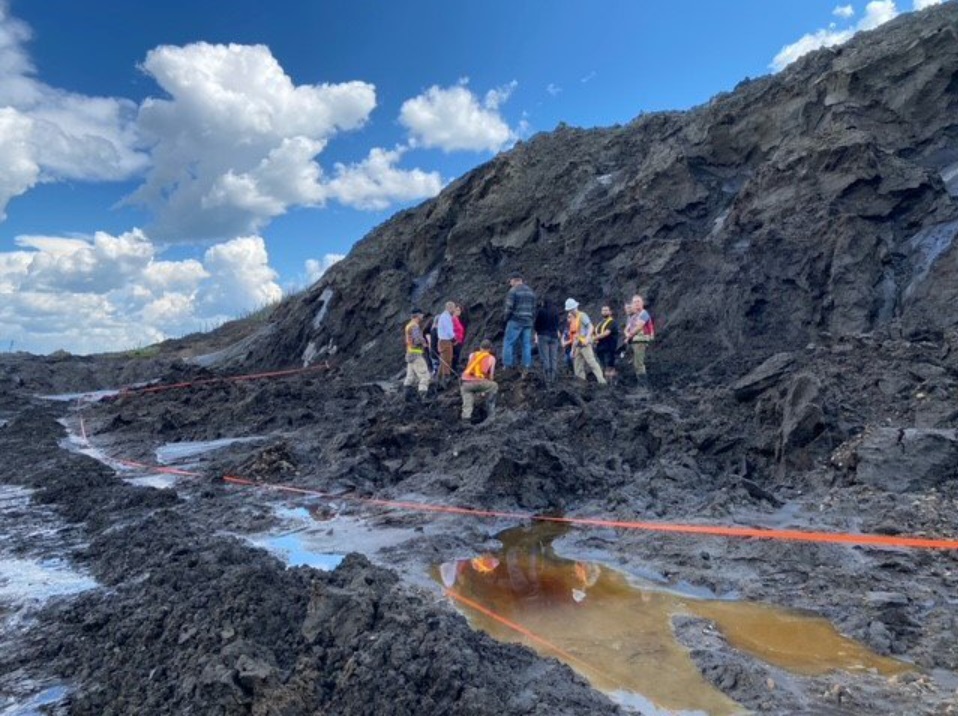 Photo: Klondike Placer Miner's Association
How did the found mammoth live?
Dawson City is located near the center of Yukon,at the confluence of the Yukon and Klondike rivers. To the north are the rocky peaks of Tombstone Territorial Park. To the south are hills with permafrost, crossed by rivers and streams. Across it all grows a dense boreal forest of white spruce, cedar pine, aspen and willow.
When the found mammoth was born, the landscape aroundlooked different. His home territory was dry and very cold. The Wisconsin Ice Age, which began about 100,000–75,000 years ago and ended about 11,000 years ago, was in full swing. Because of him, most of Canada was covered with colossal glaciers. But the coastal mountains deep in the Yukon and Alaska blocked all rainfall.
This region has become a haven for animalsice age. Fossil remains show that woolly mammoths, steppe bison, giant beavers and Yukon horses roamed the treeless landscape alongside camels, rhinoceroses and ancient wolves.
The ice age has come, and most of the waterfroze, so the sea level dropped to 0.12 km. In connection with this fall, the Bering Land Bridge was exposed, forming a connection between Asia and North America. This is how the ancient land mass known as Beringia appeared.
Beringia was covered with thickets of wild grasses andweeds—small, nutritious plants that include tundra flowers such as poppies and buttercups. If the found mammoth had grown to adulthood, it would have been smaller than its southern brother, the Columbian mammoth.
But the first was better adapted to the cold: he had small ears and a more fluffy body. Most of the time, these mammoths grazed on the steppe and ate over 130 m of grass per day.
According to leading scientific theory, indigenous peoplescrossed the Bering Land Bridge and began to spread across North America some time after the found mammoth froze in permafrost. This may have happened about 15,000 years ago.
What do we know about the mammoth?
Even among these rare discoveries, the frozen mammoth is something special. It was named Nong Cho Ga, which means "large baby animal" in the Yukon indigenous language.
The mammoth mummy is incredibly well preserved - so much so that you can study the skin, claws, the body itself and even the intestines with the remains of the last meal of the animal.
Its size is just over 1.3 m from the tail to the base of the body. This cub is perhaps even better preserved than Lyuba, a tailless mammoth found in Siberia in 2017.
Nong Cho Ga helps paint a more complete pictureice age in the Yukon, it also reconstructs the history of relationships between the Tr'ondek Khwe'chin - the traditional peoples of the land - and the miners and scientists who long claimed these territories as their own.
Researchers from the Tr'ondek Khwechin community, together with the Yukon government, will continue to study the baby mammoth.
Read more:
Archaeologists have found drawings of creepy people with huge heads: who they were
NASA: James Webb telescope irreversibly damaged by small meteorite impact
Largest and hottest hydrothermal vent field found in Pacific Ocean