Scientist Peter Ma applied machine learning and artificial intelligence to data collected by the Search Institute
In a new article published in the journal NatureAstronomy, the scientist explained how he trained a machine learning algorithm on 480 hours of telescope data from 820 stars collected in 2016. In the end, he identified eight signals that were “of interest.” However, previous algorithms were unable to detect them.
A University of Toronto student told VICE thathis method completely “removes humans from the equation,” unlike previous machine learning algorithms applied to SETI data. “Our algorithm relies only on neural and produces results that more traditional methods could not obtain,” explains Ma.
As a result of the experiment, scientists received eightsignals that may come from highly advanced extraterrestrial species. The algorithm specifically identified features that “represent narrowband Doppler drift signals emanating from some extraterrestrial source.”
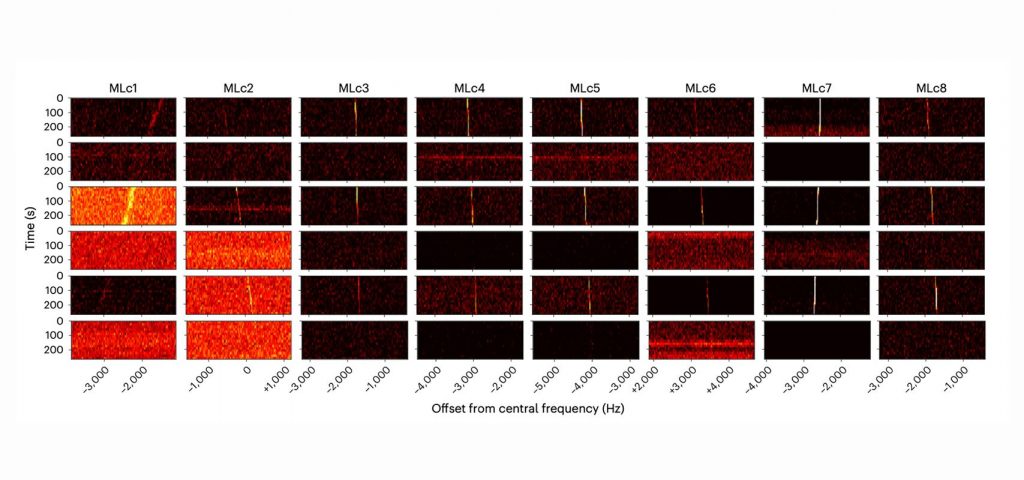 Plots of eight signals of interest. Each bar is 2800 Hz wide. Courtesy of the SETI Institute
The SETI Institute was founded in 1984 to scan the sky in search of radio signals that may come from the technology of intelligent alien civilizations. So far the search has been fruitless.
Read more:
Scientists have named the top 6 ways to "save" the memory of older people
A mysterious imprint underground surprised scientists. He is over 1000 years old
Sword thought to be fake turns out to be a 3,000-year-old Bronze Age artifact
On the cover: artist's impression of the ASKAP CSIRO radio telescope
Image credit: OzGrav, Swinburne University of Technology