Researchers compared the performance of neural networks and professional doctors in recognizing
The study showed that AI when passingthe typical exam achieved an average overall accuracy of 79.5% and passed two of ten practice exams, and the average radiologist achieved an average overall accuracy of 84.8% and passed four of ten practice exams.
At the same time, when analyzing 148 out of 300 radiographs,which were correctly interpreted by more than 90% of radiologists, the neural network correctly identified violations in 134 cases (91%), and was wrong in the remaining 14 cases. At the same time, studying 20 radiographs, which more than half of the doctors interpreted incorrectly, AI in half of the cases found a violation missed by the doctors.
Scientists have developed ten “trial”rapid examinations based on one of the three modules that make up the qualifying examination for membership of the Royal College of Radiologists. This is one of the mandatory exams that all UK doctors take to qualify as a 'Consultant Radiologist'.
Each practice test consisted of 30 radiographs,meeting the requirements of a real Royal College of Radiologists test or more complex. To pass the exam, candidates were required to correctly interpret at least 27 (90%) of 30 images within 35 minutes.
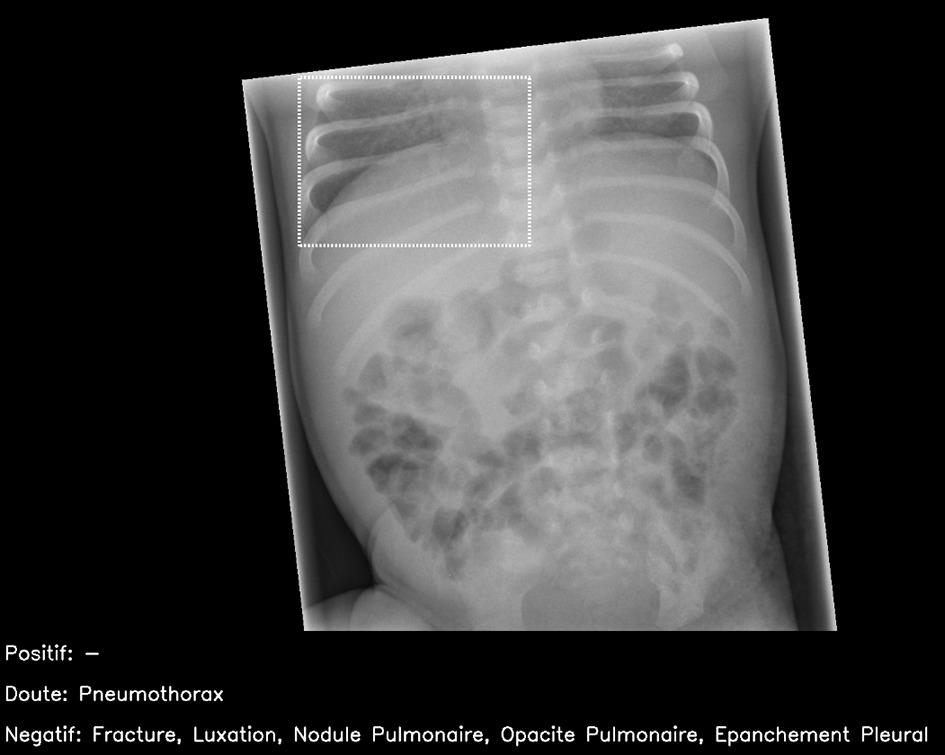
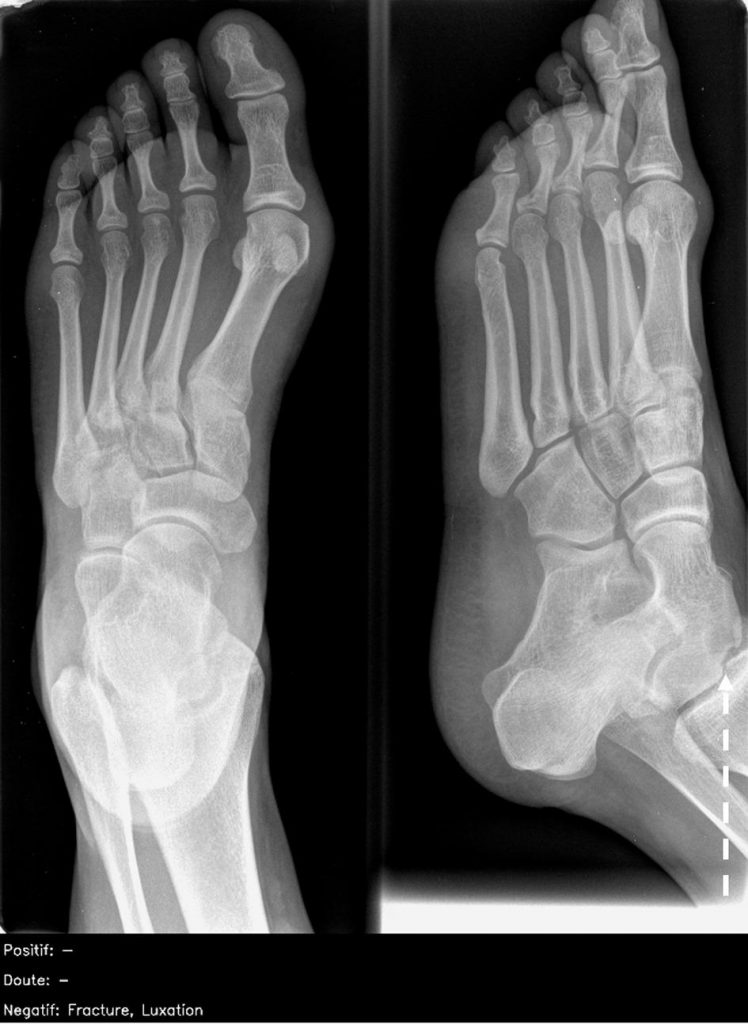
Examples of images from the test.Left: Normal abdominal x-ray on which AI found a right-sided basal pneumothorax (false positive). Right: X-ray of the foot in two projections, which shows an osteochondral defect in the dome of the talus (dashed line), this violation was missed by all doctors and AI. Images: Susan Cheng Shelmerdine et al., BMJ
Scientists gave the finished test to 26 radiologists,who passed the exam last year, and one of the commercial AI systems popular on the market, trained to evaluate chest and bone (musculoskeletal) x-rays for several conditions, including fractures, swollen and dislocated joints, and collapsed lungs.
Researchers note that, according to surveys, radiologists overestimate the effectiveness of AI, but for now it should be seen as an assistant, not an alternative to a doctor.
Read more:
A shock wave from the Sun has opened a crack in the Earth's magnetic field
17-year-old engineer came up with a magnetless motor: it can be used in electric vehicles
First-of-its-kind material withstands 'projectiles' that travel at the speed of sound